Author: TRACIE@FRANCESUPPLYCHAIN.ORG

supply chain monthly

The Supply Chain Monthly #36

Find this month :

  • The return of a smooth and fast website
  • A successful launch for the new teams at LAB Digital
  • Breaking through glass ceilings  
  • How can supply chain risks be reduced?
  • Electric heavy-duty trucks: What’s the current status? 
  • Upcoming events 

WELCOME to the staff of the new member organizations that have joined us in recent months: PELICAN CYCLES , DOMES PHARMA, ONET C-LOG SOLUTIONS KARDEX France, LEON 

as well as students from the following schools: EIGSI, ISTELI BREST and ROUEN, UNIVERSITY OF PICARDY – EIJV

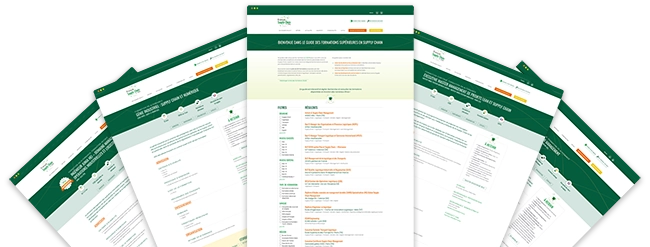
Overview of some pages in the digital Supply Chain training guide

GUIDE TO HIGHER EDUCATION IN SUPPLY CHAIN 2025

Discover our training courses

The return of a smooth and fast website!

Behind the scenes

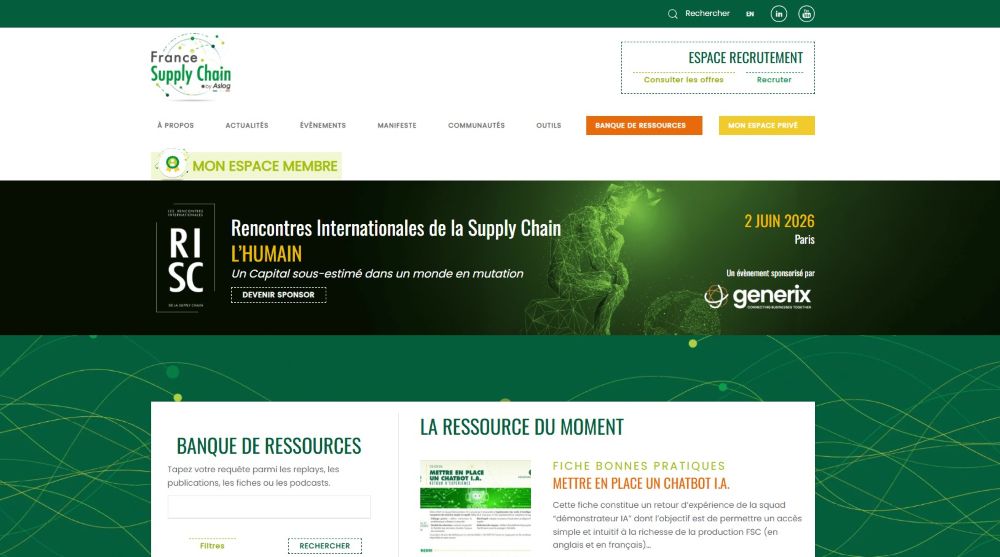
Image from the France Supply Chain website

Dear members, many of you have experienced difficulties on our website in recent weeks (slow loading times, loading errors). We apologize for the inconvenience. 

The move to a newThe move to a new server required some adjustments, but that’s all in the past now:your browsing experience is now smooth and more secure!

A successful launch for the new teams at LAB Digital

The actors

France Supply Chain's Digital and Technologies Lab logo

We’re thrilled to see the growing enthusiasm for ourSquads: there wereabout 50 of youat the four kickoff events.

This initiative reflects a commitment to shaping the technological future of our industries together. Our experts are ready to turn their ideas into tangible benefits for the communitythrough new publications—well done to them!

On display

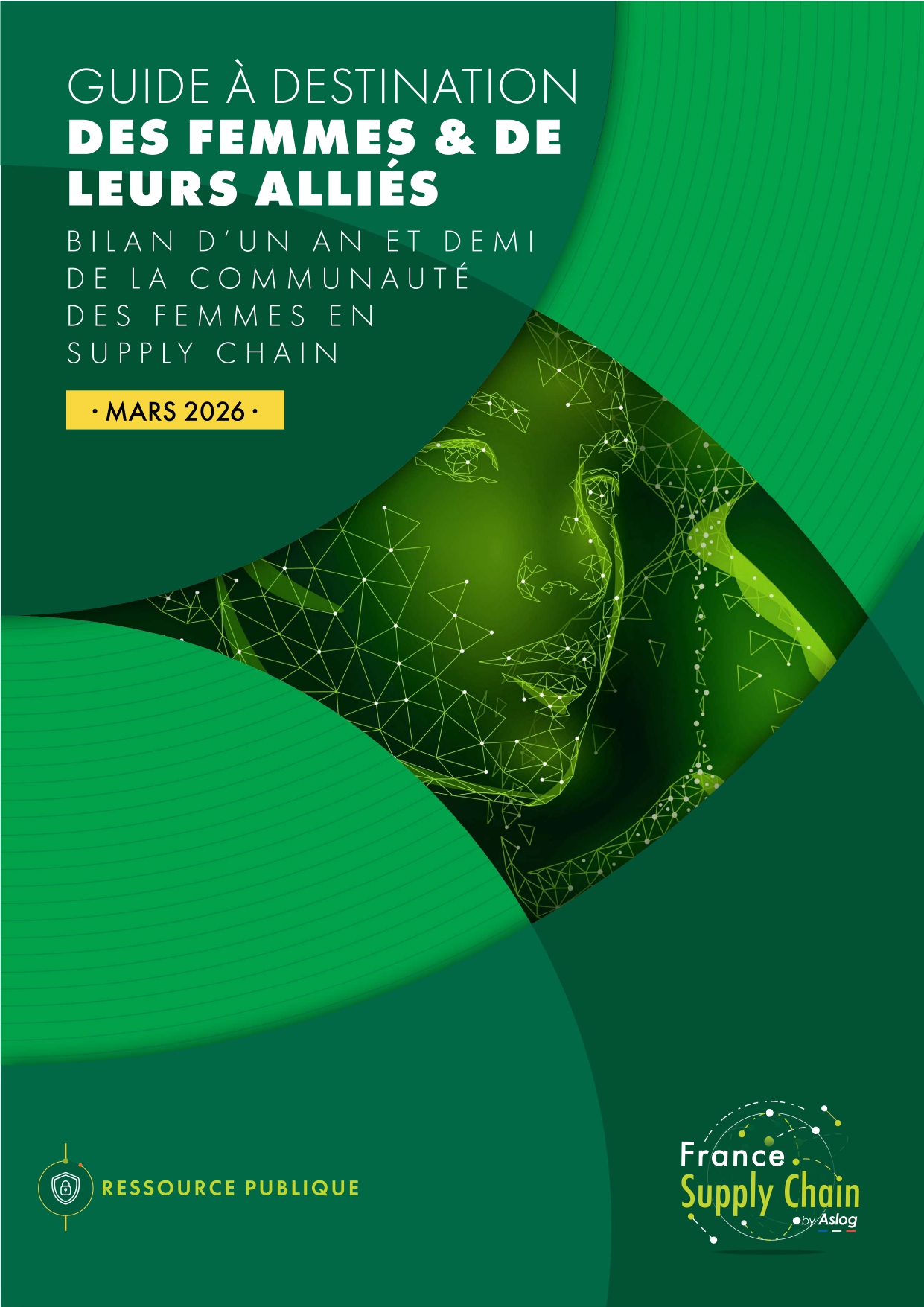
  • women's guide

    Breaking Through Glass Ceilings with the Women in Supply Chain Community

    Whatapproach and mindsetshould one adopt when managing 1,300 people across nine platforms? Is it possible to remain authentic? 

    During the 5th "Inspiring Women" webinar, Carole Doucet, Director of Logistics Operations at DSC (Saint-Gobain Group), shared her remarkable career journey and taught us a great deal. It was a real eye-opener!

    If you missed it, the replay will be available very soon 😉  

    To expand its impact, the community has developed a groundbreaking guide that breaks down12 biases that hindercareers(primarilythose of women)

    Drawing on research and feedback from the field, our contributors share:

    • Theirtips and best practicesfor navigating with confidence
    • Practical tips forshowcasing your strengths
    • Tools toengageyour teams in a fun way

    Gentlemen, recruiters, and managers: this guide is for you, too! Transforming our organizations for the long term requires a collective commitment.

    👉To learn more about this community

    Explore the guide

  • supply-chain-decarbonization

    Decarbonizing Road Freight Transport: The Conditions for the Shift to Electric Vehicles

    The findings of this study (conducted by Équilibre des Énergies (EdEn) with support from the Supply Chain 4 Good Fund) are fully in line with the work we have been conducting for several years to accelerate the energy transition of supply chains:electric heavy-duty trucks are already technically and economically viablefor certain applications and will become the standard solution by 2030.

    It highlights the need for a stable framework, coordinated investments, and collective action to make this transition a success.

    Learn more about the study and its findings

  • Circularity as a strategic solution for mitigating supply chain risks

    (Re)discover this article—testimonials that reveal key insights on the necessary transformation of our economic models to address today’s geopolitical, environmental, and regulatory challenges. 

    Learn more about this proactive solution

The next sessions

DATES NOT TO BE MISSED

  • [EXHIBITION]

    March 31

    SITL 2026

  • [MEETING]

    01/04

    Regulatory Monitoring Project

  • [MEETING]

    04/07

    LAB Human Resources

  • [MEETING]

    08/04

    Alternative Energy Mobility Project

  • [WORKSHOP]

    08/04

    Circular packaging x traceability 

  • [MEETING]

    April 15

    LAB ETI PME

  • [MEETING]

    16/04

    LAB SC Sustainable

  • [MEETING]

    April 21

    Women in Supply Chain

  • [WORKSHOP]

    23/04

    Exploratory tour of MIX.E

  • [VISIT]

    April 30

    Tour of a state-of-the-art pharmaceutical distribution center

  • [EXHIBITION]

    May 12

    LOGISMED 2026

  • [Congress]

    05/12

    RISC 2024 - International Supply Chain Meetings

Find out more about Supply Chain events

More than 40 candidate CVs, updated weekly, are available on the site.

Discover

NEWS

See all the news


EVENTS


PRESS

Read more

They chose river transport: how did they do it?

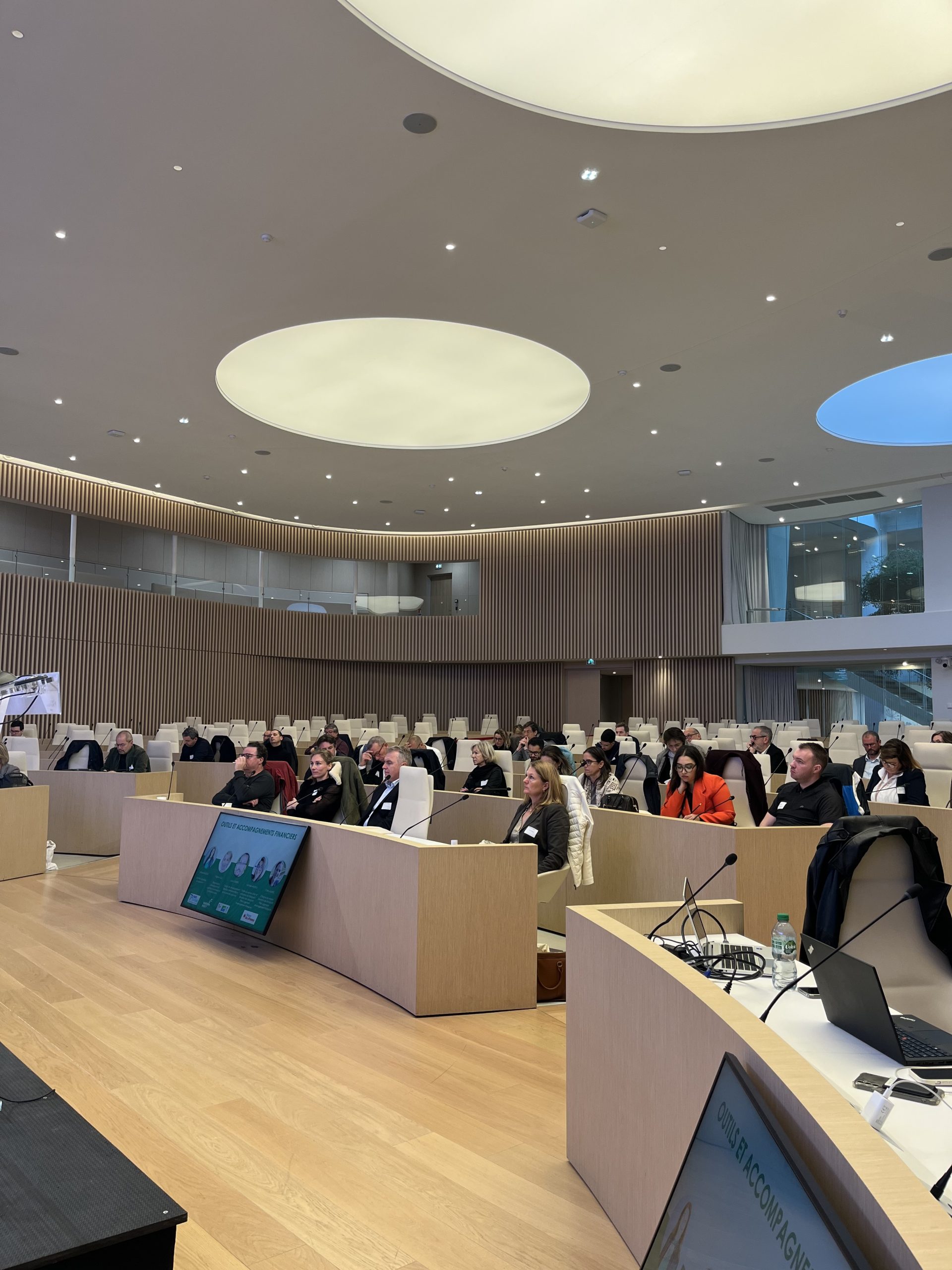
On November 4, the Île-de-France Region welcomed us for a morning event entirely dedicated to river transport. Around the table, VNF, IKEA, Les Mousquetaires, Point P, CEVA Logistics, Paris Terminal, and Haropa Port shared their practices, their gains, and the levers that make this mode of transport decisive for the logistics chain.

Rivers at the heart of strategies: they tell their story

River transport is establishing itself as a performance driver for companies seeking to stabilize their flows and reduce their costs. During this morning session, speakers reiterated that decarbonization is just an added bonus: the real traction comes from operational and economic gains. Our president made it clear: to be convincing, we must first demonstrate the business value before talking about carbon impact.

Ceva Logistics logo

The Musketeers use the Seine to smooth the arrival of containers and reduce penalties related to port congestion.

Ceva Logistics logo

To integrate river transport into its processes and ensure reliable delivery times, CEVA relies on five internal pillars:

  • Flow detection
  • Training
  • Systematic proposal
  • Dedicated unit
  • Monthly committee

Ceva Logistics logo

IKEA has demonstrated that a daily river corridor combined with an electric last mile can deliver to more than 180,000 customers while removing 18,000 trucks from the road.

Ceva Logistics logo

Point P uses dedicated barges to consolidate its river logistics for aggregates and blocks, thereby avoiding the use of 2,500 trucks. It should be noted that post-transport has been internalized to circumvent constraints on low-value products.

In all these cases, the modal shift to river transport transforms a logistical peak into a steady flow, reducing pressure on warehouses and limiting congestion. Companies also cite greater resilience in the face of unforeseen events: the availability of the river network exceeds 99% on the Seine axis.

speaker at the microphone in the chamber during the morning session dedicated to river transport

Creating an integrated multimodal ecosystem: the key to success

River transport does not operate in isolation. Its efficiency depends on coordination across the entire chain, from the seaport to the last mile. Various initiatives have shown that the success of a modal shift depends on four factors: reliable infrastructure, a modernized fleet, suitable port services, and structured customer demand.

Ceva Logistics logo

In terms of infrastructure, the Île-de-France Region and the French government have made significant investments: €82 million since 2015 in ports, port railways, locks, dams, shared quays, and multimodal platforms.

Ceva Logistics logo

VNF also has a ten-year strategy, financed to the tune of €300 million per year via the AFITF, to regenerate and improve the reliability of the network.

Ceva Logistics logo

Haropa Port is investing in infrastructure to improve access to Port 2000 and strengthen the river-sea network.

Ceva Logistics logo

Paris Terminal is developing a Gennevilliers–Bonneuil shuttle (scheduled for 2026) and rail/river connections.

Focus on financial mechanisms to support projects

  • PARM for studies and experiments,
  • PAMI for fleet modernization (approximately €6 million/year, 60 projects),
  • REMOVE/CEE for new traffic (€38.5 million until 2027).

Multi-company terminals and shared solutions demonstrate that river logistics progresses when stakeholders work together. The Île-de-France region has emphasized that the most iconic projects, such as Notre-Dame and Grand Paris, are based precisely on this joint construction between public and private partners.

Key lessons to remember

  • The greatest gains come not from the cost of transportation itself, but from the hidden costs avoided and the operational flexibility achieved.

  • The storage franchises offered by river platforms reduce parking costs and absorb the vagaries of maritime transport.

  • River transport turns distance into a strategic advantage 

  • Economic viability depends on a comprehensive view of the chain, which can account for half of the total cost.

  • The logic is not to pit modes of transport against each other, but to build an optimized end-to-end chain that would reduce risks, improve regularity, and enhance overall performance.

A big thank you to Laurène MATZEU DE VIALAR for masterfully hosting this morning event, as well as to all the speakers: Yann DE FERAUDY, Muriel Saccoccio, Eloi FLIPO, Jean-Marie PETITDIDIER, Emilie CARPELS, Laurent HELARD, Camille CONTAMINE, Céline MANTOUX, Virginie ALLILI, Jacky GABRIEL, Nathalie WOOCK, and Claire AUBREE.

NEWS

See all the news


EVENTS

PRESS
To go further

Read more

European Disability Week: France Supply Chain strengthens its commitment to inclusion and disability in the supply chain

Disability and employment: concrete solutions for the entire supply chain

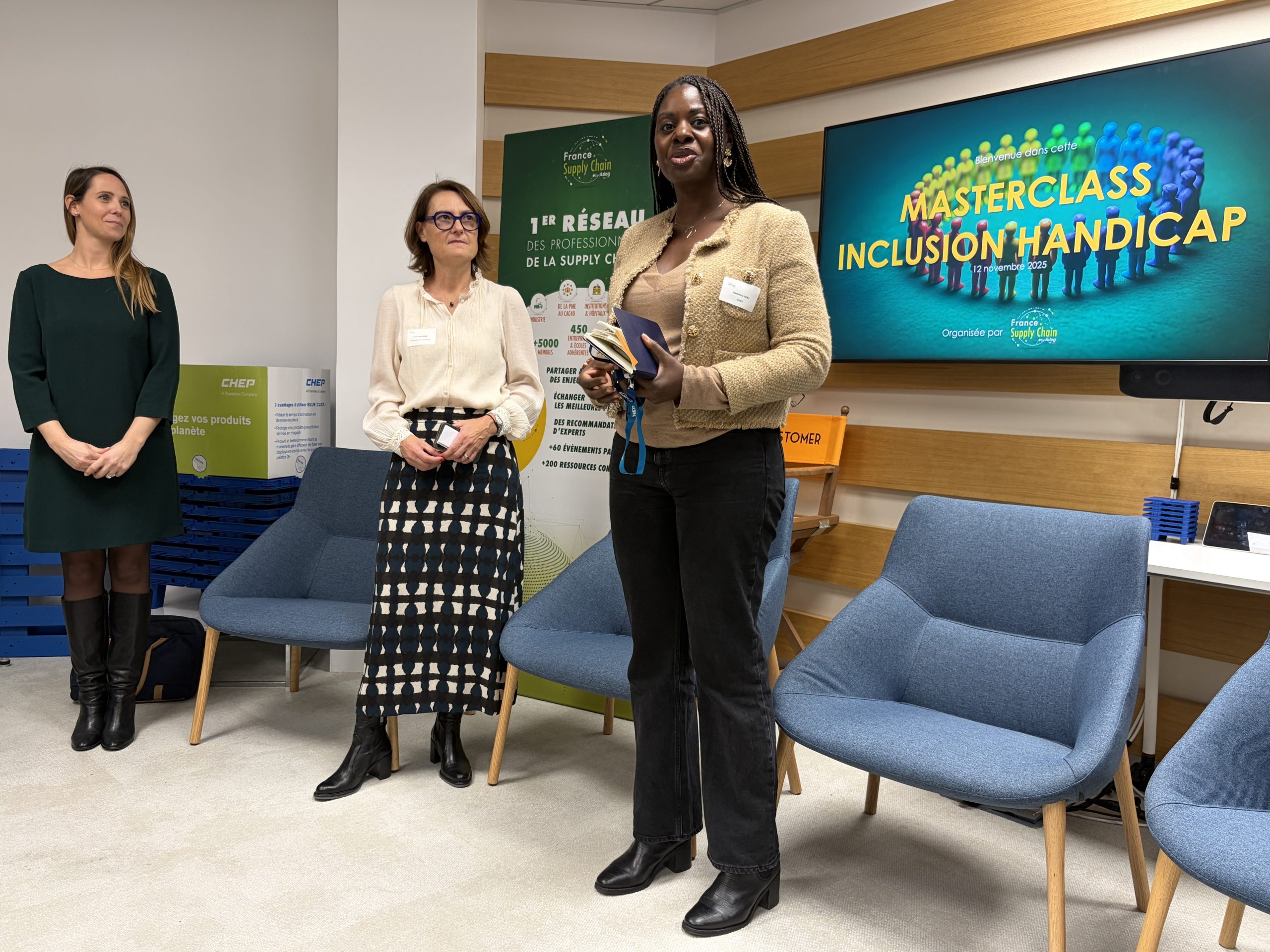
To mark the 29th European Week for the Employment of People with Disabilities (SEEPH), France Supply Chain, via its Lab Richesses Humaines, organized a groundbreaking masterclass on November 12, 2025, entirely devoted to inclusion and disability in the Supply Chain.

The event brought together companies, institutional partners, associations and schools, creating a strong collective dynamic around three main themes:

disability policy

recruitment

integration and job retention.

Disability policy: a strategic challenge for corporate performance

Speakers emphasized that a disability policy cannot stand alone: it must form part of the company's overall strategy and make a lasting contribution to collective performance. According to the forward-looking study Entreprise, travail et handicap, in 2025, 62% of managers consider the inclusion of disability to be a strategic issue, but only 28% integrate it into their CSR policies, highlighting a significant potential for improvement.

These include initial diagnostics (Agefiph type), awareness-raising and ongoing training, and the creation of a network of in-house disability contacts at all sites. The approach must be progressive, adapted to the size of the company, and supported by an ecosystem of internal and external players (Agefiph, Cap Emploi, ESAT, vocational training structures, adapted companies, etc.).

Opening quotation marks

"Working on inclusion has a positive impact on commitment, loyalty and collective practices," the managers reminded us. Indeed, studies indicate that the economic performance of a diverse company is 35% higher than that of a homogeneous organization."

Closing quotation marks

Recruitment: change your outlook and focus on skills

Only 20% of people with disabilities require job accommodation. For example, most chronic illnesses (diabetes, epilepsy, HIV, etc.) require organizational adjustments, such as flexible working hours or part-time work. On the other hand, if the disability requires adaptation, companies can benefit from assistance in adapting work situations.

The speakers identified several essential levers for better recruitment:

  • focus on skills before constraints,
  • emphasizeprofessional immersion and real-life situations,
  • train HR staff in non-discriminatory recruitment,
  • create a climate of trust to enable candidates to declare their disability and benefit from better support.
Opening quotation marks

"We find that in Europe, and particularly in France, HR staff are still too rarely trained in non-discriminatory recruitment and its methodology," stresses the CSR Director of a luxury group.

Closing quotation marks

Integration and job retention: anticipation and co-construction

Feedback from the companies and partners present highlighted the following best practices:

  • anticipate needs and adapt jobs,
  • set up the job through a progressive situation,
  • encourage the expression of needs through regular meetings,
  • mobilize a multi-disciplinary team (HR, managers, occupational physicians, occupational therapists, etc.),
  • instill a culture of safety, benevolence andattentiveness.

These approaches are based on tried and tested tools: PMSMP, PECF, fun awareness-raising activities and inspiring testimonials.

Concrete recommendations to accelerate the sector's transformation

France Supply Chain encourages companies to define a structured, progressive and realistic disability policy, to strengthen partnerships (Agefiph, Cap Emploi, ESAT, adapted companies) and to communicate in a regular, inspiring and even playful way, to create a real inclusive corporate culture.

Opening quotation marks

"Inclusion isn't just a means to an end: it's a lever for performance, collective well-being and everyone's responsibility," stresses Madeleine Deby, HR Manager at CHEP and co-leader of France Supply Chain's Lab Richesses Humaines.

Closing quotation marks

Key figures for inclusion in 2025 

  • Employment rate: In France, only 41% of people with disabilities are employed, compared with 69% of the general population. The unemployment rate for disabled people remains twice as high (12%) as the national average.
  • Adapted companies: These employ 41,100 disabled workers, i.e. 71% of their workforce, up 9% since 2021.

Sources :

********************************

About France Supply Chain

The FRANCE SUPPLY CHAIN BY Aslog community works to strengthen the impact of the Supply Chain on corporate competitiveness, and to make it a lever for a more sustainable world. The association brings together 450 French and international companies of all sizes and in all business sectors, as well as Grandes Ecoles and training organizations. This 5,000-strong network of professionals, lecturers and students pools ideas and experience to provide Supply Chain players with concrete solutions. https://www.francesupplychain.org/

Press contact: Marie-Laure Laville -MLD Consulting - Tel: +33 (0)6 18 14 85 36 - Email : mllaville@mldconsulting.fr
Le Mensuel de la Supply Chain #34

Find this month :

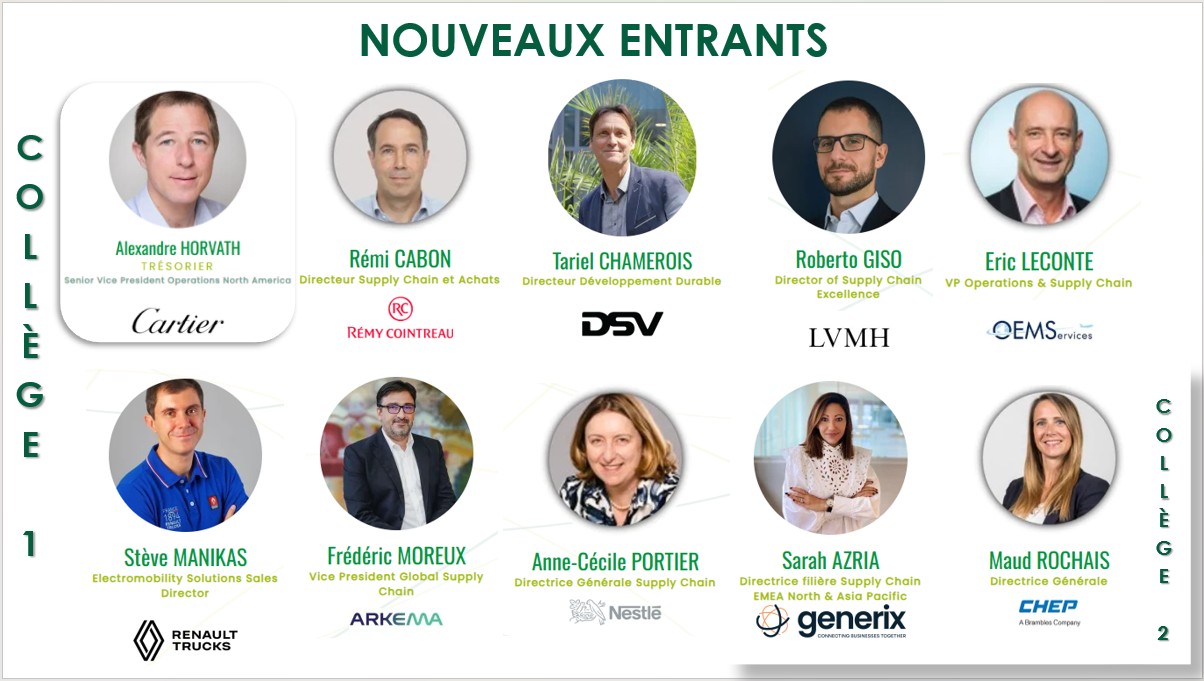
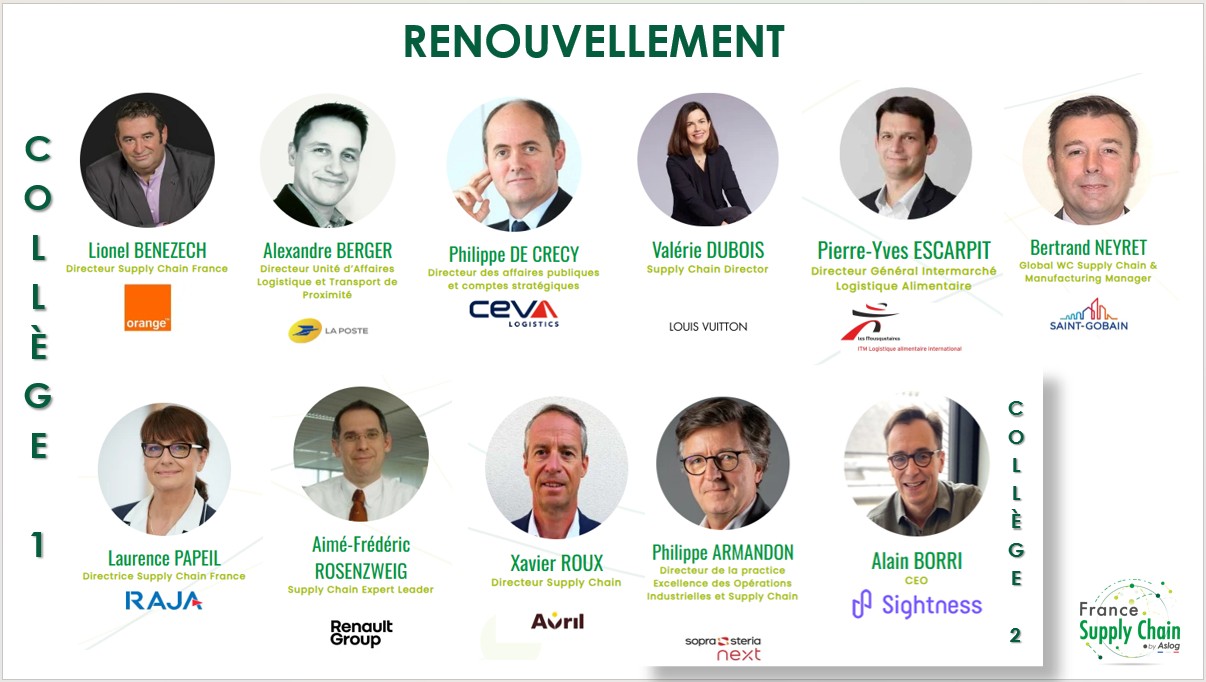
  • Latest appointments
  • What about inclusion?
  • The Supply Chain, the heart of our economy
  • Digitize better and more
  • Podcast from an inspiring SC director
  • Upcoming events 

Overview of some pages in the digital Supply Chain training guide

GUIDE TO HIGHER EDUCATION IN SUPPLY CHAIN 2025

Discover our training courses

Welcome to the employees of the 11 new member companies who have joined us in recent months:

TETRIXX PTE LTD, FÉDÉRATION FRANÇAISE DES BANQUES ALIMENTAIRES, PROMOTRANS, SALINS, CERCLH, FLEXIS, MONTPELLIER BUSINESS SCHOOL, ASTRE, ADAPTCONSULT, RIGBY CAPITAL, FEUILLE DE ROUTE CONSEILS

France Supply Chain's latest events

Behind the scenes

bringing together our face-to-face labs

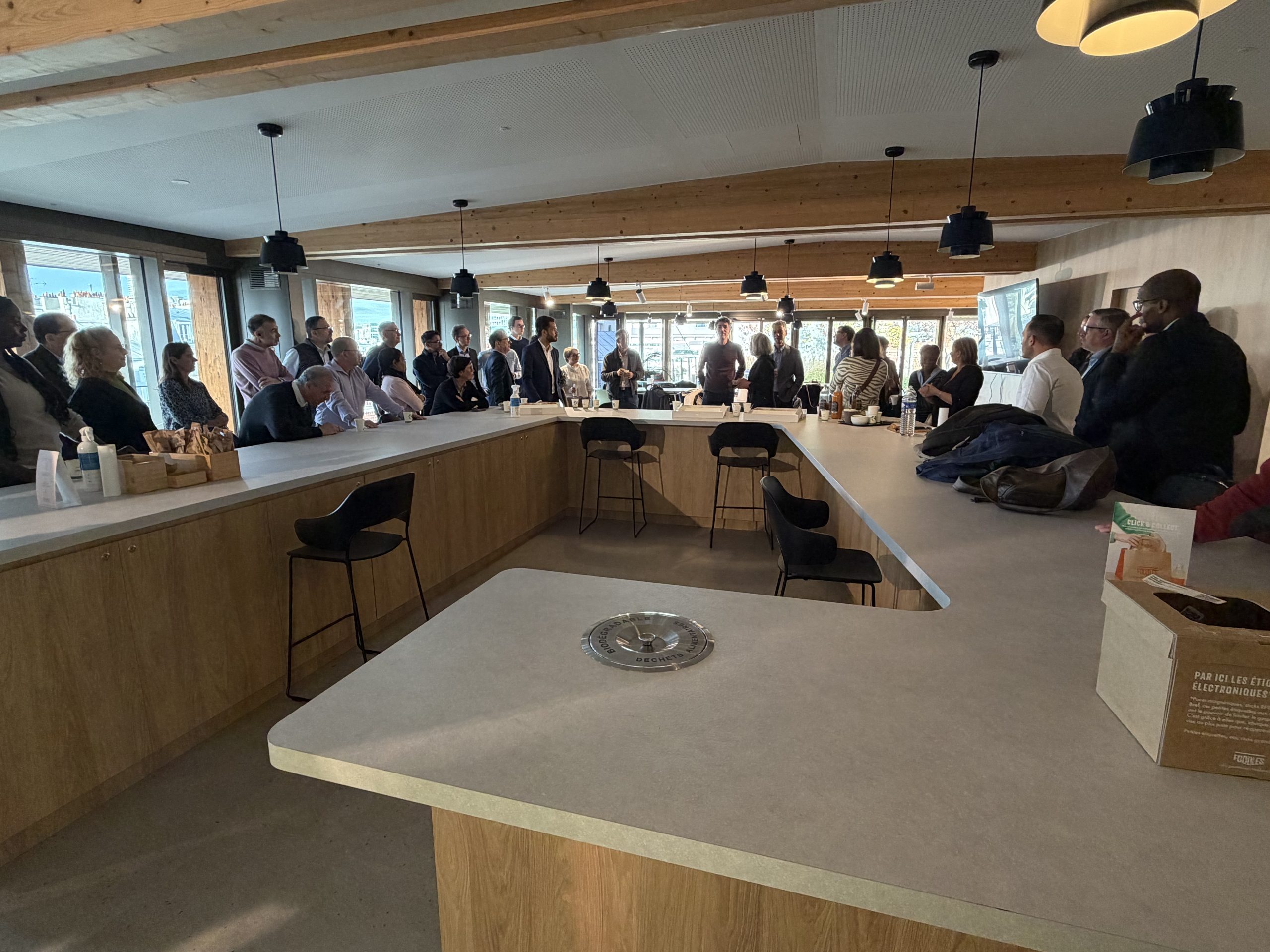
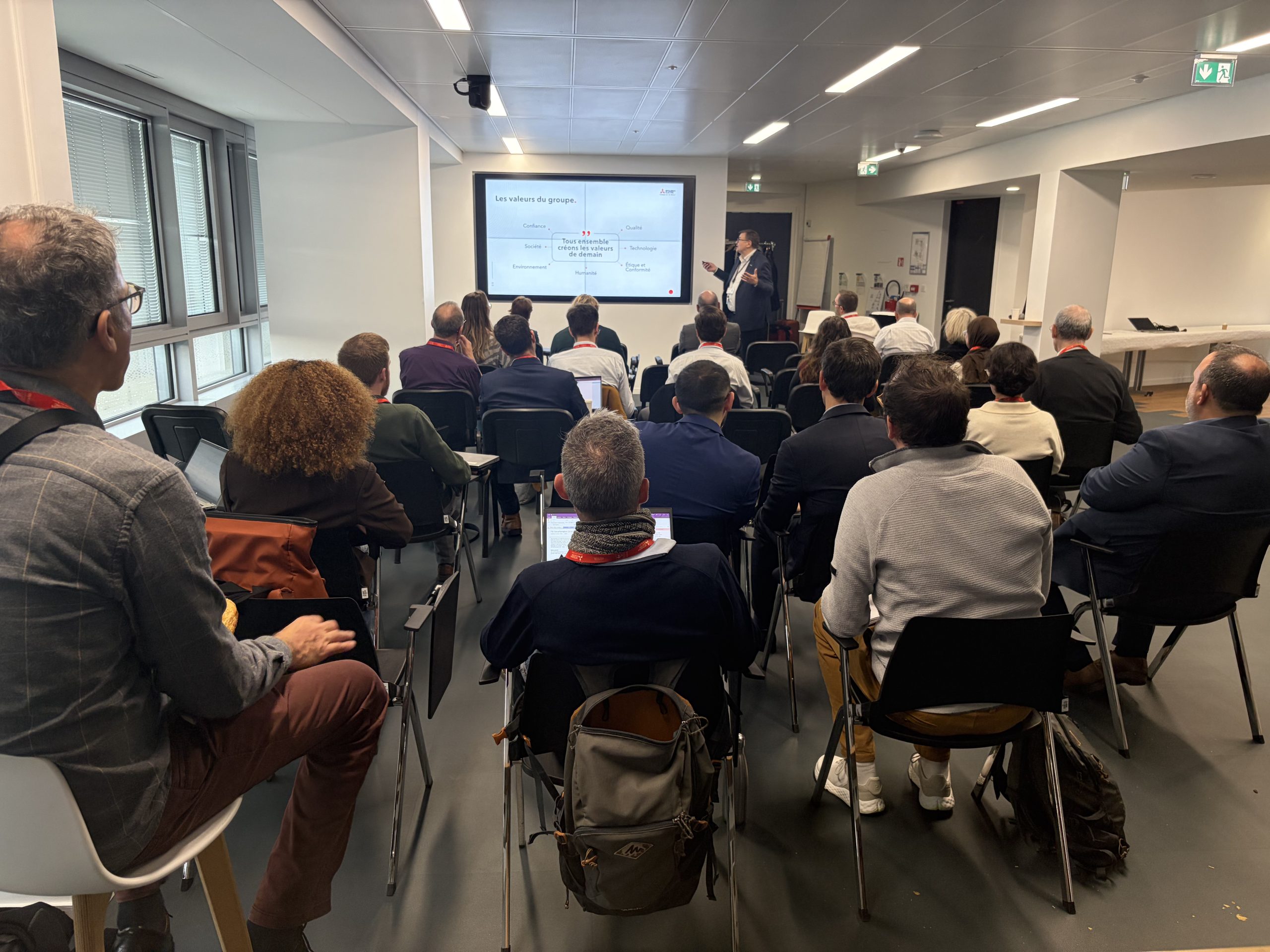
On October 23, Mitsubishi opened its doors to us to host our workshop on sharing decarbonization plans.

 decarbonation plan sharing workshop

On October 23, Mitsubishi opened its doors to us to host our workshop on sharing decarbonization plans.

river morning

On November 04, the Matinale fluviale was held at the headquarters of the Ile de France region.

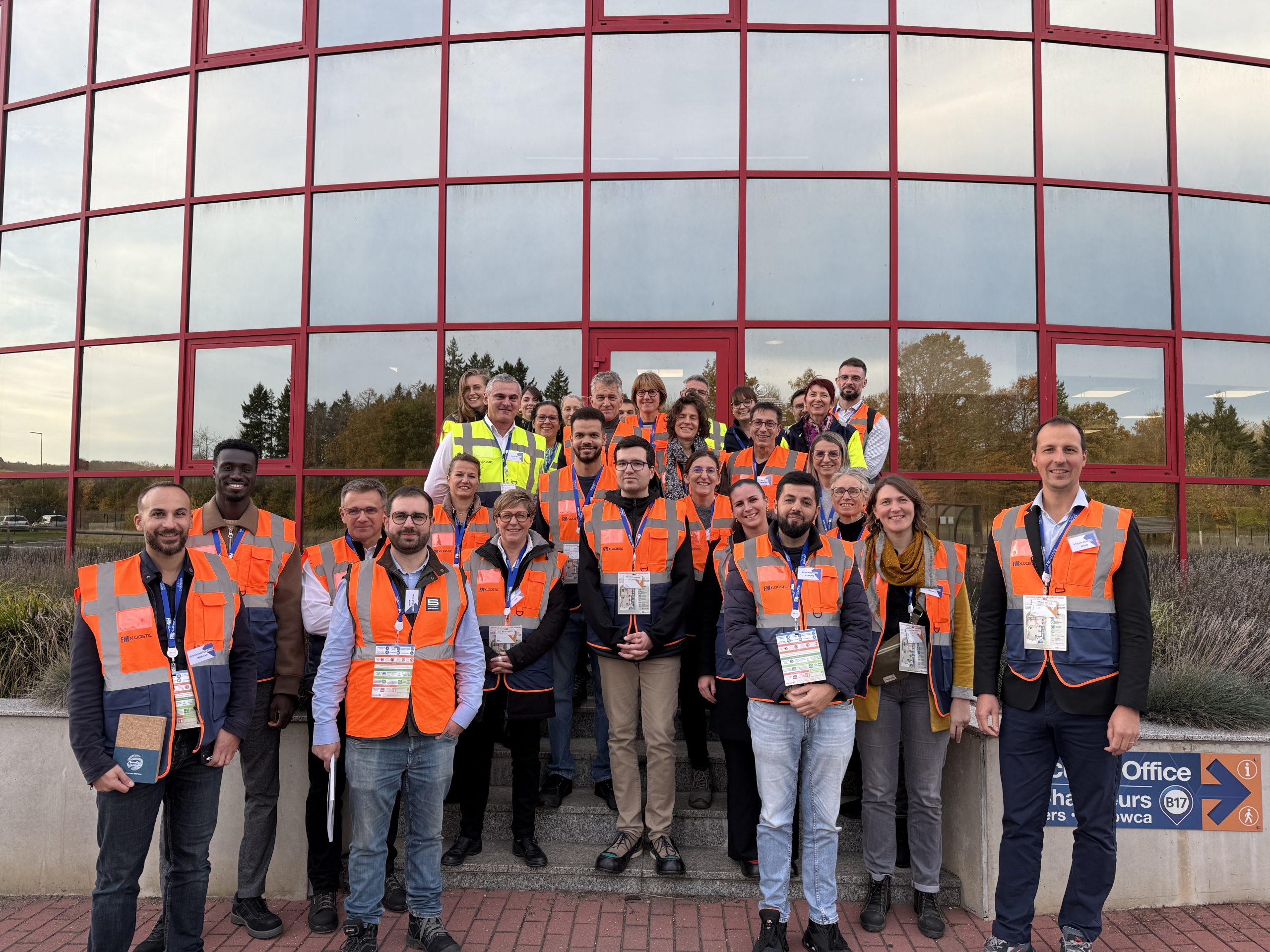
our members visit FM Logistic

On November 05, our LAB Logisitique took a behind-the-scenes look at FM Logistic.

What about inclusion?

The actors

This week is dedicated to disability. It's an opportunity to put the focus back on the need for inclusion in our businesses and our missions to promote diversity.

A few months ago, Madeleine Deby, HR manager at CHEP and co-leader of the HR LAB alongside Françoise Lieuré, our Projects Director, published an article in Forbes on the occasion of Inclusive Day.

Read the article

Madeleine DEBBY and Françoise Lieuré at the masterclass inclusion

On display

The Supply Chain, the heart of our economy

In this article, our Chairman reminds us that fn the face of current crises and transitions, France needs a national strategy capable of linking industry, energy, commerce and the environment.

The supply chain is no longer a mere cog in the wheel, it has become the foundation of our economic sovereignty.

To read the article, click here


Digitize better and more

20 pages to help teams manage their data. This is the latest publication from LAB Digital & Technologies.

You'll find concrete benchmarks, diagnostic tables, examples and diagrams to take action in your own context.

*Available only to our members.

Access the guide

data-security


A look back at the inspiring career of a Supply Chain Director

LAB Jeunes members had the opportunity to talk to Raja's Supply Chain Director, Laurence Papeil. 

Discover his atypical journey between the USA and France, his opinion and experience before and after his BAC+5 and his advice to the #femmesensupplychain.

The next sessions

DATES NOT TO BE MISSED

  • [Encounters]

    18/11

    360° Logistics
  • [Afterwork]

    27/11

    Intergenerational meetings

  • [Encounters]

    02/12

    Meet up by LSN

  • [Reunion]

    03/12

    ETI-SME LAB

  • [Reunion]

    04/12

    LAB Sustainable Supply Chain

  • [Reunion]

    11/12

    Community Ergonomists/Preventers

  • [Ceremony]

    15/12

    5th edition of Nuit de la Supply Chain

  • [Reunion]

    16/12

    Women in Supply Chain

  • [Conference]

    19/02/2026

    ELA Awards

Find out more about Supply Chain events

9 job offers and over 40 candidate CVs, updated weekly, are available on the site

Discover

NEWS

See all the news


EVENTS


PRESS

Read more

A career in Supply Chain: is BAC +5 the key?

To mark the launch of the 3rd edition of our "Guide des formations supérieures en Supply Chain", students, parents and professionals came together on September 23 for an evening dedicated to one question: is a 5-year degree the key to a career in Supply Chain?
Behind this question lies the whole relationship between qualifications, skills and developments in the sector, which was debated by our speakers with varied and inspiring backgrounds.

How it all began

" The range of Supply Chain training courses continues to develop and evolve. How can we find our way through this profusion? How can we help young people identify the training that best suits them?

After the first 2 editions, France Supply Chain worked for a year, with the help of an apprentice, Houlda WOROU, to gather all the necessary information and prepare a3rd edition, which we wanted to be entirely digital to make it easier to update and consult.

Loic LASSAGNE, leader of the HR lab, at the microphone to explain why the guide was created.

It's a major undertaking, and we hope it will prove a useful tool for everyone. Loïc LASSAGNE -HR General manager - Supply Chain at Renault Group & Leader of LAB Richesses Humaines.

A career in supply chain: training is still essential

At a time when the supply chain sector is booming, it is still too little known to the younger generation. Our guide is designed to help them make the right choices.

  • More than 200 listed training courses, including 30 new ones, covering the whole of France.
  • A 100% digital format, interactive and updated in real time, to keep pace with developments in the sector.
  • Greater accessibility: students, professionals undergoing retraining and companies will all find solutions tailored to their needs.

It is aimed at 3 main audiences:

  • Students looking for training, and possibly their parents or financial sponsors.
  • Companies looking for young or not-so-young supply chain talent.
  • To training institutes and organizations that can showcase their courses while looking at what's being done elsewhere.

All roads lead to Rome...or to the Supply Chain

Throughout the evening, our speakers reminded us that there is no single standard route into the supply chain professions. A wide variety of career paths are possible, from Bac+2 to Bac+5, not forgetting continuing education for working professionals.

The proof is in the pictures:

diagram of the different paths leading to supply chain jobs

Today's Supply Chain is enriched by multiple trajectories, and our speakers have clearly understood this. From schema to reality, their backgrounds and advice give you an overview:

Vincent Barale, Vice President Supply Chain at Louis Vuitton

  • University career
  • His position as logistics manager at Carrefour took him as far as Hong Kong
  • Executive at Louis Vuitton for 22 years

"If you have a 5-year higher education diploma or an engineering degree, it's to move up the hierarchy and take up a management position. In a management position, you're going to be asked to have a global view, to be able to draw up a strategic plan, to make structuring choices for the company, sometimes heavy investments, and so on. But to be credible at this level, you need to be close to the field. An engineer who stays behind his screens won't get very far.

On the other hand, if you've just graduated from a BTS or IUT, you already know the terrain. You need to educate yourself. Go to exhibitions, go to the cinema, read books, but get out of the field, otherwise you'll be seen as mega-operational".

Photo by Rodrigue Branchet-Fauvet, E2E Supply Graduate Program at Renault Group

Rodrigue Branchet-Fauvet, E2E Supply Graduate Program at Renault Group

  • University career
  • Completed two Master's degrees: one at university, the other at a business school to specialize in Supply Chain
  • Has had the opportunity to go abroad through internships and international exchanges
  • Now working for Renault Group

"When I did my first Master's, I decided to do a second one to specialize and understand what Supply Chain was, and not go straight into the world of work lost and without a global vision because at first I summed it up as trucks and pallet trucks, but it's not that at all.

This second master's degree gave me this more global vision, but I lacked the professional experience that I hadn't gained in my university career, where I had taken advantage of internships abroad and international exchanges."

Photo by Baptiste Coccia, stock management and logistics project manager on a work-study program at CNR (Compagnie Nationale du Rhône).

Baptiste Coccia, Inventory management and logistics project manager on a work-study program at CNR (Compagnie Nationale du Rhône).

  • BTS in international trade
  • A year in New Zealand to learn English
  • 8 years in transport and logistics
  • Travelled in Asia and Australia
  • Has resumed her studies and has just started her Master's degree in Lyon on a sandwich course.

"My aim in going back to school and taking this Master's degree is to acquire all the skills I didn't necessarily have, since I was really specialized in sea and air transport.

So now I'm involved in logistics and stock management, and in parallel with my Master's degree, I'm specializing in purchasing, which will give mea real diversity of skills, and I think these are profiles that are in demand on the job market, particularly in the supply chain. What's more, this Master's degree is recognized internationally , so it will be easier for me to apply for jobs abroad." 

Photo by Laurence Papeil, Supply Chain Director at RAJA

Laurence Papeil, Supply Chain Director at RAJA

  • Worked 10 years after BTS
  • Returned to school at 32 with three young children to "tick the bac+5 box".
  • Master International Logistics and Transport
  • This determination led her to Energizer's world headquarters in the USA as Global Logistics and Distribution Director.

"You can't systematically start out with a Bac +5, but it's more afterwards, how you manage all the opportunities you may have and I think that's what's important, it's to make structuring choices, good ones, sometimes bad ones too, but the important thing is to bounce back, and really move forward regardless of whether or not you have a level of study that corresponds to the position you're given."

The last word

Throughout the round table, they reminded us that there is no linear path to success in the world of Supply Chain. So, yes, studying at a grande école and doing long studies will always be valued, but experience is a social springboard for climbing the ladder. You can start at the bottom of the ladder and quickly build up your skills and responsibilities.

Today, many choose the academic route. The real question then becomes: how do you stand out from the crowd? Here's a roundup of advice from our speakers:

  • Get out in the field: experience the plant and warehouse to understand operational reality and prepare for the move to management.
  • Broaden your culture: nurture your strategic vision beyond technical expertise.
  • Make the most of your differences: open up to the world, learn English and more, develop your interpersonal skills.
  • Project yourself 20 years from now: define a long-term career vision and ask yourself whether the path you've taken is still in line with your desires.
  • Dare: remain curious, test, take risks.
  • Maintain your network: prolong exchanges and networking.