Author : webm@ster

France Supply Chain launches theSupply Chain 4 Good endowment fund

In response to the urgency of climate change and environmental challenges, France Supply Chain by Aslog announces the creation of the Supply Chain 4 Good endowment fund, a major initiative aimed at transforming supply chain practices to have a positive impact on people and the planet. The Supply Chain is a company's nervous system, playing a central role in strategic decisions that have a direct influence on environmental and social issues. It alone is responsible for over 80% of greenhouse gas emissions, including Scope 3. Transforming the Supply Chain means taking concrete action for a sustainable future.

A call for commitment to a responsible future

Opening quotation marks

Supporting us means giving us the means to mobilize experts, finance studies, make our voice heard and bring to fruition high-impact projects for women, men, ecosystems and the planet.
Yann de FERAUDY, President of France Supply Chain 

Closing quotation marks

The Supply Chain 4 good community was created in 2020 under the impetus of Michelin and France Supply Chain by Aslog, as part of Movin'On, an ecosystem dedicated to more sustainable mobility. Initially conceived as an ideas laboratory, this movement gave rise in 2021 to a manifesto setting out ambitions for 2030. In 2023, a second edition presented over a hundred concrete initiatives. Today, the creation of the Supply Chain 4 Good fund marks a decisive step towards amplifying this impact.

A fund serving the public interest

This vehicle will help accelerate essential initiatives and provide financial support for projects related to :

  • The circular supply chain.
  • Decarbonizing operations.
  • Reducing drudgery.
  • Promoting a "slow" supply chain Supply Chain and sober logistics.
  • Modal shift and the development of innovative solutions.
  • Structuring a collaborative ecosystem.

The Supply Chain 4 Good fund is committed to supporting non-profit, socially-oriented projects. It is therefore eligible for philanthropy tools, and can receive donations in kind, in cash or in the form of skills sponsorship. Donors can also benefit from tax advantages.

A fund serving the public interest

An initiative that relies on everyone's support

The Supply Chain 4 Good fund is based on the support of players committed to the sustainable transformation of the supply chain. This structure enables the association to call on business experts through the skills sponsorship mechanism, and on tax-exempt donations to carry out its missions.

Thanks to this leverage, France Supply Chain will be able to :

Skills patronage: a lever for commitment

Skills sponsorship enables companies to mobilize their employees for high-impact missions within a public-interest organization. It offers tax benefits, with a tax reduction of 60% of the amount of the employee's salary.

Two formats are available:

  • Service provision: the company manages a defined mission for a public-interest organization.
  • Loan of manpower: one or more employees are made available to the organization.

The commitment is always based on three pillars: voluntary action by the employee, response to an identified need, and agreement by the company.

Committed governance

The fund is managed by committed industry experts, including :

Yann de Feraudy

Yann de Feraudy
President, France Supply Chain

Yves Simon de Kergunic
Treasurer, Courir

Marie-Laure Furgala
Secretary, Kedge Business School

Henri de la Gravière
Michelin

Aimé-Frédéric Rosenzweig
Renault Group

Jean-Christophe Machet
FM Logistic


About France Supply Chain by Aslog

For more than 50 years, the France Supply Chain association has been pursuing its mission of bringing together companies, business schools and research organizations to innovate, share best practices and provide concrete solutions to the challenges of today and tomorrow.

Think and Do Tank, with over 450 member companies and schools, 800 active members involved in our projects, and an audience of 7,000 players, we promote exchange and collective action for a more robust and responsible Supply Chain. As of January 2025, the association' s public-interest activities will be carried out by the SUPPLY CHAIN 4 GOOD endowment fund, starting with projects to decarbonize and sustain our Supply Chains.

Press contact: Marie-Laure Laville - MLD Consulting - Tel: +33 (0)6 18 14 85 36 - mllaville@mldconsulting.fr

Le Mensuel de la Supply Chain #28

Find this month :

  • France Supply Chain joins forces with ADEME

  • A circular supply chain at the heart of the ecological transition
  • RISC: French players in the field of goods transport by sail.
  • Supply chain resilience - an FSC X Sopra Steria Next white paper
  • What to expect in the coming months

Manifesto for a supply chain

MANIFESTO FOR A FRUGAL AND DESIRABLE SUPPLY CHAIN

Have you read it?

France Supply Chain by Aslog and ADEME commit to a frugal supply chain to meet 2050 climate challenges

Behind the scenes

France Supply Chain by Aslog and ADEME commit to a frugal supply chain to meet 2050 climate challenges

Paris, Salon International du Transport et de Logistique 01/04/2025 - France Supply Chain by Aslog and ADEME announce the signing of a joint letter of intent to accelerate the ecological transition of logistics and supply chains. This initiative aims to fully integrate the concepts of "circular supply chain" and "slow logistics" into ADEME's updated "Transition(s) 2050" scenarios, in order to build more sober, resilient and value-creating logistics models.

To know more about it

A circular supply chain at the heart of the ecological transition

The actors

France Supply Chain warns of the importance of the Circular Supply Chain

Following the creation of the Fonds d'interet general, France Supply Chain is alerting the public to the importance of the Circular Supply Chain and proposing the www.supplychaincirculaire.org platform.

A collaborative Hub to accelerate the transformation of a Circular Supply Chain.

Discover the platform

On display

RISC: French players in the field of goods transport by sail

On December 5, at the Rencontres Internationales de la Supply Chain, Jean Zanuttini, Thibault DROGUET, Djamina HOUDET-CASENEUVE and Simon WATIN got together to talk about transporting goods by sail.

An inspiring round table discussion led by leading industry players.

Discover exchanges


supply-chain-circular

White Paper - SUPPLY CHAIN RESILIENCE

France Supply Chain has joined forces with consulting firm Sopra Steria Next to create this White Paper. The aim: to help companies understand how to prepare structurally for future shocks. You'll find three interviews and feedback from experts, as well as a list of outstanding studies on resilience.

Download the white paper

The next sessions

DATES NOT TO BE MISSED

  • [Reunion]

    23/04

    Risk community

  • [Reunion]

    25/04

    Expert planning community

  • [Reunion]

    13/05

    HR Lab

  • [Encounters]

    13/05

    PoSEAble

  • [Reunion]

    14/05

    Lab ETI/PME

  • [Reunion]

    15/05

    Digital & Technologies Lab

  • [International]

    15/05

    Chapter Asia - SHANGAI

  • [International]

    21/05

    Chapter Asia - SINGAPORE

  • [Reunion]

    21/05

    Customs community

  • [Conference]

    21/05

    IGR-IAE Rennes

  • [Reunion]

    22/05

    Community Ergonomists / Preventers

  • [Reunion]

    22/05

    Lab supplyChain4Good

  • [Forum]

    23/05

    ISLI: Aeronautics - Aerospace - Defence

  • [Reunion]

    27/05

    Women in Supply Chain

  • [Evening]

    05/06

    Intergenerational meetings

  • [Reunion]

    06/06

    Packaging & Conditioning Community

Find out more about Supply Chain events

NEWS

See all the news


EVENTS


PRESS

Read more

France Supply Chain by Aslog, 53 years of history: committed to efficient, resilient and sustainable supply chains

A strong ambition: to federate players for a frugal and desirable Supply Chain

France Supply Chain by Aslog, a dynamic and influential trade association, is strengthening its commitment to making the Supply Chain a strategic lever for competitiveness and sustainability. In 2025, the association reaffirms its ambition: to amplify the strategic impact of the Supply Chain within companies, while accelerating their transition towards more responsible, sober and resilient models.

Opening quotation marks

" Supply Chain is no longer simply a performance lever: it's becoming a driver of transformation. It's up to us to define tomorrow's standards by mobilizing innovation, talent and collective will. Rather than going faster and faster, we sometimes need to slow down in order to move forward. A sustainable Supply Chain is also an economic opportunity: more sober, more resilient ". Yann de Feraudy, President of France Supply Chain

Closing quotation marks

An extensive network dedicated to excellence

France Supply Chain brings together over 450 organizations from all sectors and of all sizes, in France and abroad. The network brings together companies, business schools, training organizations and institutions, forming a unique collaborative ecosystem committed to innovation and transformation.

A strategic function at the heart of today's challenges

A strategic function at the heart of today's challenges

The Supply Chain covers all the processes and players involved, from the design and optimization of product, information and service flows, right through to delivery to the end customer. The supply chain is a company's nervous system, accounting for 60-80% of its cost structure and over 80% of its carbon footprint.

Its digital transformation, its role in resource management and its environmental impact have made it a strategic pillar of management policies, particularly within large groups.

Three priorities for a sustainable transformation

In the face of successive crises (health, geopolitical, economic) and the climate emergency, France Supply Chain by Aslog is taking action along three main strategic lines:

Decarbonizing the sector

Massive adoption of a mix of low-carbon transport solutions (cargo bikes for the last mile, electrification of fleets, use of multimodal transport, veiled container ships, etc.).

Transport pooling

On certain sections of the supply chain, this approach combines performance, value creation and the reduction of negative externalities for all stakeholders. It requires closer cooperation between companies, consumers and logistics service providers. 

The emergence of circular supply chains 

To orchestrate the circular economy on a large scale, promoting eco-design, reparability and intensive use of new technologies (Blockchain, AI, digital twins, etc.).

A frugal, inclusive and meaningful supply chain

Tomorrow's supply chain will be frugal, intelligent and inclusive. It will produce what is necessary, optimize resources, limit waste and promote values of solidarity and social utility.

France Supply Chain by Aslog is committed to :

  • Promote supply chain and logistics professions, which are still too often invisible.
  • Make careers more attractive, especially to young people.
  • Promoting inclusion and diversity.
  • Reducing drudgery through digitalization, reorganization and prevention.
  • Supporting continuing training to accompany transitions.
Lab Supply Chain 4 Good becomes an endowment fund.

A collective dedicated to sustainable transformation

The association is multiplying its initiatives to support the emergence of a sustainable supply chain:

In line with new European regulations, in particular the objectives of the Green Deal, France Supply Chain supports companies in their transition to greener logistics: a 55% reduction in GHG emissions by 2030, the development of rail and sea transport, and the construction of positive-energy logistics infrastructures.

Visionary, committed governance

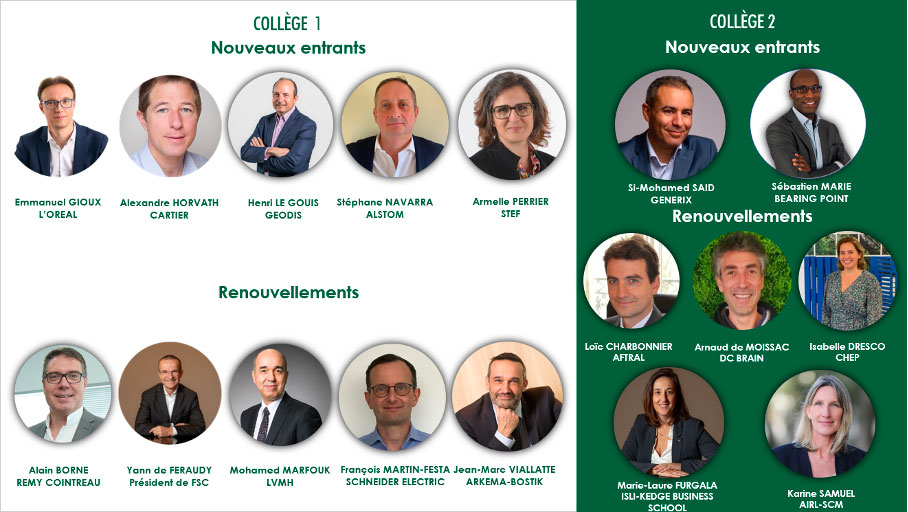
College 1 and 2 of France Supply Chain and its permanent team

Chaired by Yann de Feraudy, the Board of Directors of France Supply Chain by ASlog brings together 50 decision-makers and experts from major companies such as LVMH, L'Oréal, Orange, Nestlé, Schneider Electric, Renault, Alstom, FM Logistic and many others. Together, they share a common vision: an innovative, high-performance, responsible and deeply human supply chain.


About France Supply Chain by Aslog

For more than 50 years, the France Supply Chain association has been pursuing its mission of bringing together companies, business schools and research organizations to innovate, share best practices and provide concrete solutions to the challenges of today and tomorrow.

Think and Do Tank, with over 450 member companies and schools, 800 active members involved in our projects, and an audience of 7,000 players, we promote exchange and collective action for a more robust and responsible Supply Chain. As of January 2025, the association' s public-interest activities will be carried out by the SUPPLY CHAIN 4 GOOD endowment fund, starting with projects to decarbonize and sustain our Supply Chains.

Press contact: Marie-Laure Laville - MLD Consulting - Tel: +33 (0)6 18 14 85 36 - mllaville@mldconsulting.fr

Supply Chain Today: Geopolitics, Strategy & Defense

Here's a summary of what 2 experts have to say about the geopolitical changes and new challenges facing global supply chains. An exchange of views as an introduction to SITL 2025, with crucial proposals to ensure the sustainability of supply chains.

  • Photo by Dominique Trinquand

    Dominique Trinquand

    General, Former Head of Military Mission to the UN

  • Yann de Feraudy

    Yann de Feraudy

    President France Supply Chain

Geopolitical developments and their impact on the supply chain

Since 1945, the global geopolitical landscape has undergone major transformations, profoundly influencing supply chain dynamics. The number of UN member countries has risen from 50 to 193, reflecting a diversification of international players. At the same time, the G7, which represented over 60% of global GDP before 1975, now accounts for less than 40%. These changes have redefined the balance of economic and political power, creating a more complex and interconnected environment.

The rise of empires in both East and West, particularly with pressure from the Trump administration in the US and reactions from China and Russia, has intensified geopolitical tensions. These dynamics have a direct impact on supply chains, requiring constant adaptation.

Europe finds itself in a delicate strategic position, wedged between East and West, while at the same time being the world's third-largest economic power in terms of military budget. To ensure its security and strategic autonomy, Europe needs to develop a robust and agile supply chain.

resilience, protect against legislative complications, simplify processes and foster cooperation.

The increase in France's defense budget over the past seven years or so bears witness to this growing awareness. The supply chain, by its very nature agile, must now face up to a changing geopolitics that is evolving all too rapidly. In response, it is crucial to innovate, build resilience, protect against legislative complications, simplify processes and foster cooperation.

The supply chain now encompasses the entire value chain, from sourcing to final distribution, and its return loops in a circular economy perspective. Military and civilian logistics are increasingly interconnected, underlining the importance of a robust supply chain to ensure economic and social security.

Supply chain resilience initiatives

Supply chain resilience has become a crucial issue in a context of geopolitical and economic crises. However, the term "resilience" is often criticized in favor of "robustness", which emphasizes the need to maintain a fluid supply chain to avoid disruptions, such as shortages of essential products.
To reinforce this robustness, concrete initiatives have been put in place. For example, France Supply Chain has launched the 1st Supply Chain Resilience Observatory, in collaboration with Sopra Steria Next, to survey supply chain managers. An indicator on a scale of 1 to 4 has been developed, the results of which indicate margins for improvement:

  • Overall maturity of 2.59 out of 4.
  • Only six companies reached level 3, the threshold at which resilience becomes a strategic lever.

Discover the study

A strategic approach to sustainable supply chains

A strategic approach to sustainable supply chains

Faced with global supply chain initiatives, Europe must respond strategically to ensure the sustainability of its supply chains. China, with its Silk Roads, and the United States, with the Supply Chain Council created by the Biden administration, have set up ambitious projects to secure their critical supplies. Europe needs to reflect on how to integrate more robust and coordinated supply chain expertise into its policies, in order to strengthen Europe's position on the international stage.

Yann de Feraudy


In collaboration with the European Logistics Association (ELA) and its member associations, we will be developing a new benchmark with indicators to measure the resilience and fluidity of supply chains.

Yann de Feraudy, President of France Supply Chain

The aim is to create a simple, relevant indicator to monitor performance beyond traditional port infrastructure criteria (by integrating ESG issues and digital data exchanges in particular) in order to ensure the fluidity of supply chains.

The convergence of economic, ecological and safety issues is essential for a sustainable strategic approach. Extreme climatic phenomena, such as rising average temperatures, have a significant economic impact on production and distribution chains. It is crucial to anticipate these impacts and propose adaptations.

Every company needs to assess risks across the entire value chain, and integrate sustainability criteria, environmental performance and safety requirements into non-financial reporting. Reconciling the worlds of materiality and economic impact is essential for a high-performance supply chain.

"The future is never just a present to be put in order," concludes General Trinquand, in the words of Antoine de Saint-Exupéry. In other words, it is crucial to anticipate, collaborate and constantly adapt to meet the challenges of the supply chain in a context of geopolitics and multiple risks. The supply chain must be seen as a weapons system in the service of military performance, capable of responding to complex and interconnected challenges. Resilience initiatives and strategic approaches to supply chain sustainability are essential to ensure economic and social security.

NEWS

See all the news


EVENTS

PRESS
To go further

Read more

Supply Chain Day 2025: what can we learn from the day?

Supply Chain Day is an opportunity to look back on the major achievements of the association and its members, and to follow their development. This 2025 edition marks a turning point with a major change for France Supply Chain: twice as many productions, the creation of an endowment fund, new strategic partnerships and even more committed governance.

Discover in pictures the key moments and messages of the Annual General Meeting and the digital learning expedition that followed.

A new Board of Directors, but above all continuity

Chairmanship and Co-Chairmanship: changes to the bylaws

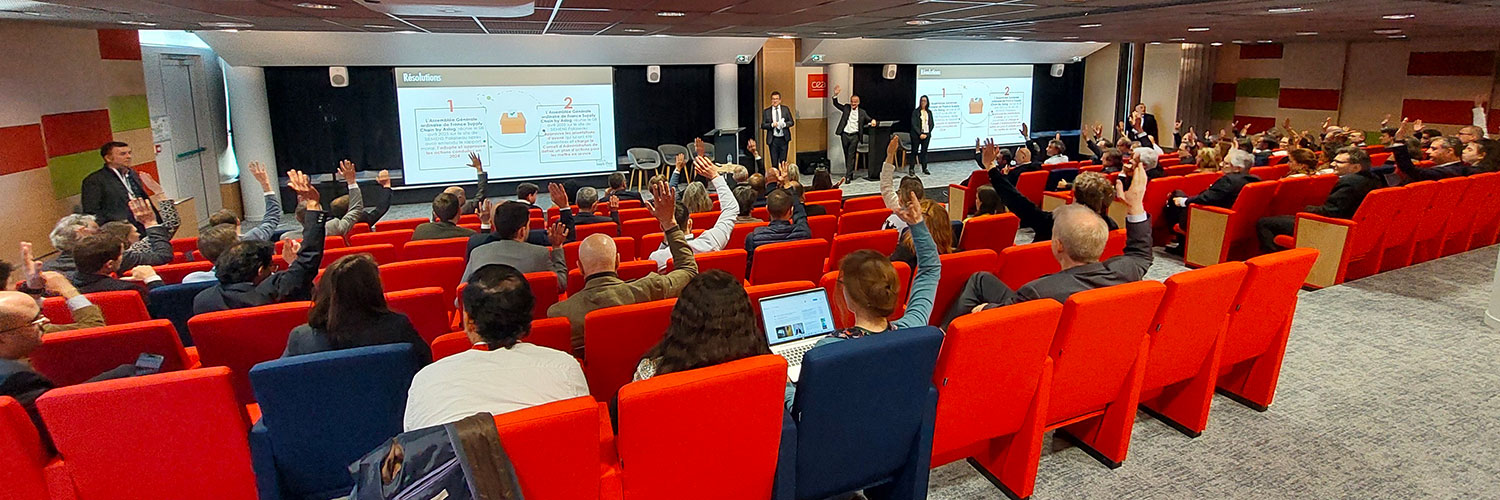
At the Extraordinary General Meeting, a major amendment to the bylaws was proposed concerning the association's governance. The presidency will remain unchanged in terms of required qualifications: the president must be a shipper, responsible for an international supply chain. However, a major innovation has been introduced, with the possibility of appointing a co-chairman. The co-chairman, who may be retired or have a reduced activity, must also come from College 1 shipper and have managed an international supply chain over the last five years. This measure is designed to relieve the Chairman of the many requests to attend meetings, and to distribute the workload more evenly.

Renewed governance, as committed as ever

New members and renewed mandates on the France Supply Chain Board of Directors

New members and renewed mandates on the France Supply Chain Board of Directors

The Board of Directors (BOD) of an association plays a crucial role in the governance and management of the organization. It has a versatile and essential role, ranging from strategic definition to operational management, including representation and supervision. It is the guarantor of the association's smooth running and long-term viability, in direct contact with the team of permanent staff and active members.

At France Supply Chain, the Board of Directors takes the form of a "comité des sages" or scientific committee. It is made up of a diversity of profiles and complementary expertise: manufacturers, distributors, logistics service providers, academics, researchers, solution providers, real estate players, etc.

Following a vote at the Annual General Meeting, the Board will be given new responsibilities, in particular the management of membership fees, previously the responsibility of the Annual General Meeting. This reform will allow greater flexibility, as the Board meets four times a year, unlike the General Meeting, which only meets once a year. This reorganization is essential to keep pace with the association's growth, and requires greater commitment from its members. It is crucial that directors are available and involved to ensure effective and proactive management.

Discover all directors

An association on the move for ever more IMP'ACT!

The Association steps up a gear

The past year has been marked by a significant transformation of France Supply Chain, aimed at increasing its impact. The association has forged several strategic partnerships, such asAlliance for Logistics Innovation through Collaboration in Europe (ALICE) and Movin'On, giving it a European dimension and strengthening its ability to build powerful coalitions.

Other collaborations withADEME and the Institut du Développement Durable et des Relations Internationales (IDDRI) will add scientific depth, enriching the association's roadmaps and making its deliverables more robust. These partnerships are the fruit of growing recognition of the quality of France Supply Chain's productions, which have seen the number of publications double compared to the previous year, with almost one per month.

The key figure

1 production/month

in 2024

Lab Supply Chain 4 Good becomes an endowment fund.

A newcomer: the SUPPLY CHAIN 4 GOOD Endowment Fund

To support this growth, Lab Supply Chain 4 Good is transforming itself into an endowment fund. This change will give the association access to both financial and skills sponsorship. Skills sponsorship is particularly crucial to our ability to produce faster and, above all, to enhance the quality of our deliverables.

This endowment represents a major step forward, providing the resources needed to continue innovating and responding to the complex challenges of the Supply Chain, while strengthening the association's ability to influence and transform the sector towards frugal and desirable Supply Chains.

Human Resources are always at the heart of our work

Focus on inclusion: we have launched a discussion group on the inclusion of disabled and senior employees. The aim is to hold a Masterclass at the end of the year, with contributions from experts, specialist organizations and witnesses, in order to share best practices and answer questions.

Loïc Lassagne HR manager SC Renault and Madeleine HR manager Chep

Loïc Lassagne, HR manager SC Renault and Madeleine, HR manager Chep

LAB Jeunes renews itself

The new organization of Lab Jeunes aims to ensure its durability and impact by structuring it into centers of expertise, and by strengthening the support provided by PMOs/permanent members/former Lab Jeunes members who are now active.

A strong message: "Young people are ready to take risks, assume responsibility, and carry out projects with courage and ambition. However, this dynamic cannot be one-sided: the courage of young people must be supported by the commitment of mentors."

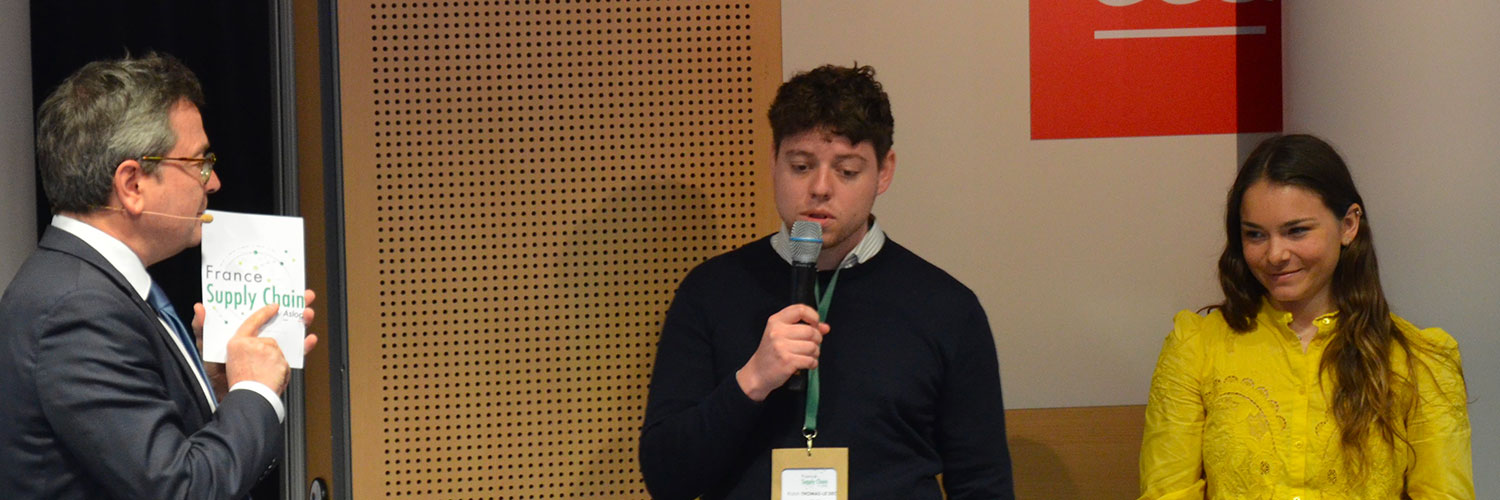
Emma, Demand Planner - Consumer Product Division L'Oréal and Robin Thomas le Déoré Consultant Operations & Performance Strategy KPMG

Emma, Demand Planner - Consumer Product Division L'Oréal and Robin Thomas le Déoré Consultant Operations & Performance Strategy KPMG

What about ETIs and SMEs?

  • Photo by Myriam Bizouard

    Myriam Bizouard

    Supply chain director

    Carniato Logo

  • Emmanuel Gioux

    Supplier Performance Development Program Director

    L'Oréal logo

  • François Peignes

    ex Vice President Supply Chain Operations

What better way to understand what makes the eSCalade difference than through the experience of a participant in the made-in-France Supply Chain coaching program? Read Myriam Bizouard's account of the site visits, the meetings with members and other participants, and the support provided by a mentor.

What did you expect from eSCalade? And who did you find? A participant's testimonial

Horizon 2040: The Climate Challenge for Supply Chains

In this case: 30 artifacts brought back from the future, for 6 immersive scenarios!

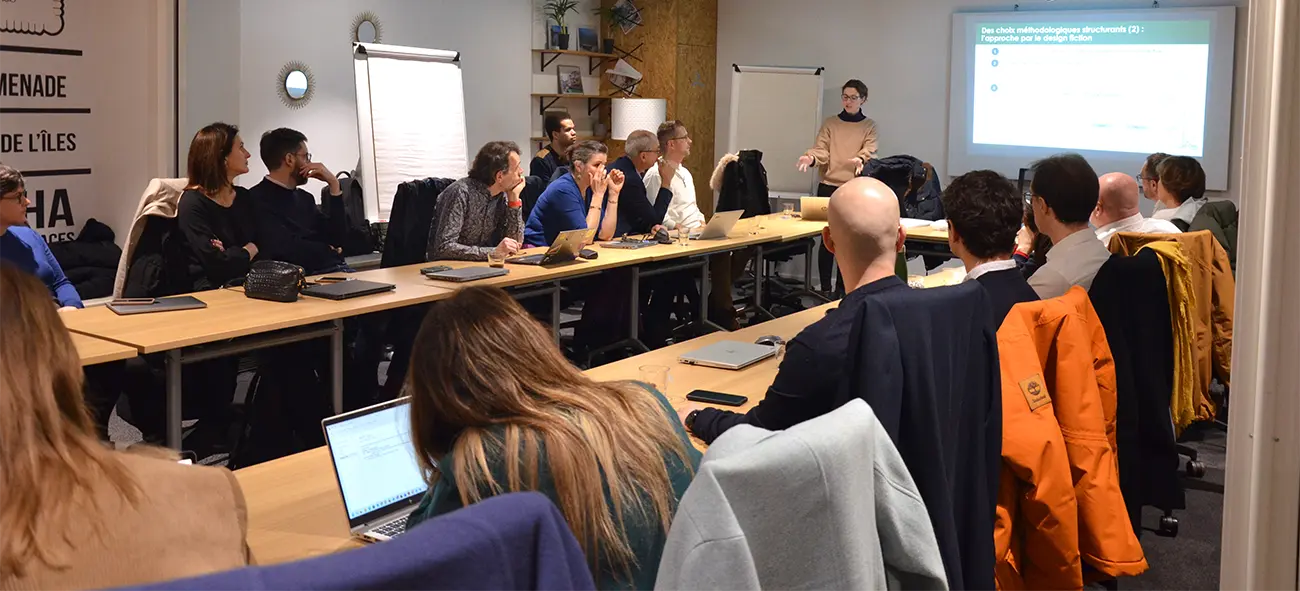
With design fiction, participants are immersed in a future that is contextualized, and which can be contextualized to your own sectors and companies. This workshop can be used as part of a collective awakening process, to improve your preparedness for climate risks, or to feed the supply chain strategic plan on risk and resilience aspects.
The tool is there, it's usable, it's at your disposal, it's yours!

Ask for it

Jonathan LECLUZE, Manager Citwell, Alexandra SAMYN, Director of Circular Economy Operations MANUTAN, Aurélie Delemarle, Principal - Argon & Co and Morgan Dizier, Supply Chain Transformation Manager at Louis Vuitton

Jonathan LECLUZE, Manager Citwell, Alexandra SAMYN, Director of Circular Economy Operations MANUTAN, Aurélie Delemarle, Principal - Argon & Co and Morgan Dizier, Supply Chain Transformation Manager at Louis Vuitton

Live my life as a squad

A strong message for the Digital & Techno LAB: no AI without data! With this in mind, during the morning, members presented how their work enables companies to gain in digital maturity, with a focus on data (quality, governance), which has been accentuated in 2025. The CO2 calculation and data component is also fully linked to the pillars of digital maturity and data! Here, the aim is to use data to limit and then reduce the supply chain's carbon footprint.

Sébastien Marie, Partner, BearingPoint, Florence Mazaud, Director, Decarbonation, Sightness, Arnaud de Moissac, President, DCbrain and Jérôme Bour, Partner, Newton Vaureal Consulting.

Sébastien Marie, Partner, BearingPoint, Florence Mazaud, Director, Decarbonation, Sightness, Arnaud de Moissac, President, DCbrain and Jérôme Bour, Partner, Newton Vaureal Consulting.

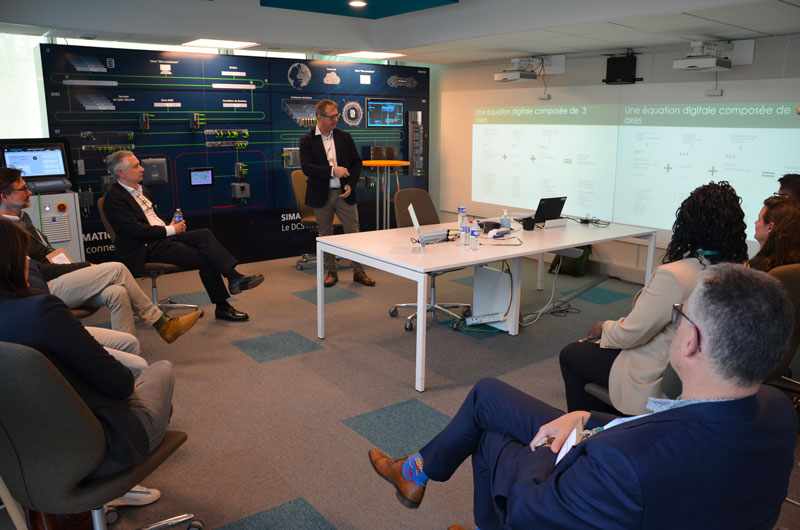
In the afternoon, the program was dedicated to digital transformations, with a learning expedition led by members at the Nano-innov center, and hosted by SIEMENS:

  • A plenary session on start-ups;

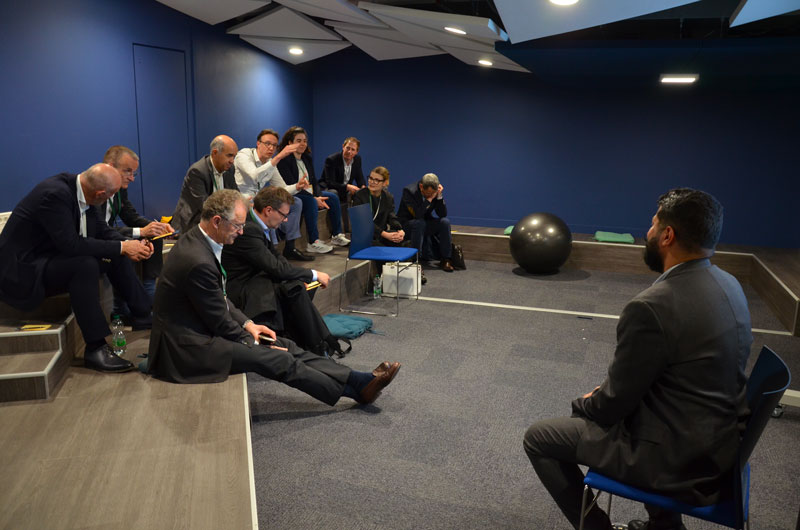
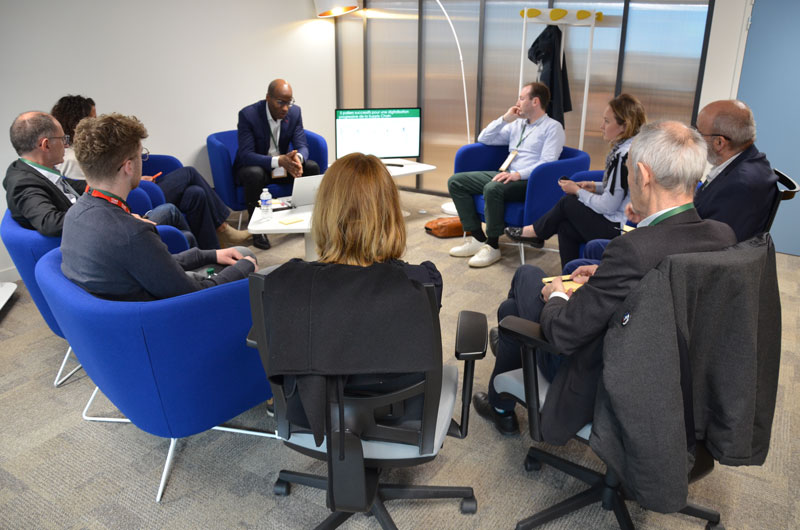
  • 2 immersive squad sessions on 4 themes:

  • Maturity grid - Gilles Verdier and Sébastien Marie

  • Data governance - Saad Kadioui and Sébastien Marie

  • Digital twin - Thibaud Maurin and Arnaud De Moissac

  • DataCO2 - Florence Mazaud and Marc Ortlieb

  • discover the IA FSC demonstrator currently being deployed thanks to our members!

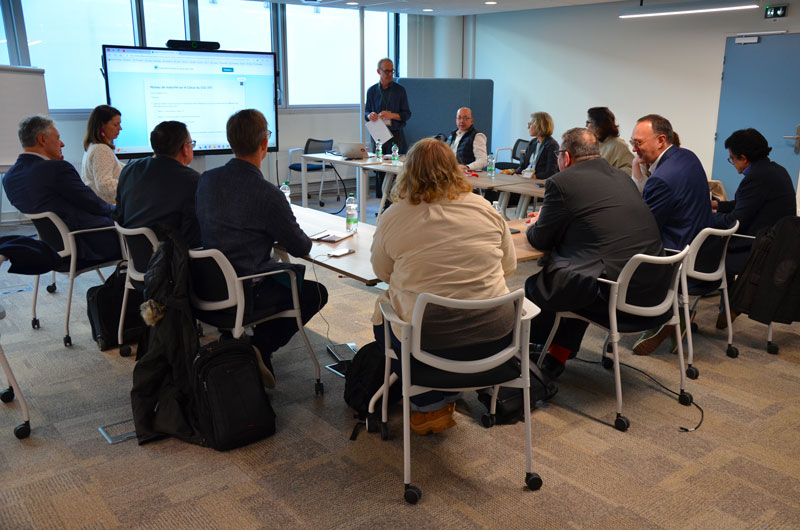
  • supply-chain-day-2025-01

  • supply-chain-day-2025-02

  • supply-chain-day-2025-03

  • supply-chain-day-2025-04

Today, we are at a turning point. What we have already achieved is immense. But what lies ahead is even greater. Every action counts. Every commitment, every transformation brings us closer to our goal. Together, we are building a more efficient, more resilient, more humane model.

"Darkness cannot drive out darkness; only light can do that."

Dr. Martin Luther King

NEWS

See all the news


EVENTS

PRESS

Read more

France Supply Chain by Aslog and ADEME commit to a frugal supply chain to meet 2050 climate challenges

Focus on circular supply chains and "slow logistics" to meet climate challenges and ADEME's "Transition(s) 2050" scenarios.

Paris, Salon International du Transport et de Logistique 01/04/2025 - France Supply Chain by Aslog and ADEME announce the signing of a joint letter of intent to accelerate the ecological transition of logistics and supply chains. This initiative aims to fully integrate the concepts of "circular supply chain" and "slow logistics" into ADEME's updated "Transition(s) 2050" scenarios, in order to build more sober, resilient and value-creating logistics models.

Opening quotation marks

"This initiative embodies a shared ambition: to reinvent supply chains to build a sustainable future, aligned with the goals of carbon neutrality and material sobriety. Together, France Supply Chain by Aslog and ADEME wish to demonstrate that the ecological transition of supply chains is not only possible, but also a source of economic opportunity and innovation." Yann de Feraudy, President of France Supply Chain

Closing quotation marks

Logistics and supply chains play an essential role in the French, European and global economies. However, they are also responsible for significant environmental impacts, particularly in terms of greenhouse gas (GHG) emissions and consumption of natural resources. Faced with the challenges of climate change and the increasing scarcity of raw materials, it is becoming imperative to adapt supply chains to make them more sober, value-creating and resilient.

France Supply Chain by Aslog and ADEME commit to a frugal supply chain to meet 2050 climate challenges

As part of "Transition(s) 2050", ADEME has identified two key objectives: to halve the consumption of virgin raw materials from 20 tonnes to 10 tonnes per capita by 2050, and to achieve carbon neutrality by 2050. However, the necessary transformation of logistics and supply chains remains an underexplored challenge. Without a structural adaptation of the supply chain, trajectories towards carbon neutrality risk being slowed down, leading to inefficiencies and blockages throughout the socio-economic system.

Concrete objectives and a shared vision

Faced with these challenges, ADEME and France Supply Chain by Aslog wish to work together to fully integrate the transformation of logistics and supply chains into the "Transition(s) 2050" prospective scenarios currently being updated, based on the "slow logistics / slow supply chain"and "circular supply chain" concepts promoted by France Supply Chain by Aslog. Ultimately, this collaboration will help to maximize the reduction of environmental impacts(significant reduction in material and carbon footprints) and improve economic performance, while strengthening the resilience of organizations.

The results of this work are intended to provide strategic indicators and recommendations for public action. The aim is to provide public and private decision-makers with forward-looking tools and concrete feedback to guide their decisions, while reinforcing ADEME's forward-looking scenarios. Subsequently, these elements will enable innovative solutions to emerge for more sustainable supply chains, experiment with resilient and optimized logistical and organizational models, and support economic players in their ecological transition.

Opening quotation marks

"This collaboration reflects an ambitious vision for building supply chains that are consistent with climate and environmental challenges, while creating new economic and social opportunities." says Antoine Dupont, Deputy Head of the Transport & Mobility Department, ADEME.

Closing quotation marks

About France Supply Chain by Aslog

For more than 50 years, the France Supply Chain association has been pursuing its mission of bringing together companies, business schools and research organizations to innovate, share best practices and provide concrete solutions to the challenges of today and tomorrow.

Think and Do Tank, with over 450 member companies and schools, 800 active members involved in our projects, and an audience of 7,000 players, we promote exchange and collective action for a more robust and responsible Supply Chain. As of January 2025, the association' s public-interest activities will be carried out by the SUPPLY CHAIN 4 GOOD endowment fund, starting with projects to decarbonize and sustain our Supply Chains.

Press contact: Marie-Laure Laville - MLD Consulting - Tel: +33 (0)6 18 14 85 36 - mllaville@mldconsulting.fr

France Supply Chain warns of the importance of the Circular Supply Chain and proposes the www.supplychaincirculaire.org platform to support this transformation.

France Supply Chain, via its general interest fund, recently called on the members of the Conseil National de l'Économie Circulaire (CNEC) and members of parliament involved in the circular economy. With this in mind, the association announces the launch of the www.supplychaincirculaire.org platform, a reference site dedicated to the Circular Supply Chain. This tool centralizes publications, initiatives and best practices to support companies and players in the circular economy in adapting their supply chains to the new ecological and economic challenges.

France Supply Chain warns of the importance of the Circular Supply Chain

The www.supplychaincirculaire.org platform has thus become a central tool in this process, a collaborative hub enabling everyone to discover tools, training, feedback and practical solutions for a more responsible, resilient Supply Chain adapted to environmental challenges.

France Supply Chain and its SUPPLY CHAIN 4 GOOD endowment fund recently alerted the members of the Conseil National de l'Économie Circulaire (CNEC) (National Council for the Circular Economy) and the members of parliament involved in these issues. A key observation: without a Supply Chain designed for circularity, the circular economy will not be able to reach its full potential.

Opening quotation marks

"In a letter to decision-makers, we stressed the importance of flow management in the transition from a linear economy to a high-performance circular economy. The NF ISO 59004 standard defines 13 structuring actions (refuse, reduce, reuse, repair, recycle, etc.), requiring rigorous orchestration of physical, informational and financial flows." Yann de Feraudy, President of France Supply Chain and of the SUPPLY CHAIN 4 GOOD public interest fund

Closing quotation marks

A call to action: the need for collective transformation France Supply Chain invites public and private players to integrate this expertise into their strategies to ensure an effective transformation towards a truly circular economy.


About France Supply Chain by Aslog

For more than 50 years, the France Supply Chain association has been pursuing its mission of bringing together companies, business schools and research organizations to innovate, share best practices and provide concrete solutions to the challenges of today and tomorrow.

Think and Do Tank, with over 450 member companies and schools, 800 active members involved in our projects, and an audience of 7,000 players, we promote exchange and collective action for a more robust and responsible Supply Chain. As of January 2025, the association' s public-interest activities will be carried out by the SUPPLY CHAIN 4 GOOD endowment fund, starting with projects to decarbonize and sustain our Supply Chains.

Press contact: Marie-Laure Laville - MLD Consulting - Tel: +33 (0)6 18 14 85 36 - mllaville@mldconsulting.fr

Launch of the Supply Chain Resilience Observatory: global vision, concrete actions

Yann de Feraudy

I think there's a kind of myth behind resilience, and I think that when we got into the subject, we were actually looking for a score, we were looking for a champion, we were looking for the best, and so on. And I remember that we had a few sessions with the COPIL where it was quite tense because, ultimately, what we were looking for were best practices in order to highlight and share them.

With these words from Yann de Feraudy, President of France Supply Chain, we opened the evening's presentation of our White Paper: Supply Chain Resilience.

With this France Supply Chain/Sopra Steria Next co-publication, what we're interested in is the dynamic that companies are becoming part of. We also wanted to establish indicators of this resilience, because things that are measured are managed! That's why we've decided to build on this initial study to create an observatory of corporate resilience, the first of its kind, with the aim of :

  • Supply chain risk management

    Take regular stock of the situation, using an "index" of business resilience

  • Supply chain risk management

    Identify best practices

  • Supply chain risk management

    Offer feedback and expert advice

  • Supply chain risk management

    Provide food for thought with a compendium of outstanding studies and analyses

  • Supply chain risk management

    Share this with the supply chain community

The results show that their average supply chain maturity score will be 2.59 in 2025.

Assessing company maturity

The study is based on well-known supply chain benchmarks, examining planning, purchasing, production and distribution functions, as well as surrounding functions such as information systems and sustainability. "Companies are assessed on a maturity scale of 1 to 4, where 4 represents a competitive advantage. Resilience starts at maturity 3," explains Philippe Armandon, Director of Sopra Steria Next's Industrial Operations and Supply Chain Excellence practice, and leader of the study. Of the 39 companies that responded to the questionnaire, only 26 completed all the maturity questions. This dual approach enables us to obtain a global sample of organizational practices, and a smaller sample for detailed maturity analysis.

The results show that the average maturity score is 2.59, with only 6 companies reaching level 3, the threshold at which resilience becomes a strategic lever. The most advanced companies in this field regularly address supply chain issues at COMEX level, demonstrating the importance of integrated governance. As a link to the rest of this article, it is interesting to note that only 10% of companies have visibility over several levels of their supply chain, with complexity increasing significantly with lower-ranking suppliers.

Risk versus resilience

Before getting down to the nitty-gritty of the discussions, participants wanted to go back over the definition of these 2 terms. "Risk and resilience are notions that are a little different; there's an amalgam between the notions of risk and resilience. The essential distinction lies in the approach taken to events. When it comes to risk, the analysis focuses primarily on the events themselves and the vulnerability they may engender, whether in terms of climate risks, cybersecurity or other threats. This perspective emphasizes the identification and assessment of immediate threats likely to disrupt the business.

Resilience, on the other hand, is based on the assessment and strengthening of long-term capabilities. This approach includes in-depth consideration of capabilities in the broadest sense, encompassing planning, production, supply, distribution and communication.

Photo by Walid Klibi

These two notions are complementary. You have to start with risk analysis, because it provides the basis of vulnerability on which a layer of resilience can be added. And if we want to be truly resilient, there needs to be an alignment between vulnerability and the level of resilience invested.

 explains Walid Kibli, Research Professor at ISLI KEDGE, associated with MIT. This link ensures proactive, adaptable management in the face of hazards.

Assessing company maturity

Renault's risk strategy

Thierry Blein, GM Supply Chain Risks and Business Continuity Plan, began by describing the complexity of Renault's supply chain. Production reaches 15,000 vehicles a day, with each car made up of around 2,000 parts from 4,000 first-tier suppliers. In depth, Renault works with almost 60,000 suppliers. Downstream, 2,000 trucks or ships transport vehicles daily to 5,000 sales outlets in 130 countries. This global, interconnected organization makes exposure to disruptions inevitable: "in 2024, in 7 months, we suffered 10 floods that impacted operations".

To strengthen its resilience, the Group has taken some structuring strategic decisions in recent years, notably by attaching the Supply Chain function to the CEO and investing in digitalization. This transformation has enabled us to decompartmentalize data and obtain a global view of supplier risks. Rather than focusing on the probability of risks occurring, Renault assesses their potential impact on the business. A cross-functional team, with a dedicated budget, analyzes vulnerabilities and anticipates crises by monitoring critical suppliers.

Renault has also set up a single risk management repository accessible to all stakeholders. This approach makes it possible to identify suppliers with multiple risk factors, and to assess the potential impact on production in the event of disruption. This methodology, focused on business impact, reveals vulnerabilities invisible with traditional probability-based approaches.

The complex subject of investing in resilience

"When you talk to people in the supply chain, they know what to do: they know where to invest, where to put flexibility, or strategic stocks. But there's a real difficulty in justifying these investments to top management." This observation highlights a fundamental paradox: investing in resilience means allocating resources to prevent events that we hope will never happen. In this context, conventional financial methods, such as return on investment (ROI) or net present value (NPV) analysis, often prove inadequate.

An alternative approach is to incorporate option theory, already used in technology sectors such as HP and Boeing. This theoretical framework introduces the principle of "the right and not the duty", offering the possibility of acting without immediate commitment. This method enhances the flexibility of decisions by taking future uncertainties into account. Adopting a logic of options enables companies to take preparatory measures (reservations, pre-actions) that facilitate a rapid response to crises when they occur. This approach reflects dynamic, adaptive risk management.

Technology and AI take center stage

Technology and AI take center stage

The use of digital technologies and artificial intelligence is essential to ensure accurate monitoring of supplier risks and early detection of weak signals, "A massive investment over 3 years has been made to digitize and de-risk our most impacting suppliers". Thanks to digital tools, Renault is able to continuously monitor its entire supply chain and detect the first signs of fragility among its suppliers. For example, AI-based risk management solutions can identify social tensions, environmental problems or financial difficulties that could affect suppliers.

Renault relies on two pillars to improve anticipation: visibility and agility. Visibility is based on real-time knowledge of logistics flows, thanks in particular to GPS tracking of trucks and ships. This constant monitoring makes it possible to quickly identify any climatic or logistical risks, and to adapt production forecasts according to recalculated ETAs (Estimated Time of Arrival) versus factory safety stocks. Agility, on the other hand, consists of developing pre-configured scenarios for dealing with disruptions, such as the use of interchangeable parts or alternative suppliers. These scenarios are centralized in a "Control Tower", facilitating real-time operational decision-making.

For further reflection

  • The importance of keeping one's feet on the ground and shortening the decision-making chain

    Direct coordination of Supply Chain crises is essential to maintain a concrete understanding of risks. Being in the field enables us to quickly identify malfunctions and assess whether better risk mapping would have enabled us to anticipate them. This dual role, both operational and strategic, promotes faster, more effective corrective loops.
  • The importance of simplifying the supply chain to improve resilience

    Multiplying suppliers to diversify sources of supply may seem an obvious solution, but it complicates operational management considerably. Without appropriate digital tools, it becomes difficult to locate suppliers precisely and detect signs of failure. Warehouse automation and mechanization also add complexity. Targeted simplification, supported by monitoring and analysis technologies, is essential to ensure lasting resilience, while avoiding the creation of overly cumbersome structures that are difficult to manage.
NEWS

See all the news


EVENTS

PRESS
To go further

Read more

France Supply Chain and Sopra Steria Next present a study on supply chain resilience and transformation: current situation and outlook

Paris, xxx 2025 - In a world faced with mounting crises, business resilience has become a strategic issue. France Supply Chain by Aslog and Sopra Steria Next, Sopra Steria's consulting practice, today publish an in-depth study that identifies the key determinants of this resilience, particularly in operations and the supply chain. The aim of the study is to help companies understand how to structurally prepare for future shocks.

Among its key lessons:

A lack of resilience in the face of crises - Overall company maturity index: 2.59 out of 4. Only 23% are at an advanced level, and none at the maximum.

Lack of supply chain visibility - Only 10% of companies have a clear view of several levels of their supply chain, exposing the rest to increased risks.


Ecological transition still too timid - 42% of companies measure their carbon footprint after the fact, but only 27% integrate this data into their operational decisions.

Resilience investments still too reactive - After every crisis, companies invest massively, but scale back their efforts once the emergency has passed, following a boom-and-bust pattern.

Supply Chain, a strategic lever still under-exploited - 42% of companies include it in their strategic planning, but 33% keep it at an intermediate hierarchical level.

"The COVID-19 crisis accelerated senior management's awareness of the importance of resilience and proactive risk management. Some companies have set up dedicated governance structures, including multidisciplinary teams (Purchasing, Supply Chain, Corporate Risk, etc.)." Declares Yann de Feraudy, President of France Supply Chain.


Growing awareness of the role of the supply chain in corporate strategy 

42% of companies systematically include the supply chain in their strategic planning, and 21% do so regularly. Moreover, 42% have positioned it within the Executive Committee (Comex), testifying to its strategic importance. However, 33% keep it at an intermediate level (N-3/N-2 of the Managing Director), while 15% only include it in the Comex on an ad hoc basis.

Figure 1- Companies that deal with the supply chain regularly and at a high level in the organization have a higher resilience index than others.


Progress in resilience, but more needs to be done

2.59 on a scale of 4: this is the overall maturity index of the companies surveyed. Very few companies reached level 3 (just six, or 23%), the first level at which a supply chain can be considered resilient. None reach the highest average level. The five most resilient companies in the panel score close to 3.3.

When asked about actions taken to anticipate future crises, 42% of companies have already initiated localized changes or investments, while 21% have undertaken more far-reaching transformations. However, 27% have limited themselves to marginal adaptations, underlining the need to reinforce resilience strategies.


Philippe Armandon, Director of the Operations and Supply Chain Excellence practice, Sopra Steria Next: "In a world where instability has become the norm, the impact on Supply Chains is considerable - and will only grow. Our study reveals that most companies are still in transition: they perceive resilience primarily as short-term risk management, whereas it should be seen as a sustainable strategic capability. It is essential to evolve towards a Supply Chain capable of delivering on its customer promise in all circumstances. This transformation, though complex, is a major opportunity for those who can commit to it now.


Lack of visibility on suppliers and collaboration still in need of improvement

10% of companies have high visibility on several levels of the supply chain 41% have average visibility on first-tier suppliers. This situation exposes companies to the vagaries of supply and does not enable them to anticipate potential problems. 45% of companies rely fairly traditionally on formal contracts (SLAs). Only 28% prefer to collaborate on the basis of a high level of trust, beyond the contract, in other words, they know "who they can count on" in the event of a problem.

When it comes to purchasing and procurement, 59% of respondents consider that less than half of their critical supplies are secured with a business continuity plan (BCP). While 58% say they are investing in corrective measures, considerable work remains to be done to ensure optimum resilience of the upstream chain.


Distribution largely outsourced, with a predominance of 2PL and 3PL models 

The majority of companies outsource distribution to specialized service providers, using the 2PL (37%) or 3PL (33%) model. Only 22% of companies consider their distribution scheme to be flexible within a short timeframe, while 45% believe their scheme to be more rigid and complex to maneuver. In this area, where collaboration and information sharing are key, 30% of companies consider that they collaborate with their service providers with a high level of trust.


Factoring environmental criteria into operational decisions 

42% of companies adopt an a posteriori reporting approach to their environmental footprint, measuring the impact of their activities without systematically integrating it upstream into decision-making. Only 27% integrate environmental data into their decision-making processes, while 23% are in the early stages of doing so, limiting themselves to a limited scope.

This finding highlights the gap between strategic intent and operational implementation, particularly in the distribution function, where environmental impact still takes second place to economic considerations. This predominance of costs is holding back the adoption of sustainable logistics solutions, underlining the need for a transition to more responsible practices.


Information and Communication Systems: a tool for resilience 

IS and the ability to communicate with its ecosystem play a central role in supply chain resilience. Yet only 12% of companies have so-called predictive and prescriptive information systems. The majority (58%) are still at a low or medium level of maturity in terms of their ability to communicate with their ecosystem and capture weak, upstream or downstream signals. Data exchanges via APIs and platforms are still in the minority, and cybersecurity is still a weak point, particularly among SMEs, which are often the weakest link in the chain. IS is one of the areas in which companies are investing the most, mainly through the implementation of APS, the reinforcement of security protocols with suppliers, and the integration of Business Intelligence (BI) solutions.


Figure 2- Preferred areas for resilience-related actions and investments - "localized actions and investments" + "planned structuring" responses added up and averaged

Expert vision

Mr. Walid Klibi, Professor of Supply Chain at Kedge-ISLI, and affiliated researcher at MIT-CTL : "Companies often react reactively to the investments required for resilience, adopting an approach known as 'boom-and-bust'. After a disruption, they tend to commit large sums to protect their operations and maintain business continuity, but these investments quickly diminish once the impact of the crisis has subsided. A new approach to funding resilience investments could be to integrate real options pricing into companies' budgeting processes. Rather than treating these expenses as reactive one-off costs following a crisis, companies could allocate funds proactively and on an ongoing basis by integrating them into employee capital, working capital and operating budgets. This method would allow investments to be optimized according to their impact on business continuity, and not just on the probability of a specific risk."


About France Supply Chain by Aslog

For more than 50 years, the France Supply Chain association has been pursuing its mission of bringing together companies, business schools and research organizations to innovate, share best practices and provide concrete solutions to the challenges of today and tomorrow.

Think and Do Tank, with over 450 member companies and schools, 800 active members involved in our projects, and an audience of 7,000 players, we promote exchange and collective action for a more robust and responsible Supply Chain. As of January 2025, the association' s public-interest activities will be carried out by the SUPPLY CHAIN 4 GOOD endowment fund, starting with projects to decarbonize and sustain our Supply Chains.

Press contact: Marie-Laure Laville - MLD Consulting - Tel: +33 (0)6 18 14 85 36 - mllaville@mldconsulting.fr

About Sopra Steria Next - Driving meaningful impact

With more than 4,000 consultants in 30 offices across Europe, Sopra Steria Next, the Sopra Steria group's management consulting and digital transformation firm, works every day to design and deploy the projects and transformations that will shape the future. In a world in the throes of revolution - technological, ecological - Sopra Steria Next combines business and technology to create value beyond the purely economic, by giving meaning to data, innovating thanks to artificial intelligence and engaging all stakeholders at every stage. Thanks to this vision and its expertise, Sopra Steria Next supports its customers in prioritizing their actions, for a concrete and sustainable result, for them, their employees, citizens and Society as a whole. It's about giving tangible impetus to what really counts, what's essential.

* Let's focus on the essentials, for a positive impact.

A circular supply chain at scale: Retex from Manutan and Orange

Webinar speakers :

  • Photo by Alexandra SAMYN

    Alexandra SAMYN

    Director of Circular Economy Operations

    MANUTAN

  • Photo by Jean-Claude CAQUELOT

    Jean-Claude CAQUELOT

    Supply Chain Performance and Projects Director

    ORANGE SA

  • Anaïs LEBLANC

    Executive Partner

    CITWELL 

Implementing a circular Supply Chain on an industrial scale is a major challenge for companies. In a fascinating webinar, Manutan and Orange shared their experience of this transformation, which relies among other things on the right organization, optimized logistics sizing and solid partnerships. A structured approach to sourcing and the adoption of traceability tools are also key success factors. Let's dive into the world of refurbished goods with these two players committed to the circular economy.

How does the circular economy team fit in with a traditional, well-established business?

The circular economy is based on a different organization from the traditional supply chain. Initially, a dedicated team is needed to initiate this transition and test new practices without disrupting existing operations. The aim, however, is to gradually integrate these innovations into the traditional organization. To achieve this, equipment is centralized at national level to optimize skills management and control risks.

"The target is to be absorbed by the "classic" orga, but first you have to innovate on your own."

Alexandra Samyn

Over time, once they have reached maturity, circular processes should become a natural part of the supply chain, guaranteeing their lasting, effective adoption.

Sourcing is a key success factor for refurbished products

The Circular Economy has turned the S&OP approach on its head by integrating the constraints of access to product sources, as well as anticipating production volumes and capacities.

Manutan has developed a structured approach known as the road map of reconditioning, in order to guarantee quality sourcing, but make no mistake, a high-potential source is not necessarily furniture in very good condition. Value recovery potential is one of the 4 decision-making axes of the road map, and the decision is made on the basis of information provided by the Group's sourcing manager. This dedicated person will check potential collections in the field, in order to select sources as far upstream as possible.

Strong collaboration with various players (eco-organizations, brokers, customers) is also essential to ensure the sustainability of supplies. The aim is to access homogeneous batches in large quantities.

Logistics network sizing and multi-locality

Orange's logistics strategy is based on a hybrid organization:

  • Photo by Alexandra SAMYN

    2/3 of stock is kept locally to simplify logistics and sort equipment by condition.

  • A centralized reconditioning hub in France enables precise diagnosis of used equipment.

  • Multi-locality is managed at national level to guarantee centralized expertise and optimize logistics.

This approach optimizes flow management while guaranteeing efficient reconditioning. The "test & learn" approach is essential for adjusting these processes in line with feedback from the field.

Partnership and value sharing in the circular economy

Orange has set up a long-term partnership model based on several pillars:

  • Transparent pricing.

  • A feedback loop for continuous process improvement.

  • Strategic outsourcing to compensate for the lack of in-house skills.

  • A "pay-per-use" approach that enables investment in innovation and research.

This sharing of value enables us to build lasting relationships that benefit all our stakeholders.

Implementing a circular supply chain requires high-performance tools, particularly in terms of traceability and flow management. Rigorous inventory management and tracking of equipment by serial number are essential to ensure quality and profitability. Digitizing the circular supply chain is therefore a key factor in scaling up.

To find out more and discover the details of these strategies, the replay of the event is available to members.

TO watch the replay

ACTUALITu00c9S

See all the news


u00c9Vu00c8NEMENTS

PRESS
To go further
  • Circular supply chain: what can we learn from the first experiments?

    Methodological guide to implementation and management

    To know more about it

  • Circular Supply Chain: 1rs retex of the 4 workshops

    Circular Supply Chain: 1rs retex of the 4 workshops

    As part of the transition to a circular economy, companies are seeking to transform their models to meet environmental and societal challenges.

    To know more about it

Read more