France Supply Chain, via its general interest fund, recently called on the members of the Conseil National de l'Économie Circulaire (CNEC) and members of parliament involved in the circular economy. With this in mind, the association announces the launch of the www.supplychaincirculaire.org platform, a reference site dedicated to the Circular Supply Chain. This tool centralizes publications, initiatives and best practices to support companies and players in the circular economy in adapting their supply chains to the new ecological and economic challenges.
A collaborative Hub to accelerate the transformation of a Circular Supply Chain
The www.supplychaincirculaire.org platform has thus become a central tool in this process, a collaborative hub enabling everyone to discover tools, training, feedback and practical solutions for a more responsible, resilient Supply Chain adapted to environmental challenges.
A circular supply chain at the heart of the ecological transition
France Supply Chain and its SUPPLY CHAIN 4 GOOD endowment fund recently alerted the members of the Conseil National de l'Économie Circulaire (CNEC) (National Council for the Circular Economy) and the members of parliament involved in these issues. A key observation: without a Supply Chain designed for circularity, the circular economy will not be able to reach its full potential.
"In a letter to decision-makers, we stressed the importance of flow management in the transition from a linear economy to a high-performance circular economy. The NF ISO 59004 standard defines 13 structuring actions (refuse, reduce, reuse, repair, recycle, etc.), requiring rigorous orchestration of physical, informational and financial flows." Yann de Feraudy, President of France Supply Chain and of the SUPPLY CHAIN 4 GOOD public interest fund
A call to action: the need for collective transformation France Supply Chain invites public and private players to integrate this expertise into their strategies to ensure an effective transformation towards a truly circular economy.
About France Supply Chain by Aslog
For more than 50 years, the France Supply Chain association has been pursuing its mission of bringing together companies, business schools and research organizations to innovate, share best practices and provide concrete solutions to the challenges of today and tomorrow.
Think and Do Tank, with over 450 member companies and schools, 800 active members involved in our projects, and an audience of 7,000 players, we promote exchange and collective action for a more robust and responsible Supply Chain. As of January 2025, the association' s public-interest activities will be carried out by the SUPPLY CHAIN 4 GOOD endowment fund, starting with projects to decarbonize and sustain our Supply Chains.
I think there's a kind of myth behind resilience, and I think that when we got into the subject, we were actually looking for a score, we were looking for a champion, we were looking for the best, and so on. And I remember that we had a few sessions with the COPIL where it was quite tense because, ultimately, what we were looking for were best practices in order to highlight and share them.
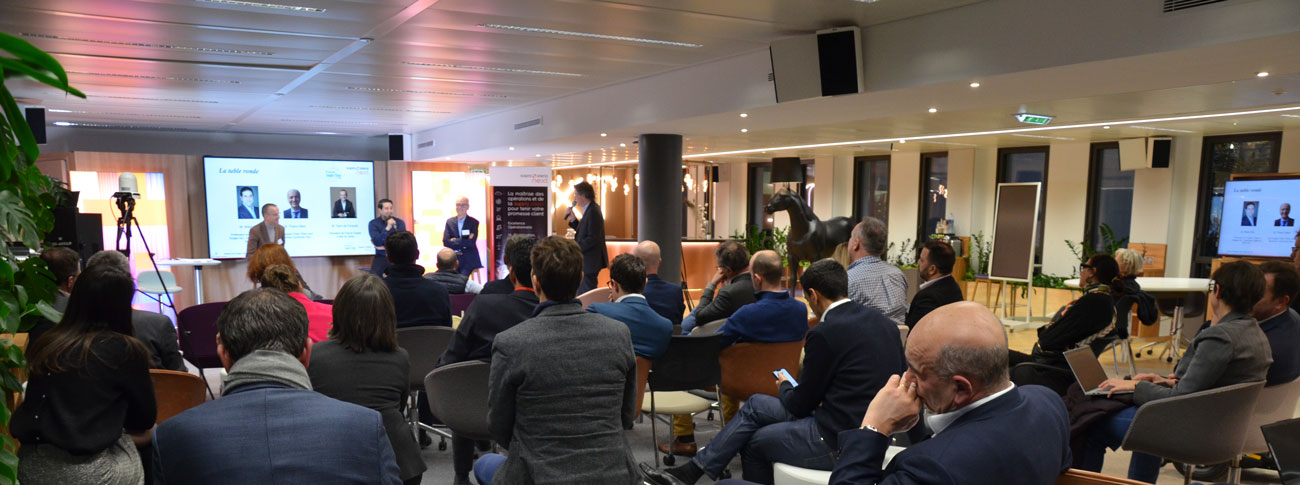
With these words from Yann de Feraudy, President of France Supply Chain, we opened the evening's presentation of our White Paper: Supply Chain Resilience.
With this France Supply Chain/Sopra Steria Next co-publication, what we're interested in is the dynamic that companies are becoming part of. We also wanted to establish indicators of this resilience, because things that are measured are managed! That's why we've decided to build on this initial study to create an observatory of corporate resilience, the first of its kind, with the aim of :
Take regular stock of the situation, using an "index" of business resilience
Identify best practices
Offer feedback and expert advice
Provide food for thought with a compendium of outstanding studies and analyses
Share this with the supply chain community
Assessing company maturity
The study is based on well-known supply chain benchmarks, examining planning, purchasing, production and distribution functions, as well as surrounding functions such as information systems and sustainability. "Companies are assessed on a maturity scale of 1 to 4, where 4 represents a competitive advantage. Resilience starts at maturity 3," explains Philippe Armandon, Director of Sopra Steria Next's Industrial Operations and Supply Chain Excellence practice, and leader of the study. Of the 39 companies that responded to the questionnaire, only 26 completed all the maturity questions. This dual approach enables us to obtain a global sample of organizational practices, and a smaller sample for detailed maturity analysis.
The results show that the average maturity score is 2.59, with only 6 companies reaching level 3, the threshold at which resilience becomes a strategic lever. The most advanced companies in this field regularly address supply chain issues at COMEX level, demonstrating the importance of integrated governance. As a link to the rest of this article, it is interesting to note that only 10% of companies have visibility over several levels of their supply chain, with complexity increasing significantly with lower-ranking suppliers.
Risk versus resilience
Before getting down to the nitty-gritty of the discussions, participants wanted to go back over the definition of these 2 terms. "Risk and resilience are notions that are a little different; there's an amalgam between the notions of risk and resilience. The essential distinction lies in the approach taken to events. When it comes to risk, the analysis focuses primarily on the events themselves and the vulnerability they may engender, whether in terms of climate risks, cybersecurity or other threats. This perspective emphasizes the identification and assessment of immediate threats likely to disrupt the business.
Resilience, on the other hand, is based on the assessment and strengthening of long-term capabilities. This approach includes in-depth consideration of capabilities in the broadest sense, encompassing planning, production, supply, distribution and communication.
These two notions are complementary. You have to start with risk analysis, because it provides the basis of vulnerability on which a layer of resilience can be added. And if we want to be truly resilient, there needs to be an alignment between vulnerability and the level of resilience invested.
explains Walid Kibli, Research Professor at ISLI KEDGE, associated with MIT. This link ensures proactive, adaptable management in the face of hazards.
Renault's risk strategy
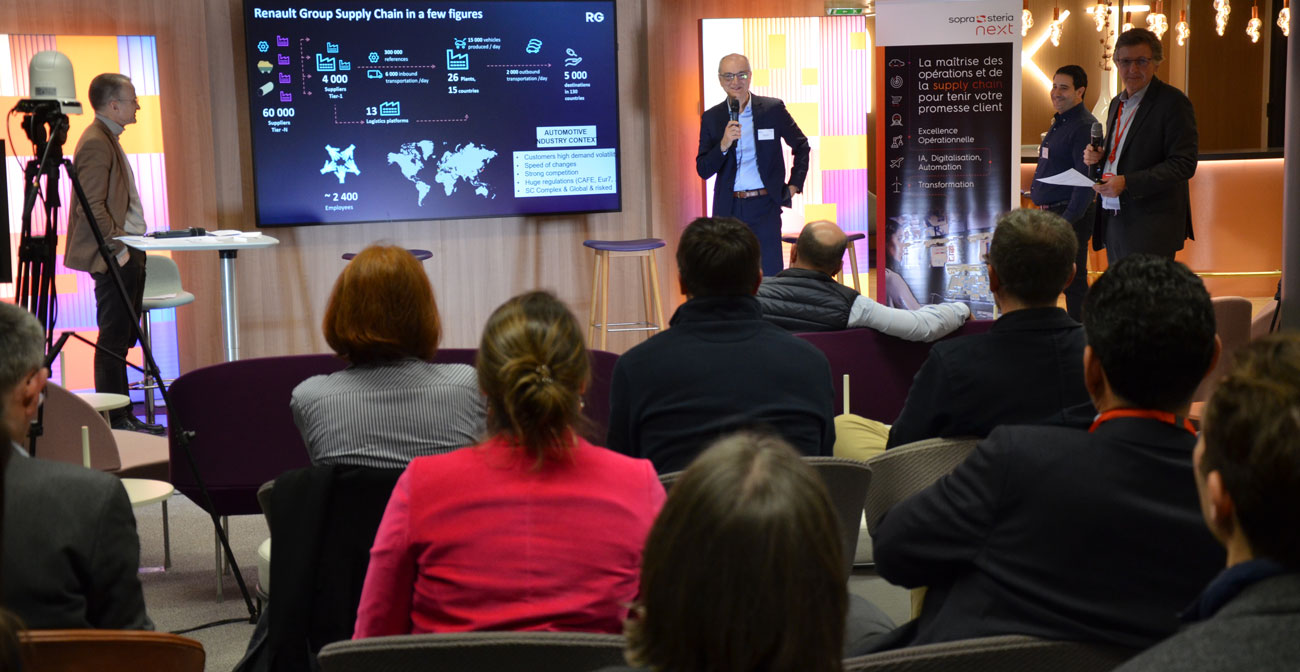
Thierry Blein, GM Supply Chain Risks and Business Continuity Plan, began by describing the complexity of Renault's supply chain. Production reaches 15,000 vehicles a day, with each car made up of around 2,000 parts from 4,000 first-tier suppliers. In depth, Renault works with almost 60,000 suppliers. Downstream, 2,000 trucks or ships transport vehicles daily to 5,000 sales outlets in 130 countries. This global, interconnected organization makes exposure to disruptions inevitable: "in 2024, in 7 months, we suffered 10 floods that impacted operations".
To strengthen its resilience, the Group has taken some structuring strategic decisions in recent years, notably by attaching the Supply Chain function to the CEO and investing in digitalization. This transformation has enabled us to decompartmentalize data and obtain a global view of supplier risks. Rather than focusing on the probability of risks occurring, Renault assesses their potential impact on the business. A cross-functional team, with a dedicated budget, analyzes vulnerabilities and anticipates crises by monitoring critical suppliers.
Renault has also set up a single risk management repository accessible to all stakeholders. This approach makes it possible to identify suppliers with multiple risk factors, and to assess the potential impact on production in the event of disruption. This methodology, focused on business impact, reveals vulnerabilities invisible with traditional probability-based approaches.
The complex subject of investing in resilience
"When you talk to people in the supply chain, they know what to do: they know where to invest, where to put flexibility, or strategic stocks. But there's a real difficulty in justifying these investments to top management." This observation highlights a fundamental paradox: investing in resilience means allocating resources to prevent events that we hope will never happen. In this context, conventional financial methods, such as return on investment (ROI) or net present value (NPV) analysis, often prove inadequate.
An alternative approach is to incorporate option theory, already used in technology sectors such as HP and Boeing. This theoretical framework introduces the principle of "the right and not the duty", offering the possibility of acting without immediate commitment. This method enhances the flexibility of decisions by taking future uncertainties into account. Adopting a logic of options enables companies to take preparatory measures (reservations, pre-actions) that facilitate a rapid response to crises when they occur. This approach reflects dynamic, adaptive risk management.
Technology and AI take center stage
The use of digital technologies and artificial intelligence is essential to ensure accurate monitoring of supplier risks and early detection of weak signals, "A massive investment over 3 years has been made to digitize and de-risk our most impacting suppliers". Thanks to digital tools, Renault is able to continuously monitor its entire supply chain and detect the first signs of fragility among its suppliers. For example, AI-based risk management solutions can identify social tensions, environmental problems or financial difficulties that could affect suppliers.
Renault relies on two pillars to improve anticipation: visibility and agility. Visibility is based on real-time knowledge of logistics flows, thanks in particular to GPS tracking of trucks and ships. This constant monitoring makes it possible to quickly identify any climatic or logistical risks, and to adapt production forecasts according to recalculated ETAs (Estimated Time of Arrival) versus factory safety stocks. Agility, on the other hand, consists of developing pre-configured scenarios for dealing with disruptions, such as the use of interchangeable parts or alternative suppliers. These scenarios are centralized in a "Control Tower", facilitating real-time operational decision-making.
For further reflection
The importance of keeping one's feet on the ground and shortening the decision-making chain
Direct coordination of Supply Chain crises is essential to maintain a concrete understanding of risks. Being in the field enables us to quickly identify malfunctions and assess whether better risk mapping would have enabled us to anticipate them. This dual role, both operational and strategic, promotes faster, more effective corrective loops.
The importance of simplifying the supply chain to improve resilience
Multiplying suppliers to diversify sources of supply may seem an obvious solution, but it complicates operational management considerably. Without appropriate digital tools, it becomes difficult to locate suppliers precisely and detect signs of failure. Warehouse automation and mechanization also add complexity. Targeted simplification, supported by monitoring and analysis technologies, is essential to ensure lasting resilience, while avoiding the creation of overly cumbersome structures that are difficult to manage.
A real momentum in resiliencebut there's still a lot of progress to be made
Paris, xxx 2025 - In a world faced with mounting crises, business resilience has become a strategic issue. France Supply Chain by Aslog and Sopra Steria Next, Sopra Steria's consulting practice, today publish an in-depth study that identifies the key determinants of this resilience, particularly in operations and the supply chain. The aim of the study is to help companies understand how to structurally prepare for future shocks.
Among its key lessons:
A lack of resilience in the face of crises - Overall company maturity index: 2.59 out of 4. Only 23% are at an advanced level, and none at the maximum.
Lack of supply chain visibility - Only 10% of companies have a clear view of several levels of their supply chain, exposing the rest to increased risks.
Ecological transition still too timid - 42% of companies measure their carbon footprint after the fact, but only 27% integrate this data into their operational decisions.
Resilience investments still too reactive - After every crisis, companies invest massively, but scale back their efforts once the emergency has passed, following a boom-and-bust pattern.
Supply Chain, a strategic lever still under-exploited - 42% of companies include it in their strategic planning, but 33% keep it at an intermediate hierarchical level.
"The COVID-19 crisis accelerated senior management's awareness of the importance of resilience and proactive risk management. Some companies have set up dedicated governance structures, including multidisciplinary teams (Purchasing, Supply Chain, Corporate Risk, etc.)."Declares Yann de Feraudy, President of France Supply Chain.
Growing awareness of the role of the supply chain in corporate strategy
42% of companies systematically include the supply chain in their strategic planning, and 21% do so regularly. Moreover, 42% have positioned it within the Executive Committee (Comex), testifying to its strategic importance. However, 33% keep it at an intermediate level (N-3/N-2 of the Managing Director), while 15% only include it in the Comex on an ad hoc basis.
Figure 1- Companies that deal with the supply chain regularly and at a high level in the organization have a higher resilience index than others.
Progress in resilience, but more needs to be done
2.59 on a scale of 4: this is the overall maturity index of the companies surveyed. Very few companies reached level 3 (just six, or 23%), the first level at which a supply chain can be considered resilient. None reach the highest average level. The five most resilient companies in the panel score close to 3.3.
When asked about actions taken to anticipate future crises, 42% of companies have already initiated localized changes or investments, while 21% have undertaken more far-reaching transformations. However, 27% have limited themselves to marginal adaptations, underlining the need to reinforce resilience strategies.
Philippe Armandon, Director of the Operations and Supply Chain Excellence practice, Sopra Steria Next:"In a world where instability has become the norm, the impact on Supply Chains is considerable - and will only grow. Our study reveals that most companies are still in transition: they perceive resilience primarily as short-term risk management, whereas it should be seen as a sustainable strategic capability. It is essential to evolve towards a Supply Chain capable of delivering on its customer promise in all circumstances. This transformation, though complex, is a major opportunity for those who can commit to it now.
Lack of visibility on suppliers and collaboration still in need of improvement
10% of companies have high visibility on several levels of the supply chain 41% have average visibility on first-tier suppliers. This situation exposes companies to the vagaries of supply and does not enable them to anticipate potential problems. 45% of companies rely fairly traditionally on formal contracts (SLAs). Only 28% prefer to collaborate on the basis of a high level of trust, beyond the contract, in other words, they know "who they can count on" in the event of a problem.
When it comes to purchasing and procurement, 59% of respondents consider that less than half of their critical supplies are secured with a business continuity plan (BCP). While 58% say they are investing in corrective measures, considerable work remains to be done to ensure optimum resilience of the upstream chain.
Distribution largely outsourced, with a predominance of 2PL and 3PL models
The majority of companies outsource distribution to specialized service providers, using the 2PL (37%) or 3PL (33%) model. Only 22% of companies consider their distribution scheme to be flexible within a short timeframe, while 45% believe their scheme to be more rigid and complex to maneuver. In this area, where collaboration and information sharing are key, 30% of companies consider that they collaborate with their service providers with a high level of trust.
Factoring environmental criteria into operational decisions
42% of companies adopt an a posteriori reporting approach to their environmental footprint, measuring the impact of their activities without systematically integrating it upstream into decision-making. Only 27% integrate environmental data into their decision-making processes, while 23% are in the early stages of doing so, limiting themselves to a limited scope.
This finding highlights the gap between strategic intent and operational implementation, particularly in the distribution function, where environmental impact still takes second place to economic considerations. This predominance of costs is holding back the adoption of sustainable logistics solutions, underlining the need for a transition to more responsible practices.
Information and Communication Systems: a tool for resilience
IS and the ability to communicate with its ecosystem play a central role in supply chain resilience. Yet only 12% of companies have so-called predictive and prescriptive information systems. The majority (58%) are still at a low or medium level of maturity in terms of their ability to communicate with their ecosystem and capture weak, upstream or downstream signals.Data exchanges via APIs and platforms are still in the minority, and cybersecurity is still a weak point, particularly among SMEs, which are often the weakest link in the chain. IS is one of the areas in which companies are investing the most, mainly through the implementation of APS, the reinforcement of security protocols with suppliers, and the integration of Business Intelligence (BI) solutions.
Figure 2- Preferred areas for resilience-related actions and investments - "localized actions and investments" + "planned structuring" responses added up and averaged
Expert vision
Mr. Walid Klibi, Professor of Supply Chain at Kedge-ISLI, and affiliated researcher at MIT-CTL : "Companies often react reactively to the investments required for resilience, adopting an approach known as 'boom-and-bust'. After a disruption, they tend to commit large sums to protect their operations and maintain business continuity, but these investments quickly diminish once the impact of the crisis has subsided. A new approach to funding resilience investments could be to integrate real options pricing into companies' budgeting processes. Rather than treating these expenses as reactive one-off costs following a crisis, companies could allocate funds proactively and on an ongoing basis by integrating them into employee capital, working capital and operating budgets. This method would allow investments to be optimized according to their impact on business continuity, and not just on the probability of a specific risk."
For more than 50 years, the France Supply Chain association has been pursuing its mission of bringing together companies, business schools and research organizations to innovate, share best practices and provide concrete solutions to the challenges of today and tomorrow.
Think and Do Tank, with over 450 member companies and schools, 800 active members involved in our projects, and an audience of 7,000 players, we promote exchange and collective action for a more robust and responsible Supply Chain. As of January 2025, the association' s public-interest activities will be carried out by the SUPPLY CHAIN 4 GOOD endowment fund, starting with projects to decarbonize and sustain our Supply Chains.
About Sopra Steria Next - Driving meaningful impact
With more than 4,000 consultants in 30 offices across Europe, Sopra Steria Next, the Sopra Steria group's management consulting and digital transformation firm, works every day to design and deploy the projects and transformations that will shape the future. In a world in the throes of revolution - technological, ecological - Sopra Steria Next combines business and technology to create value beyond the purely economic, by giving meaning to data, innovating thanks to artificial intelligence and engaging all stakeholders at every stage. Thanks to this vision and its expertise, Sopra Steria Next supports its customers in prioritizing their actions, for a concrete and sustainable result, for them, their employees, citizens and Society as a whole. It's about giving tangible impetus to what really counts, what's essential.
* Let's focus on the essentials, for a positive impact.
Implementing a circular Supply Chain on an industrial scale is a major challenge for companies. In a fascinating webinar, Manutan and Orange shared their experience of this transformation, which relies among other things on the right organization, optimized logistics sizing and solid partnerships. A structured approach to sourcing and the adoption of traceability tools are also key success factors. Let's dive into the world of refurbished goods with these two players committed to the circular economy.
How does the circular economy team fit in with a traditional, well-established business?
The circular economy is based on a different organization from the traditional supply chain. Initially, a dedicated team is needed to initiate this transition and test new practices without disrupting existing operations. The aim, however, is to gradually integrate these innovations into the traditional organization. To achieve this, equipment is centralized at national level to optimize skills management and control risks.
"The target is to be absorbed by the "classic" orga, but first you have to innovate on your own."
Alexandra Samyn
Over time, once they have reached maturity, circular processes should become a natural part of the supply chain, guaranteeing their lasting, effective adoption.
Sourcing is a key success factor for refurbished products
The Circular Economy has turned the S&OP approach on its head by integrating the constraints of access to product sources, as well as anticipating production volumes and capacities.
Manutan has developed a structured approach known as the road map of reconditioning, in order to guarantee quality sourcing, but make no mistake, a high-potential source is not necessarily furniture in very good condition. Value recovery potential is one of the 4 decision-making axes of the road map, and the decision is made on the basis of information provided by the Group's sourcing manager. This dedicated person will check potential collections in the field, in order to select sources as far upstream as possible.
Strong collaboration with various players (eco-organizations, brokers, customers) is also essential to ensure the sustainability of supplies. The aim is to access homogeneous batches in large quantities.
Logistics network sizing and multi-locality
Orange's logistics strategy is based on a hybrid organization:
2/3 of stock is kept locally to simplify logistics and sort equipment by condition.
A centralized reconditioning hub in France enables precise diagnosis of used equipment.
Multi-locality is managed at national level to guarantee centralized expertise and optimize logistics.
This approach optimizes flow management while guaranteeing efficient reconditioning. The "test & learn" approach is essential for adjusting these processes in line with feedback from the field.
Partnership and value sharing in the circular economy
Orange has set up a long-term partnership model based on several pillars:
Transparent pricing.
A feedback loop for continuous process improvement.
Strategic outsourcing to compensate for the lack of in-house skills.
A "pay-per-use" approach that enables investment in innovation and research.
This sharing of value enables us to build lasting relationships that benefit all our stakeholders.
Implementing a circular supply chain requires high-performance tools, particularly in terms of traceability and flow management. Rigorous inventory management and tracking of equipment by serial number are essential to ensure quality and profitability. Digitizing the circular supply chain is therefore a key factor in scaling up.
To find out more and discover the details of these strategies, the replay of the event is available to members.
* Read our newsletters in English on the France Supply Chain website follow the link and click on "English" in the top right-hand corner of the website.
Because partnerships are important to France Supply Chain, discover the latest news from our LAB ETI PME members.
LAB-ETI-PME 1
LAB-ETI-PME 2
William Zanotti ambassador for the ETI PME label at the France Qualité AGM.
LAB-ETI-PME 3
Kick-off and visit to an FM Logistic site for the 1st promotion of the eSCalade program.
LAB-ETI-PME 4
How about slowing down?
The actors
With Jean-Christophe Machet, Chairman of FM Logistic, and the support of Fabien Esnoult, Chairman and founder of SprintProject, our Chairman Yann de Feraudy is helping to write a book to define slow logistics and raise awareness among industry professionals.
It's not just a question of making the supply chain greener, it's also important to make it more efficient and more resilient in the face of today's economic challenges.
On December 5 at RISC, our 3 speakers took the floor to talk about energy transition and decarbonization in the supply chain.
Calculating CO2eq emissions: ALSTOM's experience with scope 3
In 2024, the "Data CO2" squad was born within the Digital & Technologies LAB.
The aim: to master the data needed to calculate companies' GHG emissions.
This work led to the production of the white paper: "WHAT DATA FOR THE CALCULATION OF CO2 EMISSIONS FROM THE SUPPLY CHAIN?
Take a look at Alstom's video example to discover how this tool can help you take action (for any type of company, whatever your level of maturity).
This video analyzes the results of our survey on the priority use cases for you, Supply Chain players. This survey has resulted in a fact sheet offering a detailed overview of the applications of generative AI in the Supply Chain.
The 3 squad members talk in detail about their work and the most appropriate models and platforms for each use case.
The team is continuing its work, with the aim of delving deeper into the subject with a detailed case study: what are the use cases and what can we expect from them for the supply chain?
00:00
Intro
03:00
Hallucinations
03:36
The survey
05:22
3 areas of improvement or value for AI
08:01
Priority use cases
12:04
Solutions
17:00
The advantages and disadvantages of these solutions
19:51
How will AI evolve?
21:07
Things to remember
24:47
The environmental impact of AI
25:55
Developing the skills of our teams
26:15
TIPS from the Generative AI squad
Chapters are directly accessible and visible in the timeline.
This podcast begins with the results of our survey of the FSC community, with major trends and surprises. Then, with testimonials from experts at Michelin, Renault Trucks and Celonis, perfect your knowledge.
Following on from the best practice sheet published at the end of 2024, we invite you to listen to 3 members of the "Return from S&OP" squad. In this podcast, you'll hear about :
Company choices and their impact (harmonized process vs. local autonomy, tools, team) ;
The importance of communication and training ;
How to feed S&OP (ingredients, frequency, granularity, etc.)?
Future projects to improve their tools and practices ;
Their advice.
00:00
Why this PODCAST?
06:45
Survey results
12:15
Michelin Group acculturation plan with the deployment of a new S&OP tool
16:00
Implementation of the new S&OP tool in the Michelin organization
19:45
Expected benefits (or results) of switching to the group tool
21:25
Means of measuring tool quality
23:30
Upcoming topics concerning this new tool
30:40
Renault Trucks' "Order to Consumer" process and S&OP performance elements
40:00
What prompted RT to optimize its S&OP process, and what initiatives have been launched?
44:40
Process Mining: RT's top tips
47:00
Future projects to improve the S&OP RT cycle
Chapters are directly accessible and visible in the timeline:
The transition to a sustainable supply chain is a strategic transformation project for many companies. To achieve this, it is essential to master the data needed to calculate GHG emissions and therefore the company's footprint.
It was in response to this challenge that a "DataCO2 " squad was formed in 2024 within France Supply Chain's Digital & Technologies LAB. Their work led to the production of a white paper entitled "WHAT DATA FOR THE CALCULATION OFCO2 EMISSIONS FROM THE SUPPLY CHAIN?".
As you will see from the Alstom video example, this publication is designed to help you take action. Even for companies with a lower level of maturity, this tool is useful to understand the maturity of your GHG emissions calculation and see how to improve it to steer your decarbonization trajectory.
Chapters are directly accessible and visible in the timeline:
00:00
Factors influencing the calculation
01:00
How to use the guide
02:36
Example with a guide sheet
05:00
The example of ALSTOM and transport
05:45
What is the Carbon Impact of transport in the Life Cycle Analysis of Alstom products?
07:15
How do you calculate supply chain emissions?
08:30
How can Alstom make use of the White Paper's work, particularly with regard to the maturity axis for calculating GHG emissions?
11:00
What decarbonization actions is Alstom implementing and how can their impact be measured?
TO watch the replay
With
Ludovic Mendes
Senior Manager Sustainable Operations & Supply at I Care by BearingPoint, BearingPoint's Sustainability BU
Marc Ortlieb
Senior Vice President, Worldwide Transport at Alstom
67% of companies plan to increase their investment in circularity within the next three years
Paris, January 13, 2025 -In an ever-changing world, France Supply Chain by Aslog and Citwell - a consultancy firm specializing in operations and supply chain transformation - are highlighting the crucial challenges of the circular supply chain and its solutions in a methodological guide. This summary is based on discussions held during collaborative workshops with some twenty companies from various sectors. It is based on practices such as functionality, repair, reconditioning and recycling, with a clear objective: to extend the life of resources while reducing their environmental impact.
The circular supply chain: an essential strategic lever
According to NF ISO 59004, the circular economy adopts a systemic approach aimed at maintaining a continuous flow of resources in the economy. This model supports sustainable development by reducing the extraction of virgin raw materials. ADEME estimates that in France, the consumption of these resources will have to be halved by 2050, from 20 to 10 tonnes per year per inhabitant. In this context, the circular supply chain is an essential strategic lever.
"French and European laws and regulations are increasingly prompting players in a variety of sectors to take concrete steps to extend the life of their products, giving priority to reuse, repair and remanufacturing, far beyond the simple recycling of waste. The Circular Supply Chain thus represents a major evolution in corporate resource management, offering a unique opportunity to reconcile economic performance with environmental responsibility." says Yann de Feraudy, President of France Supply Chain.
A 6-point methodology for a successful transition to a circular supply chain
1 - Model and share value, based on usage
The circular economy redefines the value of products beyond their first use. For users, the aim is to get the most out of products by adopting sustainable solutions such as sharing, proactive maintenance and extending the life of objects. For example, systems such as Vélib' enable optimal use, with some bikes used up to 19 times a day, promoting collaborative and efficient consumption. Our work shows that sharing usage value, including economic value, within the eco-system is key to maximizing usage possibilities over time, by mobilizing the right know-how over time.
2 - Multi-location dimensioning
Designing a master plan for a circular economy requires in-depth analysis of multiple criteria: circularity typology (rental, repair, etc.), business model, volumes, target markets and territories. These factors help to determine the required capacities (production, renovation, storage, distribution). The decision to centralize or decentralize operations will depend on the nature of the products (weight, value, ease of processing) and the regulatory context. Identifying profitability thresholds will help determine the most appropriate locations for each activity.
3 - Managing circularity
Managing a circular supply chain requires new indicators focused on intensity of use:
Number of cycles: measures the use of a product (e.g. Internet box users) in models based on functionality or rental.
Return rate: reflects the efficiency of circular flows and their viability, over and above customer satisfaction.
Quality of returns: evaluate (e.g. Gold/Silver grade) to improve remarketing and optimize processes.
Cost of refurbishment: a decisive factor for comparing with potential prices and ensuring profitability.
Size of resource pool: key indicator of available material/semi-finished/product capital, impacting on finance and the environment.
Impact indicators: include CO2eq, material savings, material footprint, recycling rate, in addition to the classic Service/Stock/Costs.
4 - Forecasts and expenses
Managing a circular supply chain requires planning tools (S&OP, PDP) to integrate multidirectional flows and the uncertainties associated with product returns. The new parameters to be managed include forecasting the pool of returns, managing capacities (machines, skills), and projecting used or reconditioned stocks, which can have a significant impact on the business in terms of costs and logistics.
5 - Operational management, continuous improvement & data
Circularity is based on rigorous traceability, essential for optimizing flows and deposits, and maximizing profitability. Precise tracking of a product's cost and lifespan enables us to adjust strategies, loops and prices. Detailed tracking by product (via a unique identifier) provides key data on usage, reconditioning and breakdowns, helping to optimize product life and positioning. Some models even integrate remote monitoring to collect information in real time. To get started, low-tech solutions can at least initially meet the need to simulate different scenarios.
6 - Organization
Setting up a specific organization dedicated to circular supply chain management is essential, and requires a more flexible and collaborative approach than a linear one. This structure makes it easier to manage the tools, processes and rituals needed to make circularity a success. Coordination between the various stakeholders is also essential to ensure efficient operations, particularly when activities are shared between linear and circular circuits.
Dedicated organization or shared with linear
The question of pooling Supply Chain skills between circular and linear activities arises. Most major circular operations show that circular teams, although often drawn from linear teams, generally belong to a dedicated entity or BU in order to manage specific tools, objectives and rituals. Nevertheless, pooling should be explored to optimize logistics space, production and transport flows.
Centralized or localized organization
Multi-locality is essential, on a regional, national or continental scale. Some activities can be centralized, while others are delegated to localities with greater decision-making autonomy, especially when there are several loops to manage (not on a single loop, like rental).
Pioneers in action with inspiring testimonials
Initiatives by leaders such as Michelin, Rev Mobilités, Orange and Valused demonstrate the tangible benefits of a circular model. Rev Mobilités and Michelin have relied on collaborative models, entrusting local partners with activities such as electrical retrofitting or retreading, while ensuring a fair redistribution of the value generated. Orange, for its part, optimizes the reconditioning of its equipment through continuous improvement of its boxes and ingenious solutions, such as adding stickers to its boxes to reduce repair costs. Epalia encourages pallet reuse with an innovative deposit system that simplifies logistics flows while encouraging sustainable practices. Valused works closely with car dismantlers to align supply and demand by sharing data on market trends and forecasts. In addition, Valused leverages its sourcing, production and customer data to develop environmental, financial andCO2eqindicators.
By placing sustainability at the heart of their strategy, companies are building a resilient and competitive supply chain. This model, a true vector of innovation, meets societal expectations while reducing environmental and economic pressures. "The circular supply chain is not only a lever for environmental and social sustainability, it also represents an opportunity for strategic innovation for companies, by making new business models sustainable. It creates value through optimized use of resources and inter-company collaboration, thanks to the specific know-how of supply chain specialists", emphasizes Anaïs LEBLANC, Executive Partner at Citwell.
The FRANCE SUPPLY CHAIN BY Aslog community works to strengthen the impact of the Supply Chain on corporate competitiveness, and to make it a lever for a more sustainable world. The association brings together 450 French and international companies of all sizes and in all business sectors, as well as Grandes Ecoles and training organizations. This 5,000-strong network of professionals, lecturers and students pools ideas and experience to deliver concrete solutions to supply chain players.
Founded in 2004, Citwell is a multi-specialist consulting firm specializing in operations and supply chain transformation. As a company with a mission and driven by our raison d'être, we aim to have a positive impact on the world. With over 140 certified consultants based in France (Paris, Lyon, Nantes, Lille) and abroad (UK, USA), Citwell supports a wide range of sectors, including pharmaceuticals, healthcare, aeronautics, luxury goods and agri-food. The group currently works with 150 customers, including 10 CAC 40 companies (Airbus Group, Air Liquide, Carrefour, Essilor, a major player in the luxury goods sector, Legrand, LVMH, Michelin, Safran, Sanofi). Citwell's missions focus on accelerating the transformation of corporate value chains, from purchasing or product design to customer delivery. We intervene at both strategic and operational levels, addressing business challenges as well as cross-functional issues such as information systems, digitization of business processes or CSR challenges. Citwell, accelerating transformation
I'm delighted to be joining the France Supply Chain team. After an 18-month VIE in the United States, the association enabled me to reconnect immediately with French Supply Chains, surrounded by brilliant people. I recognize myself in the virtues of collective intelligence that the association conveys, virtues that I had already observed when, with other students, we founded Lab Jeunes.
FSS & KPMG: ON THE ROAD TO THE ELA AWARDS!
The actors
Congratulations to the winners!
After brilliantly winning the Grand Prix and the Prix Coup de Cœur at the 19ᵉ edition of the Rois de la Supply Chain on January 30, Fondation Santé Service and KPMG are continuing their adventure towards the ELA Awards!
France Supply Chain is proud to take this project beyond its borders! We look forward to seeing you in 2026, when we hope to see this great project win the day.
A look back at our 2ᵉ Foresight Game workshop, heading for 2040!
Tuesday February 11 saw the2nd workshop in our Horizon 2040 foresight game : The Climate Challenge for Supply Chains*. The 30 participants were immersed in the future...and what a future it is! Heading for 2040, in a world subject to daily climate perils and their impact on supply chains.
The aim: to collectively identify and anticipate the transformations needed to meet these challenges. Here are a few snapshots.
atelier-prospective-01-BD
atelier-prospective-02-BD
atelier-prospective-03-BD
*This game is a France Supply Chain by Aslog trademark, registered with the INPI and only available to members of the association.
What data are needed to calculateCO2 emissions from the supply chain?
Discover this1st white paper, which helps you identify the relevant data and level of precision for calculating CO² equivalent emissions across the supply chain.
The Squad doesn't stop there, however, and continues its work!
After a year of collaborative work, our support guide is finally out! The aim: to help shippers and logisticians set up and manage circular supply chains.
You will perform a self-assessment of your Supply Chain maturity.
This self-diagnosis, created by the LAB ETI/PME of France Supply Chain from a selection of 22 questions of the Reference frame of Excellence of France Supply Chain, has for only objective to provide an evaluation of the degree of maturity of the fundamentals of your Supply Chain and to position you compared to the best practices of the field.
The data provided are for the exclusive use of France Supply Chain to feed a database allowing each respondent company to compare itself against anonymized averages.
In order to allow you to make this comparison, the filling of this diagnosis requires the collection of your contact information.
You will perform a self-assessment of your Supply Chain maturity.
This self-diagnosis, created by the LAB ETI/PME of France Supply Chain from a selection of 22 questions of the Reference frame of Excellence of France Supply Chain, has for only objective to provide an evaluation of the degree of maturity of the fundamentals of your Supply Chain and to position you compared to the best practices of the field.
The data provided are for the exclusive use of France Supply Chain to feed a database allowing each respondent company to compare itself against anonymized averages.
In order to allow you to make this comparison, the filling of this diagnosis requires the collection of your contact information.