Author : webm@ster

2026 France Supply Chain Barometer – BearingPoint: 85% of companies are investing in technology to meet customer expectations

France Supply Chain, through its Digital and Technology LAB and in partnership with BearingPoint, has published the third edition of its Supply Chain Technology Trends Barometer. Conducted between June and October 2025 among companies across various sectors, this study reveals that digital transformation has become more mature, more selective, and focused on value creation.

Key points:

  • Customer focus: 85% of companies invest in technology to better meet their customers' expectations.
  • Key technologies: RPA, IoT, traceability, and artificial intelligence are at the top of the list of priorities.
  • Automation and robotics (LMRA) are on the rise: 66% of companies have already implemented solutions.
  • AI: It is primarily used to optimize demand and flows.
  • Key challenges: Companies cite execution (49%), scaling (36%), and profitability (35%) as the main obstacles.

A more thoughtful approach to technology adoption

Five years after the initial steps were taken, companies are now adopting a pragmatic and selective approach to technology. Some technologies, such as blockchain, are losing their appeal, while others—including RPA, the IoT, traceability, and AI—are becoming firmly established.

Opening quotation marks

“Organizations are neither blindly enthusiastic nor skeptical. They are looking for the right application, in the right place, for the right business,” says Éric Pradoux, Senior Supply Chain Expert at BearingPoint.

Closing quotation marks

Customer expectations remain the primary driver of investment

For 85% of companies, changing customer expectations remain the primary driver of technology investments. The supply chain is widely viewed as a driver of customer satisfaction, differentiation, and competitiveness. Furthermore, 72% of companies consider the digitization of customer relations to be a key factor in 2025 (77% in 2020), a sign of the growing maturity of supply chain strategies.

Regulatory requirements—particularly those related to traceability, compliance, and sustainability—are also becoming a key factor for nearly one in two companies.

Data management: a strategic initiative

Data management is becoming a cornerstone of supply chain transformation. The industrial sector appears to be the most advanced: 72% of companies have defined their data strategy, compared with 60% among logistics providers and 55% in the retail sector. Today, 66% of companies leverage their data through advanced analytics, primarily within large corporations.
Artificial intelligence controlled by humans

AI for a Smarter Supply Chain

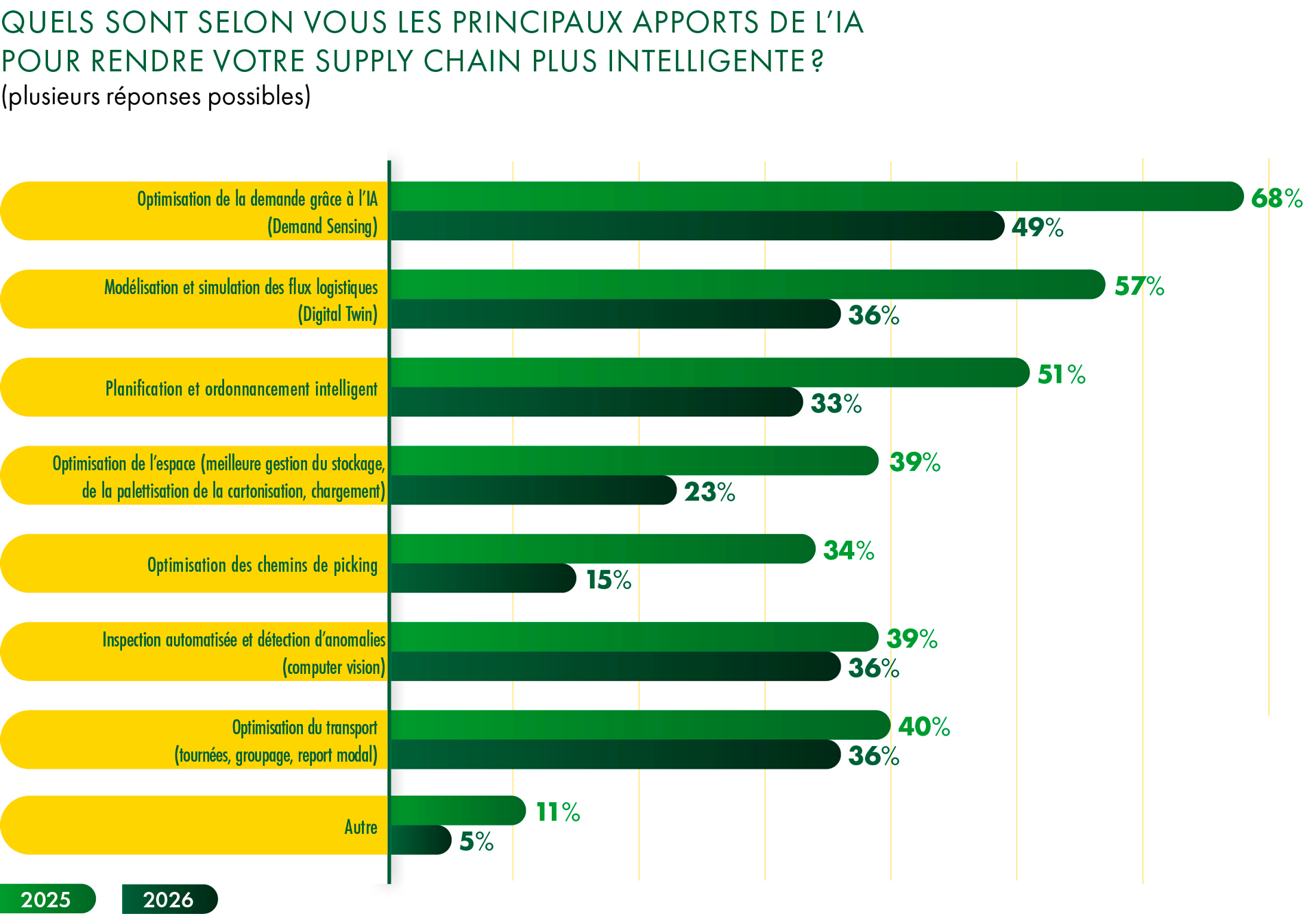
Data analytics opens up a world of possibilities, particularly through artificial intelligence technologies. Indeed, the survey shows that theprimary benefit of AI in the supply chain is its ability to leverage increased volumes of data to make better and faster decisions, particularly to optimize demand and flows.

  • In the retail sector, 91% of respondents cited demand optimization and 64% cited transportation optimization.
  • In the industry, the top priority is planning and scheduling (60%).

  • Logistics providers, for their part, prefer to model workflows using digital twins (80%).

Process Automation and Robotics: Varying Levels Across Industries

Only 23% of the supply chains among respondents, across all sectors, are found to be mostly or fully automated, with variations across processes (17% for the least automated processes—namely Receiving and Packing— versus 29% for Order Fulfillment).

39% of companies have largely or fully automated their production processes. The most automated processes are machine monitoring, production instructions, and work-in-progress tracking.

The percentage of companies that have implemented LMRA ( Logistics or Manufacturing Robotization & Automation ) rose from 55% in 2020 to 66% in 2025, with certain sectors leading the way:

  • Distribution: 73%
  • Industry: 67%
  • Logistics providers: 60%

RPA continues to grow: 67% of companies will be using it by 2025, up from 49% in 2020, primarily in back-office operations (40%) and supply chain processes (27%).

Circularity and decarbonization: emerging challenges

The transition to a more sustainable supply chain is still in its early stages: 8% of companies have adopted circularity, while 74% are in the exploratory phase and 18% have not yet taken any steps in this direction.

Overview of Technology Trends in 2026

Methodology

This third edition of the survey was conducted between June and October 2025 by France Supply Chain’s Digital and Technologies LAB, in partnership with BearingPoint, based on a questionnaire supplemented by qualitative interviews. The panel consists primarily of large corporations (76% have more than 1,000 employees and 63% generate more than €1 billion in revenue), with respondents mainly holding executive positions. The surveyed companies are primarily from the manufacturing sector (61%), retail (16%), and logistics and transportation providers (14%), supplemented by software publishers, consulting firms, and service companies.


About France Supply Chain by Aslog

For more than 50 years, the France Supply Chain association has been pursuing its mission of bringing together companies, business schools and research organizations to innovate, share best practices and provide concrete solutions to the challenges of today and tomorrow.

Think and Do Tank, with over 450 member companies and schools, 800 active members involved in our projects, and an audience of 7,000 players, we promote exchange and collective action for a more robust and responsible Supply Chain. As of January 2025, the association' s public-interest activities will be carried out by the SUPPLY CHAIN 4 GOOD endowment fund, starting with projects to decarbonize and sustain our Supply Chains.

Press contact: Marie-Laure Laville - MLD Consulting - Tel: +33 (0)6 18 14 85 36 - mllaville@mldconsulting.fr

Inspiring Webinar: A One-on-One with the Director of Logistics Operations at a Saint-Gobain Group Subsidiary

On March 10, thefifth installment of a popular community event took place:the “Inspiring Women” webinars! Participants had the opportunity to meet an energetic and authentic manager who has risen through the ranks to lead nine sites and 1,300 people. To understand her risein a very male-dominated industry, she reflected on what drives her every day, her convictions, and her experience. An interview.

Photo by Carole Doucet

I really enjoy leading large-scale projects, and I love handling major crises. So I thrive on a challenge.

Carole DoucetDSC (Plumbing and Heating Distribution) in conversation withMarie-Laure Furgala, Director of the ISLI MS/MSC in Global Supply Chain at KEDGE BUSINESS SCHOOL

Can you tell us about your current role and how you got here?

I generally changed roles every two years at DSC. I’m an engineer by training; I used to work in IT, but I didn’t find it concrete enough. When my husband and I left the Paris area, I said, “I want something more tangible.” I joined the Saint-Gobain Group, and over the course of 12 years, I’ve gone from project manager to executive.

I’m in charge of all of DSC’s logistics sites, which amount to roughly 250,000 square meters of warehouse space, plus all transportation operations. To give you an idea, that’s about 400 trucks leaving every day. DSC has 9 sites, 2 of which are leased and 7 owned, employing between 1,100 and 1,300 people. So, my current role is to manage the site managers, a transportation manager, and a performance manager.

250,000 square meters, 1,300 people—how do you manage that day to day, Carole?

No two days are the same for me. I don’t manage 1,300 people on my own; I rely on my team of managers. There are nine of them today, and my primary role is to lead—to ensure that my team is on board, so that they, in turn, can get their teams on board, who will then get their teams on board, and so on. My top priority is safety. Next, it’s about providing the best service to our customers.

How do you see your role within the company’s ecosystem, particularly in a male-dominated industry?

Our division operates as a distinct business unit, yet it is deeply integrated into the broader commercial organization. Every logistics site manager serves on the executive committee for their respective sales region. This represents a significant shift in how we operate, and I’ve seen it evolve considerably over the past 12 years; today, we are true partners dedicated to serving the end customer.

Have you met any people along the way who have been particularly influential?

Yes, absolutely. I’ve benefited from a formal mentoring program and informal support from a manager and my HR director, who has been with me for three years and generally coaches me on a daily basis.  That’s classic mentoring with a mentor who isn’t part of your business unit. It’s crucial to surround yourself with the right people so you can step back, get a different perspective, and, above all, have people you can confide in when things get complicated or the pressure mounts.

Photo by Carole Doucet

You almost always inherit a team that you need to understand and help grow. Building the “ideal” team is an ongoing process. My motto is to have “an appreciation for others and a love for the job.”

Carole Doucet,DSC (Plumbing and Heating Systems)

We imagine you have a taste for a challenge.

Yes, I’m a competitor at heart. I used to be a top-level athlete. Besides doing track and field—I sprint—I love going fast and pushing myself to the limit, which means doing more and doing better. But above all, I love learning and growing. I really enjoy leading major projects; I love managing a major crisis. So I thrive on a challenge. In operations, you’re never bored.

How do you manage to balance your work and personal life with three kids?

It was a decision we made as a couple and as a family. It’s not easy every day, but it’s all about finding balance, standing by our choices, and having the support of an amazing partner. For me , the real key is feeling comfortable with the choices you’ve made and living them to the fullest—and when things go wrong, making sure to talk about it, whether at home or at work.

What advice do you have for navigating the political landscape within a company?

It comes down to both skills and knowledge, so to speak, and then there’s a second aspect that has more to do with attitude. Today, the supply side relies on data, rigor, and operational expertise. But as soon as you move into higher-level positions, you discover a whole new playing field— one of influence and dynamics. That’s something you learn on the job.

Actually, you have to navigate these spheres to understand how things work—that’s how I’d put it. In my opinion, the best way to learn is to work on a project to understand what’s at stake, the dynamics between departments, who my allies are, who my critics are, and to understand the connections between people and the different departments. Another piece of advice is to rely on concrete facts to navigate these spheres, which can be a bit less rational.

And finally, I was talking about demeanor. For me, it’s essential to stay authentic; you have to maintain a simple yet powerful demeanor. You have to listen more than you speak, understand what’s left unsaid , and rise above the fray to remain credible. And really, the whole point is to stay true to yourself. In a way, this shows that you’re reliable, transparent, and clear—and that’s what builds credibility. Just because you’re climbing the corporate ladder doesn’t mean you have to lose sight of who you are; you must stay true to what you say and know how to listen.

Photo by Carole Doucet

Just because you’re climbing the corporate ladder doesn’t mean you have to lose sight of yourself; rather, you should stay true to your word and know how to listen.

Carole Doucet,DSC (Plumbing and Heating Systems)

How would you describe your leadership style, Carole?

I know how to connect with people. Actually, I understand how they work and what they’re feeling. I understand what goes on within a group, how to motivate a group, and how to get everyone on board. You see, I’m not very articulate—I’m a pretty simple person—but I really like people in general, and I’m a positive person, so I think it comes pretty naturally to me. I really love getting a team on board. So I genuinely enjoy working with them, doing things together, and being together. Let’s put it that way.

This new interview shed light on Carole’s career path, the challenges she has faced, and her strategies for success in logistics. The discussion explored large-scale management, the personal aspects of leadership—such as stress management and work-life balance—and navigating corporate politics, and, of course, aimed to break down stereotypes about warehouse jobs.

Here are the key factors that can encourage as many women as possible to take on leadership roles—theprimary goal of these webinars:

  • Progress and Leadership

    Rapid career advancement is possible in logistics thanks to the challenges it presents and the opportunity for continuous learning. Effective leadership on a large scale relies on delegation, trust, authenticity, and making safety the top priority.

  • Personal and Professional Development

    Mentoring is a key driver of career growth. Self-awareness, curiosity, and the courage to take calculated risks are more important than a rigid career plan. Mistakes are opportunities to learn.

  • picto adjust

    Work-life balance

    Balancing a demanding career with personal life is a family decision that requires solid planning, a spouse’s support, and the ability to set boundaries.

  • When things get complicated

    “ “The real point is to never be alone”—to make eye contact, totalk.

  • Industry Trends

    Logistics, now recognized as a strategic function, faces major challenges: CSR (decarbonization), managing physically demanding work (through automation and robotization), integrating AI, and building organizations that are resilient in the face of crises.

  • A word of advice for young people

    Get to know yourself and stay curious. It’s normal not to know exactly what you want to do. Don’t be afraid to meet with professionals and ask questions.

Thanks to Carole and Marie-Laure for this energizing one-on-one session!
NEWS

See all the news


EVENTS

PRESS
To go further

Read more

Woman observing the organization around her company's data

Data governance: the pillars of organizational transformation

"I'm not a data specialist, it's not my problem," "There are so many tools, I don't know where to find my customer data," "Trust is one of our company's values, we don't need a complicated authorization system." Often heard in companies, these phrases reflect a reality: data is widely discussed, but its management often remains scattered. We therefore decided, together with our partner Citwell, to dedicate a webinar to this topic , as it can be costly for a company. Here is a summary of this live event, which will help you understand the pillars of this essential business organization through real-life examples and numerous expert recommendations.

Download our guide

Roles and responsibilities

Who is responsible for what?

During this webinar, Saâd Kadioui, Partner/Head of IS Transformation at Citwell, emphasized thatthe business is primarily responsible for data quality. He warns organizations that dilute this responsibility by entrusting it to a data entry department that adds no value: "The real impact of this type of organization is that itdilutes responsibility for data quality. The business doesn't feel responsible because it's not the one entering the data, and the department that enters the data isn't responsible either because it's not the one providing the data."

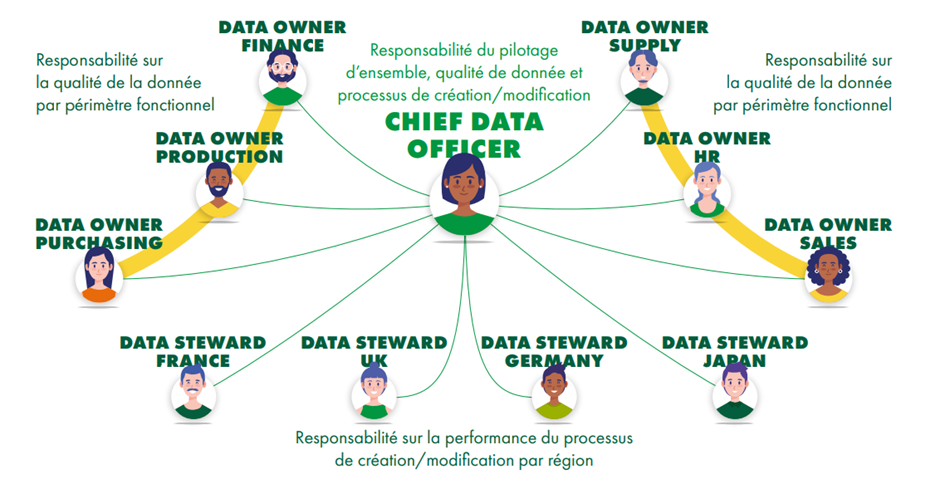
To structure governance, he introduced key roles: the Data Owner, a business person responsible for the content and quality of data, and the Data Steward, who oversees the creation and modification processes. The whole process is orchestrated by a Chief Data Officer.

Did you know?

The role of data owner can be combined with other functions, which is the case in most companies.

Data governance diagram

Illustration of an organization structured around data

Olivier Weiss, S&OP Business Development Manager at Renault, illustrated this point with the example of vehicle coding at Renault Trucks, where the coexistence of old and new codes can lead to errors if the business does not ensure reliability. "In the current 7-digit coding system, each digit is meaningful and allows us to identify the type of silhouette, the type of engine, the type of emission standard, etc. However, some old model codes still exist, and if we use the new coding system with these old model codes, we end up with incorrect data." Responsibility or proximity to the business is essential here because it is the business that will be able to say , "Watch out, we have a potential discrepancy here."

Best practice

Establish close collaboration between the business and its Data Steward: the customs code (product ID used to cross borders) is strategic data linked to 375 regulations that are subject to change (the World Customs Code is amended every five years): "Imagine the amount of data that needs to be managed and that is associated with this customs code. If I don't have the support of a data steward to update this data, it becomes very complicated for me," concludes Delphine Cuvellier , Customs Manager France at Alstom.

Data mapping

Where can the data be found and who owns it?

Given the multitude of tools available (ERP, PLM, etc.),there is a clear need for a"data GPS ." Saad explained that there is no such thing as a universal ideal urbanization (data mapping) solution, but rather one that is tailored to the context and uses of each company. The key is to define where data should be created, modified, and stored, following a strict master-slave relationship (a single master for modification, multiple slaves for consultation) in order to guarantee integrity.

Remember that in urbanization, you first need to think about uses and the complexity of use. "For example, if I am in a company that produces standard machined parts, with little documentation and extremely slow product life cycles, then I may not need PLM (Product Lifestyle Management), and perhaps an ERP workflow would suffice for the new products I create."

Best practice

Always evaluate the benefit/cost ratio of obtaining data: "Some data is very easily accessible, while other data can sometimes be extremely costly to obtain. This may be due to the history of the systems we have worked with, or to the poor quality or incompleteness of the data entered at the time. So you always have to ask yourself what the ultimate business value is."

Data security

What is the level of confidentiality of my data and how can I protect it?

The speakers addressed the need to secure access to data. Saad advocated finding a pragmatic balance in access management so as not to create an overly complex system, while highlighting the immense risks (data leaks, loss of integrity, GDPR non-compliance) of lax management, particularly during project go-lives. "What will really push us to be pragmatic here is the level of maintainability and confidentiality." 

Olivier shared an example in which cross-referencing a chassis number with geolocation data borders on the concept of personal data: "All vehicles are connected, we receive information on journeys and registrations, it's an important source of business. Couldn't I identify the driver? Sensitive data can be hidden at levels we don't necessarily suspect."

Supply chain risk management

Warning and associated best practice

The advent of BI and AI (LLMs) has significantly increased exposure to risk. "We all know the value of data, there are many hackers looking for this data, and there are even greater capabilities to disseminate it. So we need a robust, well-designed model for restricting access to data." To this end, Delphine recommends using a RACI matrix to clarify responsibilities and access rights.

Data management process

Which data is mandatory versus optional?

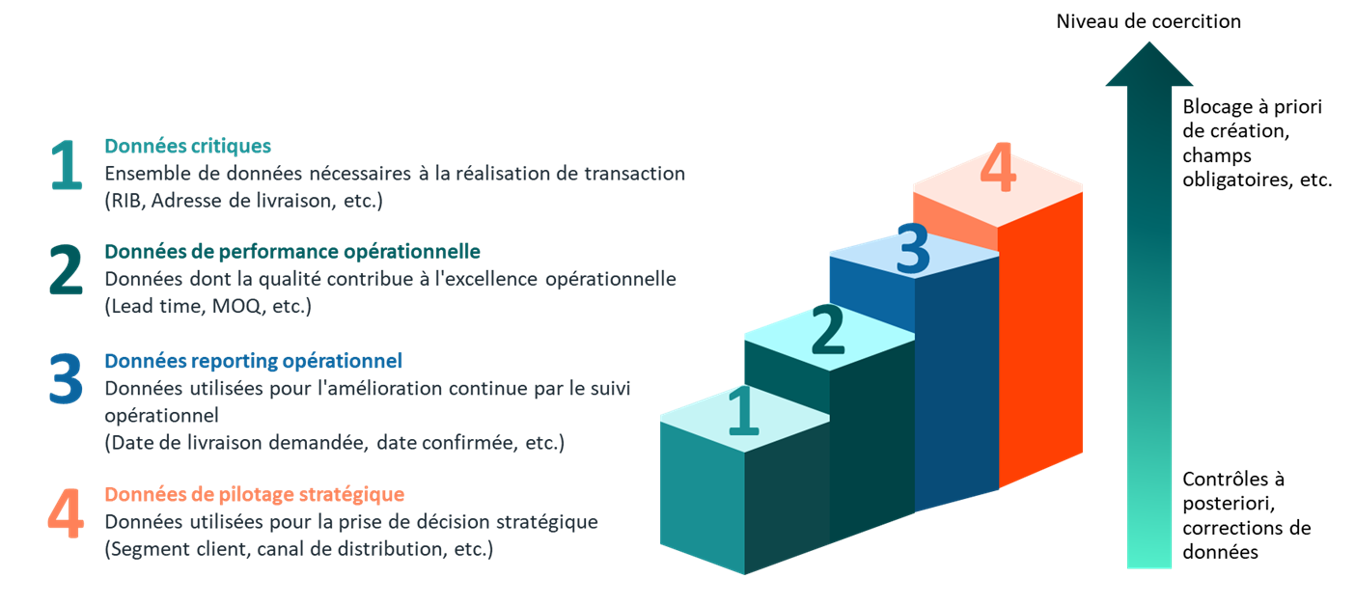
The 4 levels of data criticality

The 4 levels of data criticality

To counter the use of parallel Excel files due to a lack of confidence in the systems, it is crucial to manage the data lifecycle (creation, life, death) through robust and documented processes. Saad emphasized "frugality": structuring and maintaining only those data whose value to the business exceeds the cost of management.

To do this, it introduced a distinction between a priori controls (blocking, to guarantee quality) and a posteriori controls (non-blocking, for fluidity). The application of these controls depends on the criticality of the data, which is classified into four groups: critical data, operational performance data, reporting data, and strategic management data.

Best practice

Data quality must be orchestrated; it is closely linked to the process and the involvement of managers and facilitators, particularly for cross-functional master data (customer items, suppliers, etc.). Therefore, "to increase the robustness and quality of data, it must be controlled during creation and modification, without compromising operational efficiency, with cycle times that are too long between the need for creation and the availability of data in the system."

Did you know?

Anticipating data and knowing when it is critical and strategic is the most important factor in streamlining a supply chain.

What about performance?

Monitoring and ensuring data governance performance revolves around two main areas:

  • Responsibility for leadership
  • Responsibility for content

On the one hand, the initiative aims to guarantee the quality, speed of availability, and accuracy of data from the moment it is first produced. The associated key performance indicators (KPIs) are time to data (the average time between the request and the availability of data) and first shot accuracy (the rate of data that is correct from the first version), reflecting the efficiency of processes and their ability to avoid subsequent corrections.

On the other hand, content responsibility is based on five essential dimensions, managed by data owners:integrity (consistency and existence of values), completeness (exhaustiveness of records), relevance (adequacy of values to business rules), freshness (regular updating of data), anduniqueness (absence of duplicates). These dimensions ensure that data is reliable and usable.

Download

  • Thierry Blein

    Delphine CUVELLIER

    Customs manager France

  • Photo by Olivier Weis

    Olivier WEIS

    S&OP Business Development Manager

  • photo by Saad KADIOUI

    Saad KADIOUI

    Partner / Head of IS Transformation

    Citwell, a transformation gas pedal

Q&A with the Audience

The last part is devoted to questions from participants, which focus on very concrete implementation issues.

  • Acceptance by the trades

    To ensure governance is accepted without slowing down processes, Saad emphasizes that this is an organizational transformation driven at the highest level (COMEX), not just a simple initiative. This involves adapting job descriptions with the help of HR and defining clear objectives.

  • Role of part-time Data Owner

    One participant notes that this role is often deprioritized. Saad confirms that this is a real risk. The solution lies in integrating data quality into performance objectives and the evaluation of the person concerned.

  • Role recognition

    The questions confirm the need for official recognition of the roles of Data Owner and Data Steward in job descriptions so that the mission is taken seriously. Delphine adds that it is often easier to train a data user in the profession (customs, for example) than to find a data scientist who is an expert in the field.

  • Data leak

    In the event of an incident, the response must be proportionate to the level of risk and the sensitivity of the leaked data. Olivier emphasizes the importance of regularly reviewing access rights and revoking them when individuals change jobs, a practice that is often overlooked.

  • Quantifying ROI

    To justify the time spent on data quality, Olivier suggests starting by evaluating the time saved by avoiding manual consolidation. Saad adds that ROI can also be measured in terms of risks avoided (non-compliance, operational errors) and, above all,missed opportunities: no major technological shift (AI, advanced analytics) is possible without high-quality data.

NEWS

See all the news


EVENTS

PRESS
To go further

Read more

The Supply Chain Monthly #35

Find this month :

  • The chapters are waiting for you!
  • And the award goes to...
  • Accumulation of crises and tensions: how can we remedy this?
  • Training for students and professionals
  • Safety, health, and well-being in logistics
  • What to expect in the coming months

WELCOME to the employees of the new member organizations that have joined us in recent months: DHL Supply Chain France, Verralia, Gris Decoupage, Prologistik France, and Zetra.

Overview of some pages in the digital Supply Chain training guide

GUIDE TO HIGHER EDUCATION IN SUPPLY CHAIN 2025

Discover our training courses

The chapters are waiting for you!

Behind the scenes

The International Supply Chain

From Shanghai to New York, via Poland and Romania, our members are located all over the world! Thechapters arecurrentlyworkingon their programs, so if you would like to join them, please contact us.

Contact us

And the award goes to...

The actors

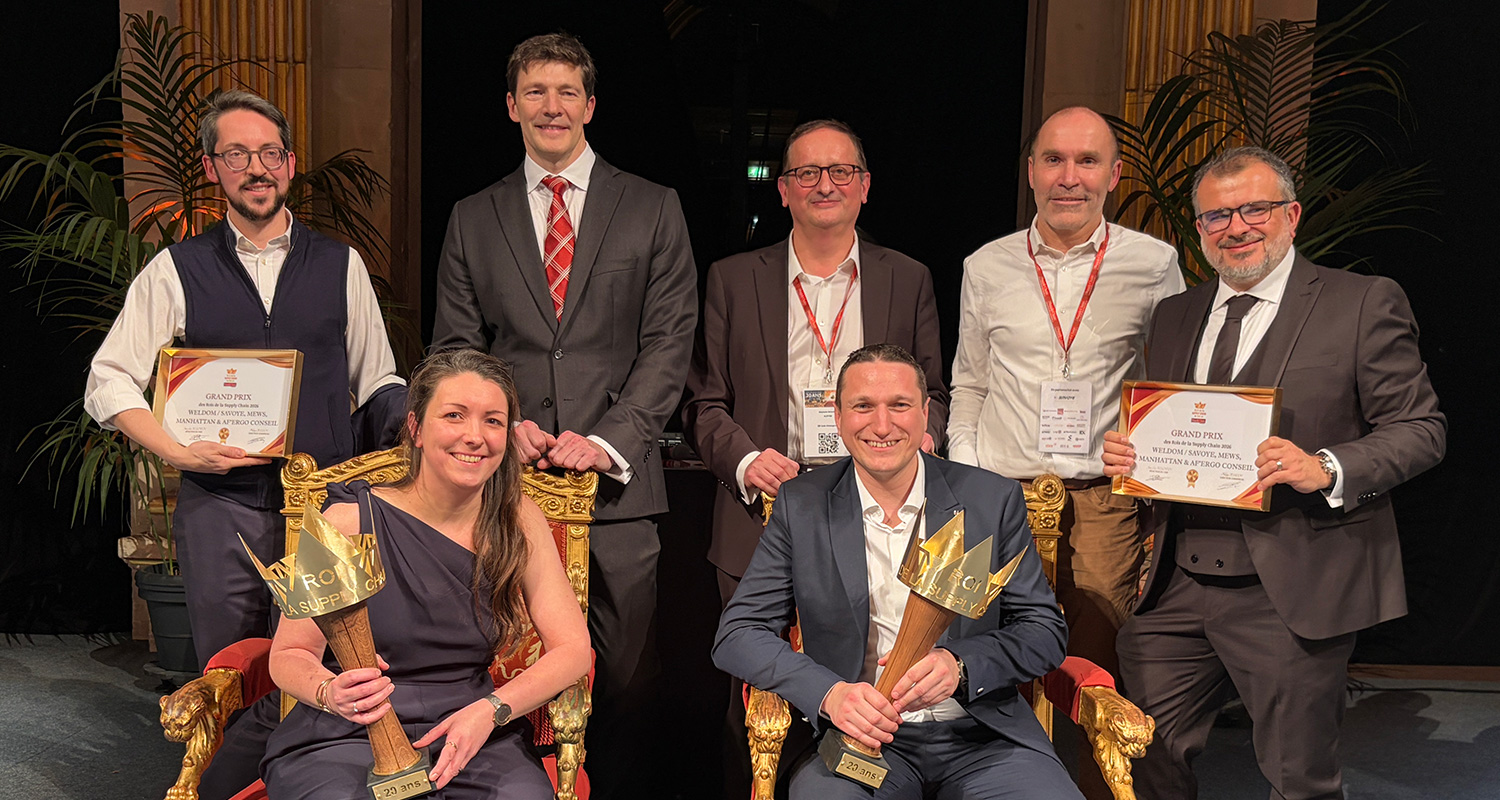
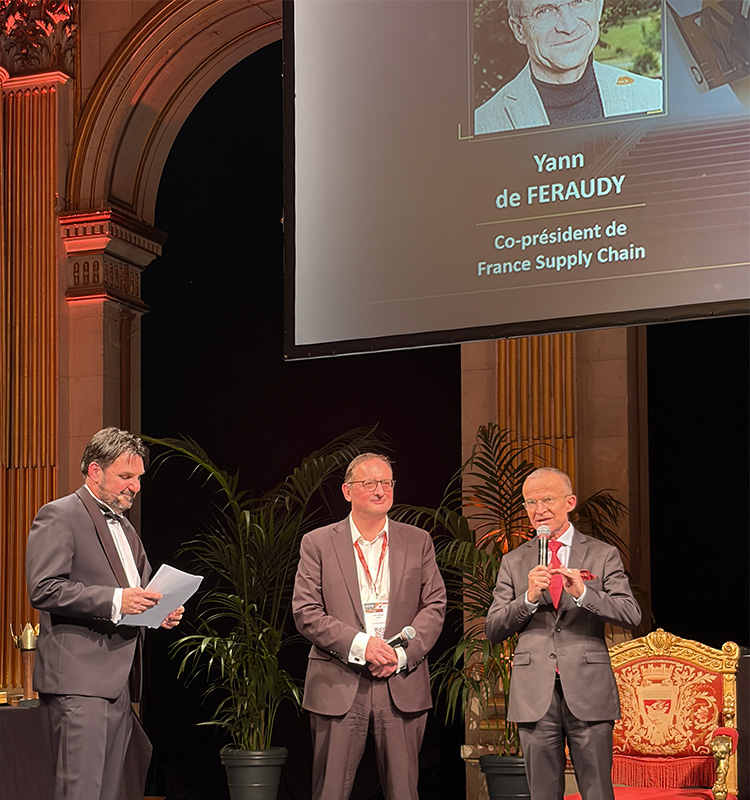
France Supply Chain won the trophy of honor at the Rois de la Supply Chain ceremony on January 29. A great first appearance as president for Stéphane Navarra.

Group photo of the winners of the 2026 Supply Chain Kings
Speech by Yann de Feraudy at the 2026 Supply Chain Kings event

Stéphane Navarra alongside Markus Mau, president of ELA, and the winners of the 2026 Grand Prix des Rois, who will be the French nominees for the 2027 ELA Awards (Weldom, SAVOYE, Mews, Manhattan Associates, and AF’ergo Conseil).

On display

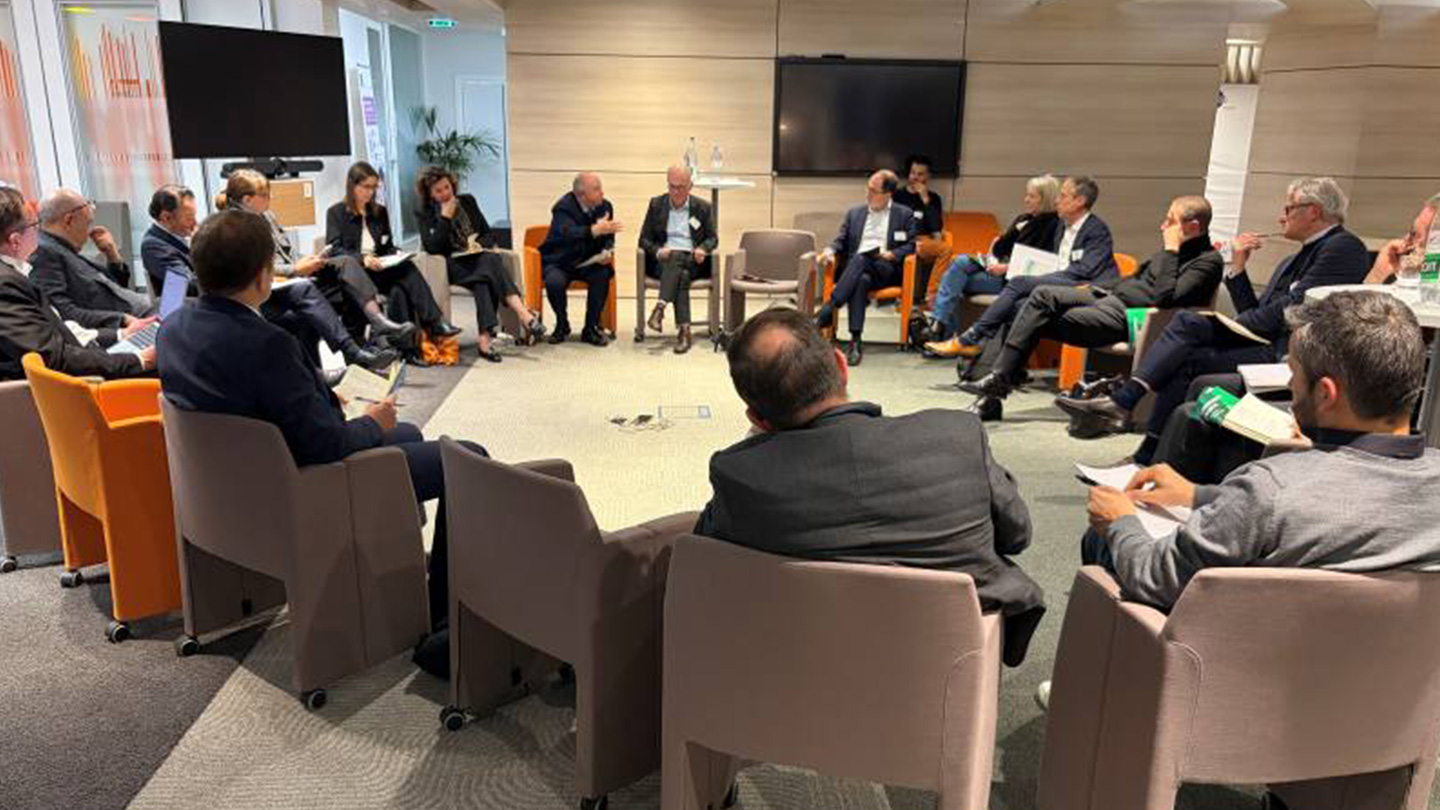
  • Round table discussion between France Supply Chain and Cretlog

    Accumulation of crises and tensions: how can we remedy this?

    France Supply Chain joined forces with Cret-Log on January 19, bringing together researchers and professionals around a common goal: to better understand the systemic dynamics that are transforming supply chains.

    Learn more about this meeting

  • Supply Chain Training

    Training for students and professionals

    Officially Qualiopi certified since 2021, France Supply Chain offers two courses to train auditors in corporate supply chain performance: an FDASC training course and a junior training course dedicated to students in higher education studying supply chain management.

    Discover junior training

    Learn more about audit training

  • Toolbook of best practices: Reducing drudgery in warehouses

    Safety, health, and well-being in logistics

    A feedback form is currently being prepared and will be published next week, focusing on safety, health, and well-being in logistics. In the meantime, take another look at the hardship toolbook created by our members of the Sustainable Supply Chain LAB with the aim of reducing hardship in warehouses.

    Download

The next sessions

DATES NOT TO BE MISSED

  • [Conference]

    19/02

    ELA Awards
  • [Reunion]

    February 23

    LAB SC Planning
  • [Reunion]

    February 24

    HR LAB
  • [Reunion]

    25/02

    LAB SC Sustainable
  • [Live]

    March 10

    Testimonials from Inspiring Women
  • [Reunion]

    11/03

    Risk community
  • [Live]

    March 17

    Electric trucks
  • [Reunion]

    19/03

    LAB Logistics
  • [Reunion]

    March 24

    Women in Supply Chain
  • [Salon]

    March 31

    SITL 2026
  • [Reunion]

    04/07

    HR LAB
  • [Workshop]

    08/04

    Circular packaging X Traceability: regulations, solutions, and action plan in one day

Find out more about Supply Chain events

4 job offers and over 40 candidate CVs, updated weekly, are available on the site

Discover

NEWS

See all the news


EVENTS


PRESS

Read more

France Supply Chain trains professionals and students in auditing the performance of companies' supply chains.

Faced with the growing challenges of performance, agility, and sustainability in supply chains, France Supply Chain by Aslog, a Qualiopi-certified organization since 2021, offers two courses to train auditors in corporate supply chain performance: an FDASC training course and a junior training course dedicated to students in higher education in supply chain management.

Since 1997, France Supply Chain has been training industry experts through a program that is now certified by France Compétences and eligible for CPF funding. Building on this experience, the program was adapted in 2020 for Master's students in Supply Chain Management, with great success. These courses are based on the Excellence Supply Chain framework designed by industry professionals.

Rigorous auditing and operational excellence: the FDASC method

The FDASC senior program, spread over six days and completed by a validation panel, offers a comprehensive, operational approach to evaluating and optimizing supply chain performance. Thanks to its cross-functional, multi-sector approach, this training program enables participants to:

  • Conduct an objective assessment of their company's supply chain maturity.
  • Conduct an in-depth analysis of key end-to-end processes.
  • Develop a structured progress plan aimed at operational excellence.
  • Accurately measure performance using standardized scoring based on the FSC benchmark.
  • Strengthen the resilience and agility of their supply chain, thereby transforming an operational challenge into a distinctive competitive advantage.

A junior program for the talents of tomorrow

Student journey

Since 2020, France Supply Chain has also been offering an intensive 5-day module taught directly at partner schools and universities. Aimed at students enrolled in Master's, MBA, and Grandes Écoles programs in supply chain and logistics, this training provides them with the key skills needed to audit a supply chain.

It combines theoretical modules, practical exercises, and a real-life audit project in a company. At the end of this assignment, students receive a junior auditor certificate, proof of their mastery of the fundamentals and their ability to operate in the field.

Opening quotation marks

"It is essential to prepare younger generations for the practical challenges of the supply chain. This training program represents a real differentiator for future graduates. We are a Qualiopi-certified training organization, which guarantees a high level of educational quality, supervision, and recognition in the market," says Yann de Feraudy, President of France Supply Chain.

Closing quotation marks

Key content of both training courses

France Supply Chain, with more than a hundred students and professionals trained each year, continues to structure audit procedures and disseminate best practices for supply chain and logistics professions. Its goal: to sustainably raise the maturity level of French supply chains in a constantly changing environment.


About France Supply Chain by Aslog

For more than 50 years, the France Supply Chain association has been pursuing its mission of bringing together companies, business schools and research organizations to innovate, share best practices and provide concrete solutions to the challenges of today and tomorrow.

Think and Do Tank, with over 450 member companies and schools, 800 active members involved in our projects, and an audience of 7,000 players, we promote exchange and collective action for a more robust and responsible Supply Chain. As of January 2025, the association' s public-interest activities will be carried out by the SUPPLY CHAIN 4 GOOD endowment fund, starting with projects to decarbonize and sustain our Supply Chains.

Press contact: Marie-Laure Laville - MLD Consulting - Tel: +33 (0)6 18 14 85 36 - mllaville@mldconsulting.fr

France Supply Chain by Aslog announces the appointment of its new President Stéphane Navarra (ALSTOM)

Last night, the directors of France Supply Chain by Aslog elected Stéphane Navarra as Chairman of the association's Board of Directors for a three-year term.

Stéphane Navarra has been Head of Global Supply Chain Rolling Stock & Components at ALSTOM since 2024. He has over 35 years of experience in the industry in Europe and North America and has held key positions in Engineering and Projects, Industry and Supply Chain, as well as in General Management of plants and groups.

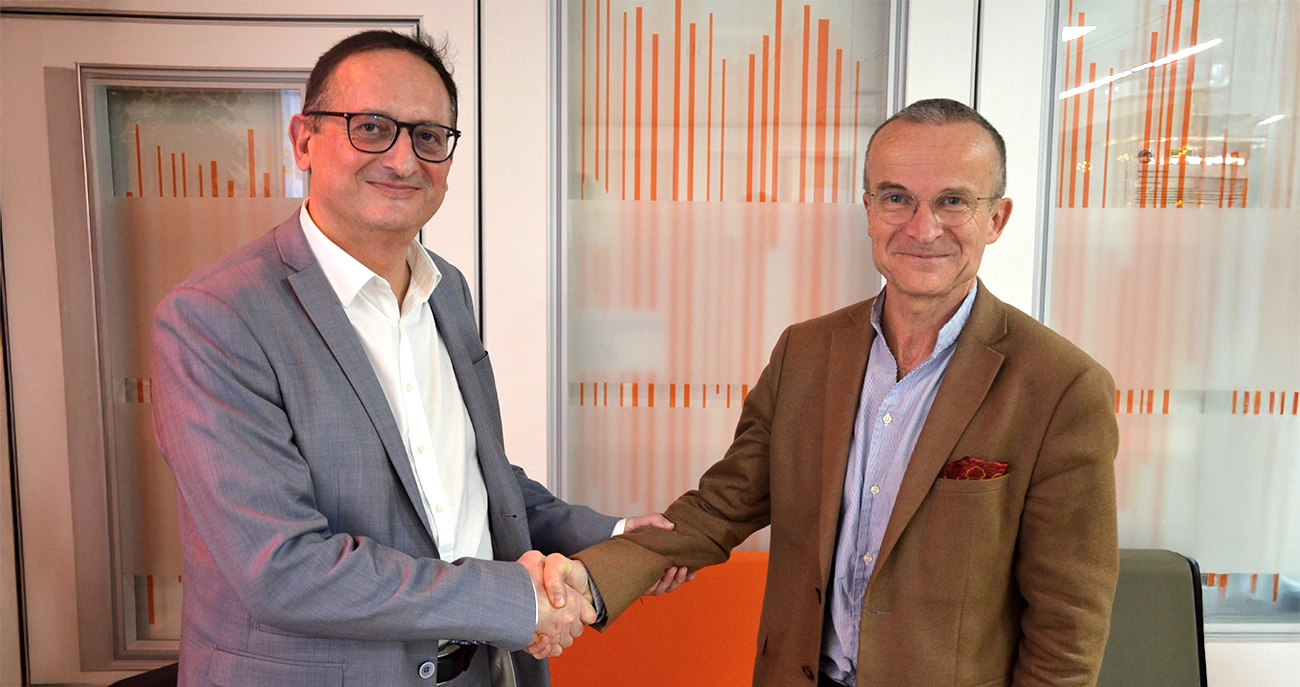
Yann de Feraudy and Stéphane Navarra shaking hands as a symbol of their co-presidency

Strengthened governance to support growth momentum

In order to strengthen the Association's governance and resilience, a new position of Co-President has been created and will be filled by Yann de Feraudy, outgoing president after six years in office and current vice-president of the European Logistics Association (ELA). 

This co-presidency aims to ensure the operationality and continuity of the association's governance, while allowing current executives who hold senior management positions overseeing supply chain functions or who themselves perform supply chain functions on an international scale to become actively involved.

Yann de Feraudy

The last six years have seen a profound transformation of our association. Today, with the arrival of Stéphane Navarra, we are strengthening our ability to meet the future challenges of the supply chain in France and internationally. Our goal remains to promote professional and innovative governance, serving our members and the entire sector.

Yann de Feraudy,Co-President of France Supply Chain

Over the past six years, France Supply Chain by Aslog has experienced strong growth, with its budget doubling between 2020 and 2025. This momentum has been accompanied by increased visibility and growing external demand, such as speaking engagements at conferences in France and abroad, as well as collaborations with government departments since 2024.

The strategy for the next three years

Three main areas were presented as the basis for the new President's three-year mandate strategy. The first is a strong ambition in France and internationally: to join and lead powerful networks. The objective is twofold: to maintain the association's position as a key player and to advance the supply chain everywhere. The associated actions are as follows:
  • In the region,
    collaborate with associations, executive clubs, schools, and universities.
  • Agreement

    In Europe,
    Strengthen the partnership with the ELA — European Logistics Association.
  • Internationally,
    Expand the network of experts in the chapters and seek new alliances such as those forged with the French Chamber of Commerce in Singapore and New York.

With the ongoing aim of advancing supply chain capabilities, this time with a focus on mid-sized companies and SMEs, the new governance structure seeks to develop services, particularly through the eSCalade support program.

Finally, it should be noted that one of the association's three missions is to "enable supply chains to actively contribute to a more sustainable world." To this end, it can draw on its Supply Chain 4 Good endowment fund , which it hopes to make a key player in the field. Created at the end of 2024, this fund aims to support projects and missions of general interest that promote the protection of the natural environment and people.

Yann de Feraudy

I often hear people say that the supply chain is a problem for some companies, but I am actually convinced that the supply chain is the solution. In a volatile, uncertain, and interdependent world, our role is to anticipate, connect, and make companies more resilient by managing the risks that we are able to identify. By taking on the presidency of this association, I want to bring people together, share best practices, and make the voice of our professions heard loud and clear by public authorities and companies, while helping our members develop their skills and strengthening our international connections.

Stéphane Navarra, President of France Supply Chain and VP Global Supply Chain CSR at Alstom


  • About Stéphane Navarra

    Stéphane Navarra has been Head of Global Supply Chain Rolling Stock & Components at ALSTOM since 2024. He has over 35 years of experience in the industry in Europe and North America and has held key positions in Engineering and Projects, Industry and Supply Chain, as well as in General Management of plants and groups.

    An engineer and graduate of École Centrale de Lyon, Stéphane began his career in project management at ALSTOM, then spent 16 years with the group in France, Spain, the United Kingdom, and Rochester, NY, in the United States. He then joined HARSCO Metals in Luxembourg and London to manage and develop the European region. He subsequently assisted private equity firms in developing some of their portfolio companies. He returned to Paris in 2018 to develop the System Engineering function at BOMBARDIER Transportation, before joining ALSTOM in 2021 to head up the Rolling Stock & Components Product Line for the Americas region.

    On December 12, 2025, Stéphane was elected Chairman of the Board of Directors of France Supply Chain by Aslog.

  • About France Supply Chain

    The FRANCE SUPPLY CHAIN BY Aslog community works to strengthen the impact of the supply chain on business competitiveness and make it a lever for a more sustainable world. The association brings together 450 companies of all sizes and from all sectors of activity, as well as prestigious universities and training organizations, in France and internationally. This network of 5,000 members, professionals, teachers, researchers, and students pools ideas and experiences in order to provide concrete solutions to supply chain stakeholders.

    Press contact: Marie-Laure Laville — MLD Consulting — Tel.: +33 (0)6 18 14 85 36 — Email: mllaville@mldconsulting.fr

NEWS

See all the news


EVENTS

PRESS

Read more

Le Mensuel de la Supply Chain #33

Find this month :

  • ANAP logistics experts in action

  • Students need you!
  • How can we build new value chains?
  • Their tips for supply chain success
  • France Supply Chain launches the4th edition of the Best Supply Chain Article Award
  • The big survey is back!
  • What to expect in the coming months

Overview of some pages in the digital Supply Chain training guide

GUIDE TO HIGHER EDUCATION IN SUPPLY CHAIN 2025

Discover our training courses

ANAP logistics experts in action

Behind the scenes

From Nantes to Cholet, participants discovered innovative hospital logistics projects, from flow automation to AMR robots. Thanks to a partnership with France Supply Chain, the delegation also explored the IDEA Group platform dedicated to Airbus flows.

  • anap-viste-01

  • anap-viste-02

Students need you!

The actors

Many students are still looking for internships or work-study programs. 

Our recruitment area is brimming with CVs from motivated candidates, ready to build the Supply Chain of tomorrow.
Visit our website to find your future talent.

View Resumes

On display

Questions

The digitalization panorama is back!

The survey will provide a comprehensive overview of the digital transformations underway in supply chains.

  • What motivates investment in Tech, in other words the stakes
  • Use cases and technologies in place
  • What drives the choice of one project over another for each technology?
  • Priorities and vision for the future

  • Focus on the round table

    How can we build new value chains?

    At the PRODURABLE trade show, Yann de Feraudy, president of the association, headed a round table dedicated to decarbonization, but not only!

    An opportunity for speakers to talk about concrete actions implemented in their companies.

    From water management to industrial sovereignty and CSR indicators, each brought a different perspective on how companies can combine performance, resilience and sustainability.

    See the replay

  • Presentation by 4 professionals of their career paths in the Supply Chain sector

    A career in Supply Chain: career paths and recommendations

    4 professionals, from students in retraining, to managers returning to school for a BAC+5, to university graduates and young people in graduate programs: 4 profiles and 4 backgrounds with the same passion: supply chain.

    Here's a look back at the key moments and advice from the speakers at the round table held on September 23, to help you succeed in this multi-faceted sector. 

    Read the testimonials

  • Prize for the best article in Sustainable Supply Chain 2026

    France Supply Chain launches the4th edition of the Best Sustainable Supply Chain Article Award

    In partnership with AIRL-SCM, this award highlights research that reconciles performance, resilience and responsibility. 

    Because science informs decisions, France Supply Chain celebrates those who are imagining the Supply Chain of tomorrow: more sober, more human, more sustainable.

    Applications open until March 2, 2026.

    I register

The next sessions

DATES NOT TO BE MISSED

  • [Reunion]

    22/10

    Face-to-face LABS

  • [Salon]

    22/10

    Tangier Logistics Days

  • [Workshop]

    23/10

    Sharing Decarbonation Plans

  • [Matinale]

    04/11

    How did they choose river transport?

  • [Matinale de prospective]

    04/11

    How to think the world (and its logistics!) in a context of riots and social movements? - AFILOG

  • [Reunion]

    04/11

    Women in Supply Chain

  • [Visit]

    05/11

    FM Logistic warehouse

  • [Encounters]

    12/11

    Logistics and freight transport industry day

  • [Reunion]

    12/11

    Risk Community

  • [Master Class]

    12/11

    Inclusion handicap

  • [Salon]

    18/11

    Solutrans

  • [Encounters]

    18/11

    360° Logistics

  • [Afterwork]

    27/11

    Intergenerational meetings

Find out more about Supply Chain events

9 job and internship offers, over 40 candidate CVs, updated weekly, are available on the site.

Discover

NEWS

See all the news


EVENTS


PRESS

Read more

Strategic solution to supply chain problems

Circularity as a strategic solution for mitigating supply chain risks

The interconnection between risk management and circular supply chain practices was on the agenda at the latest meeting of France Supply Chain's Risk Community. The session, moderated by Jonathan Lecluze, manager specialized in circular supply chain at Citwell, aimed to explore, through exchanges between participants, to what extent circularity constitutes a proactive solution to the risks faced by supply chains.

This meeting between professionals from different industrial sectors revealed major lessons about the necessary transformation of our business models to meet today's geopolitical, environmental and regulatory challenges.

Critical vulnerabilities call for a paradigm shift

On October 9, 2025, China announced extraterritorial measures for the traceability of rare earths.. In practice, any product containing more than 0.1% Chinese rare earths would have to apply for a license to be exported from China or from one third country to another.

This major event has sent shockwaves through the industry, highlighting once again Europe's dependence on external supplies of rare earths (70% of European rare earth supplies come from China) and, more broadly, for all fossil fuels, including hydrocarbons.

Reducing Europe's consumption of fossil fuels is a major challenge for our sovereignty. It is also a major environmental issue.

Technology is regularly invoked as a solution to this problem because it is said to have the virtue of decoupling economic activity from resource consumption. However, this is only a partial vision, as technology itself is eminently made up of fossil resources from non-European territories, led by China.

This first graph highlights the risk of European supply (bottom) of raw materials for a range of technologies (left) needed for environmental transitions.

Supply risk of raw materials for key technologies

Supply chain analysis and material demand forecast in strategic technologies and sectors in the EU - JRC Science for Policy Report

LREEs (Light Rare Earth Elements) and HREEs (Heavy Rare Earth Elements) top the list of raw materials most at risk for the technologies listed.

It's interesting to cross-reference this view with the following map, which shows the geographical origins of resources and the "Level of Governance", which can be interpreted as a country's level of stability, which is an approximation of the level of supply risk from a European perspective. It shows that most raw materials come from China and Africa.

Geographical origin of resources

Supply chain analysis and material demand forecast in strategic technologies and sectors in the EU - JRC Science for Policy Report

From the linear model to the circular economy: rethinking value creation

In the face of these vulnerabilities, a fundamental rethink of our economic approach is becoming imperative. The traditional "take-make-dispose" model is now revealing its structural limits. For a large proportion of the manufactured products we know, we can retain the following orders of magnitude: 90% of resources and 80% ofCO2 emissions are concentrated in the upstream phases of the value chain (extraction, production, assembly).

The circular economy responds to these realities by proposing a genuine paradigm shift. Rather than following a linear logic that progressively destroys value over the course of a product's life cycle, it structures flows around the preservation and optimization of that value.

This approach is based on the "10 Rs" framework, which prioritizes circular strategies according to their impact. They are broken down into three main logics: reducing the loop (R0-R2), slowing the loop (R3-R6) and closing the loop (R7-R9).

Lifecycle and stages on the R-ladder

Lifecycle & stages on the R-ladder (Reike et al, 2018)

This prioritization provides companies with a compass for prioritizing their circular actions.

Photo by Jonathan Lecluze

Moving from a linear to a circular model is not just about adding recycling at the end of the cycle, but about completely rethinking the way we create and preserve value throughout the chain.

Jonathan Lecluze,
manager specialized in circular supply chain at Citwell

Inspiring pioneers

Several companies present at the workshop demonstrated the economic and environmental benefits of these circular approaches, while reinforcing the robustness of their supply chains. Among them:

  • Orange company logo

    Orange presents one of the most successful circular supply chain models. Today, one box in two comes from the circular supply chain, and each piece of equipment can be reconditioned up to 10 times, thanks to an eco-design that favors disassembly using screws rather than rivets. The benefits are many: significantly reduced supply costs, reduced environmental impact and secure production volumes.

  • Renault Group logo

    Renault is deploying a structured circular strategy with The Future is Neutral, a project to recycle metals and batteries from electric vehicles in order to secure supplies of critical materials.

  • Decathlon logo

    Décathlon is developing its circular business models, offering buy-back and resale of second-hand products, repair and rental of sports equipment.

How does circularity transform risks into opportunities?

These concrete examples illustrate how the circular economy transforms the vulnerabilities of supply chains into genuine levers of resilience and opportunities:

  • Securing supplies

    Circularity creates new sources of supply independent of traditional geopolitical constraints.

  • Economic stabilization

    By developing in-house recovery and recycling channels, companies can protect themselves against fluctuations in raw materials markets, thus ensuring greater cost predictability. Interface illustrates this approach by manufacturing nylon carpet tiles (derived from petroleum) from recycled fishing nets.

  • Regulatory anticipation

    The circular economy makes it possible to anticipate regulatory changes rather than undergo them, transforming these constraints into competitive advantages. Apple is investing in dismantling robots to anticipate legislation on repairs, while Europe's Critical Raw Materials Act now requires the sourcing of recycled magnets.

  • picto conserve

    Protection against reputational risk

    Protection against reputational risk in the textile sector, which is highly exposed to social and environmental controversies. This is the choice made by Patagonia through its Worn Wear program for the repair and resale of used clothing.

  • Better flow predictability and revenue diversification

    One example is Philips and its Lighting as a service model.

Challenges and recommendations for a successful transformation

Strategic lessons

Five fundamental principles emerged from this session to guide supply chain professionals.

  • Proactive solution
    Transforming risk management from a defensive to a value-creating approach
  • Profound transformation
    Need for in-depth rethinking of processes, information systems and organizations
  • Complementarity with sourcing strategies
    Convergence with multiple sourcing approaches (circular can be seen as a new form of sourcing), nearshoring (circular is essentially local)
  • Full-cost vision
    Inclusion of hidden costs and externalities in economic analyses to reveal the full potential of the circular
  • Strategic challenge
    The need for unfailing support at the highest corporate level

* Nearshoring, as opposed to offshoring, is the relocation of an economic activity to another region of the same country or to a nearby country.

NEWS

See all the news


EVENTS

PRESS
To go further

Read more

France Supply Chain launches the 4ᵉ edition of the Prize for the Best Article in Sustainable Supply Chain

Open applications: recognition of innovative academic work

France Supply Chain by Aslog, in partnership with the International Association for Research in Logistics and Supply Chain Management (AIRL-SCM), announces the opening of applications for the 4ᵉ edition of the Best Article in Sustainable Supply Chain Award. Part of the Supply Chain 4 Good Fund, each year this award recognizes a scientific publication of excellence making a major contribution to the development of more responsible Supply Chains.

A prize for innovation and impact

With this award, France Supply Chain and AIRL-SCM wish to :

  • Strengthen the dialogue between the academic world and professionals to accelerate the transformation towards a frugal, desirable and sustainable Supply Chain.
  • Highlighting innovative research in logistics management and sustainable supply chain.
  • Encourage academic work that has a concrete impact on business practices and public policy.
Opening quotation marks

Supply Chain is today a sector of the future, creating jobs and driving performance for companies. This guide, the fruit of a collective and innovative effort, is designed to match individual ambitions with the needs of organizations. It embodies our mission: to train and support the talents who will build the future of our sector.
Yann de Feraudy, President of France Supply Chain.

Closing quotation marks
A magnifying glass that analyzes a candidate

Who can apply?

The competition is open to all teacher-researchers who have published a peer-reviewed scientific article, in French or English, between January 1, 2024 and December 31, 2025, on the theme of sustainable supply chains.

Selection criteria

Articles will be evaluated by a mixed jury of academics (AIRL-SCM) and practitioners (France Supply Chain), along four lines:

  • Relevance of the subject to the professional community (in connection with Labs France Supply Chain and the Manifeste pour une Supply Chain frugale et désirable).
  • Potential impact on decision-making in business and the public sphere.
  • Academic, methodological and managerial quality.
  • Innovative and actionable nature of the work.

Prize and award ceremony

The winner(s) will receive a €2,000 prize from France Supply Chain. The award ceremony will take place during the Rencontres Internationales de la Recherche en Logistique (RIRL), scheduled to take place in Saint-Malo on May 27, 28 and 29, 2026.

How to apply

Deadline for applications: Monday March 2, 2026.

Information and application form available


About France Supply Chain by Aslog

For more than 50 years, the France Supply Chain association has been pursuing its mission of bringing together companies, business schools and research organizations to innovate, share best practices and provide concrete solutions to the challenges of today and tomorrow.

Think and Do Tank, with over 450 member companies and schools, 800 active members involved in our projects, and an audience of 7,000 players, we promote exchange and collective action for a more robust and responsible Supply Chain. As of January 2025, the association' s public-interest activities will be carried out by the SUPPLY CHAIN 4 GOOD endowment fund, starting with projects to decarbonize and sustain our Supply Chains.

Press contact: Marie-Laure Laville - MLD Consulting - Tel: +33 (0)6 18 14 85 36 - mllaville@mldconsulting.fr

France Supply Chain publishes the 3ᵉ edition of its "Guide des Formations Supérieures en Supply Chain".

A unique digital tool to support talent and meet the sector's growing needs

France Supply Chain unveils the 3ᵉ edition of its Guide des Formations Supérieures en Supply Chain. This reference work, now 100% digital, lists almost 200 training courses spread across France, covering the major supply chain professions: transport, purchasing, planning, digitalization, CSR and much more.

A fast-growing sector, rich in opportunities

The publication of this guide comes at a time of strong momentum for the sector. In August 2025, over 5,700 job offers were published on specialized platforms, for positions ranging from Bac+2 to expert profiles.

In addition to the sheer volume of opportunities available, Supply Chain is also attractive for its remuneration levels. A Supply Chain Manager can expect to earn between €67750 and €90750 a year, depending on experience and company size (source: Glassdoor).

With 30,000 new jobs being created every year, the supply chain is becoming a real strategic competitive lever for French companies.

Opening quotation marks

Supply Chain is today a sector of the future, creating jobs and driving performance for companies. This guide, the fruit of a collective and innovative effort, is designed to match individual ambitions with the needs of organizations. It embodies our mission: to train and support the talents who will build the future of our sector.
Yann de Feraudy, President of France Supply Chain.

Closing quotation marks

A new-generation guide, designed for all audiences

Overview of some pages in the digital Supply Chain training guide

Faced with the growth and diversification of the training offer, the 3ᵉ edition has been completely redesigned to facilitate orientation. The result of a year's work, it now takes the form of an interactive digital tool, enabling regular updating and simplified consultation.

The aim of this major project is to provide a virtually exhaustive overview of the training courses available, from bac+2 level right through to courses designed for working professionals. More than 30 new courses have been added to this latest version of the guide.

Designed as a compass in a rapidly changing environment, the guide is aimed at several audiences:

  • Students and their families in search of suitable training ;
  • Companies looking for young talent or experienced profiles ;
  • Training establishments wishing to enhance their curricula and draw inspiration from best practices;

Through this approach, France Supply Chain by Aslog strengthens its ties with schools and universities, sharing its vision of the market and emerging trends.

A wide range of professions and training courses for all profiles

The Supply Chain, which is undergoing rapid change, encompasses a multitude of professions requiring varied and complementary skills: transport, purchasing, planning, digitalization, CSR, etc.

There isn't just one typical career path, but a wide variety of gateways, from bac+2 (BTS GTLA, DEUST Métiers de la Supply Chain et transport durable) to bac+5 (Masters specialized in international logistics, global purchasing, sustainable chains), not forgetting continuing education for working professionals.

Examples of routes adapted to each stage:

  • Bac+2/3 level: BUT QLIO (Industrial Logistics Quality) or Bachelor in Purchasing and Supply Chain (PPA), for rapid integration.
  • Bachelor's degree level: Licence pro Management et droit du transport maritime or BBA from one of the top business schools (ESSEC, Kedge...), often available on a sandwich course basis.
  • Master's level and above: MSc Supply Chain (EM Lyon), Master in International Purchasing (Kedge), or Sustainable Supply Chain Manager (ISLI - Kedge), to meet CSR and digital challenges.
Diagram illustrating the supply chain training pathway, from A-levels to specialized Master's degrees, right through to employment.

A tool for everyone, everywhere in France

France Supply Chain and its members have designed this 3ᵉ edition of the guide as a unique orientation lever:

  • More than 200 listed training courses, including 30 new ones, covering the whole of France.
  • A 100% digital format, interactive and regularly updated to keep pace with developments in the sector.
  • Greater accessibility: students, professionals undergoing retraining and companies will all find solutions tailored to their needs.

Practical information

Publisher: France Supply Chain by Aslog

Sources :
https://www.hellowork.com/fr-fr/emploi/mot-cle_supply-chain.html
https://www.glassdoor.fr/Salaires/supply-chain-manager-salaire-SRCH_KO0,20.htm
https://www.lynkus.fr/actualites/supply-chain-etat-des-lieux-du-recrutement


About France Supply Chain by Aslog

For more than 50 years, the France Supply Chain association has been pursuing its mission of bringing together companies, business schools and research organizations to innovate, share best practices and provide concrete solutions to the challenges of today and tomorrow.

Think and Do Tank, with over 450 member companies and schools, 800 active members involved in our projects, and an audience of 7,000 players, we promote exchange and collective action for a more robust and responsible Supply Chain. As of January 2025, the association' s public-interest activities will be carried out by the SUPPLY CHAIN 4 GOOD endowment fund, starting with projects to decarbonize and sustain our Supply Chains.

Press contact: Marie-Laure Laville - MLD Consulting - Tel: +33 (0)6 18 14 85 36 - mllaville@mldconsulting.fr