Article filter: Resilience & Competitiveness

Auditing the Supply Chain Performance of Companies: 6th version of our Training Course

Supply chain auditing is becoming a strategic lever for companies in a context where supply chains must be efficient, agile, and resilient. France Supply Chain has been offering a unique certification course in France since 1997: "Auditing the performance of corporate supply chains." The latest version goes further in terms of criteria related to digitalization and CSR, offering updated content for assessing and sustainably transforming organizational performance.

Why measure the performance of its Supply Chain?

Measuring the performance of your supply chain is, above all, a way to improve. The assessment framework provides a clear picture of the level of maturity and mastery of supply chain fundamentals, positioning you in relation to industry best practices. This approach allows you to:

  • Identify areas for improvement.
  • To drive a dynamic of continuous improvement.
  • Effectively lead teams and their projects.
  • To strengthen the cross-functional nature of the Supply Chain function within the company.

In a second step, the tool cross-references the audit results with the company's overall strategy in order to identify areas for improvement. Backed by a methodology proven in more than 300 audits, this tool raises awareness and highlights the decisive impact of supply chain operations on overall performance.

Evaluate your Supply Chain

A demanding, certification-based training program for Supply Chain Managers

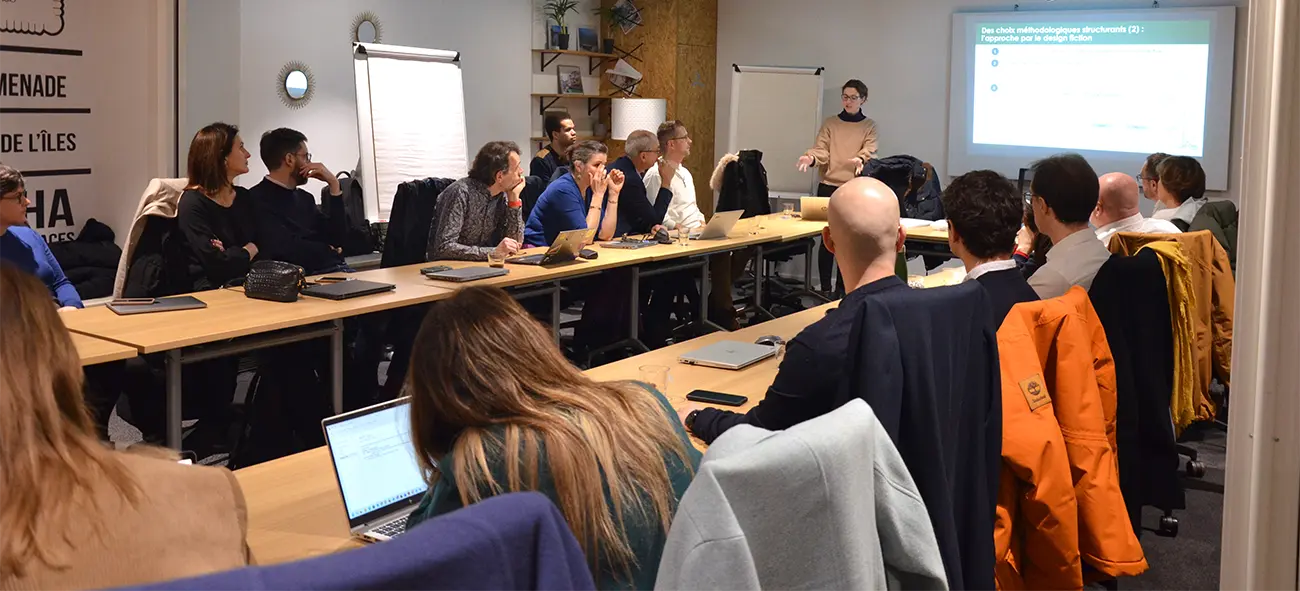
Over six days of training, participants explore the France Supply Chain excellence framework, a genuine reference framework for auditing. They also put what they have learned into practice through real-life case studies and group exercises. Reserved for executives and managers with at least three years' experience, this certification training course provides them with the tools and methods they need to carry out an objective assessment of supply chain maturity.

Regularly updated to keep pace with rapid developments in the sector, this sixth version incorporates new criteria related to process digitization and sustainability requirements, with stricter requirements in the digital domain.

  • Day 1

    Theory: challenges and objectives of supply chain auditing

  • Day 2

    France Supply Chain's "Excellence Benchmark" — rating criteria and best practices.

  • Day 3

    Audit methodology: procedure, questioning, information gathering and analysis, identification of areas for improvement

  • Day 4

    Role-playing exercises: audit exercises based on real-life business cases, group work, “auditor ↔ auditee” simulations

  • Day 5

    Development of a concrete and measurable improvement plan: prioritization, action plan, recommendations, audit deliverables

  • Day 6

    Assessment of acquired knowledge (multiple-choice questions/knowledge tests), written case study

A program structured around practice, sharing, and real-life scenarios

The Senior Supply Chain Audit training course is based on a demanding and pragmatic approach, designed to enable auditors to assess and support supply chain performance with precision, consistency, and impact. Its fundamentals are based on five essential pillars:

  • A multi-sector approach from industry to the hospital sector.
  • A resolutely operational dimension.

The objective: to give listeners the ability toquickly understand the reality on the ground, measure operational maturity, and identify directly applicable levers for progress.

Each module combines theory and practice to ensure immediately applicable skills development. It is thissystemic approachthatenables a comprehensive, structured diagnosis that accurately reflects the reality of the business.

Get the training flyer

It is this systemic vision that enables a comprehensive, structured diagnosis that accurately reflects the reality of the company.

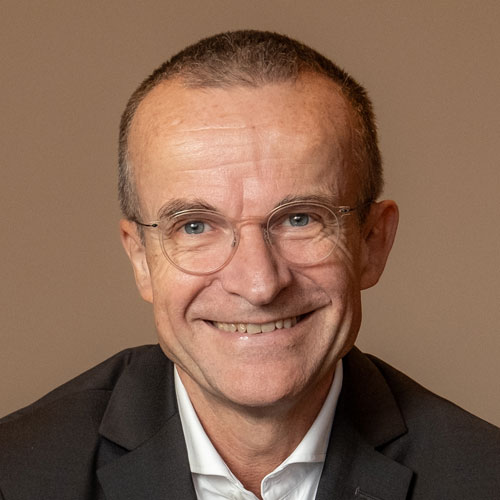
Laurent Cirou, Training Engineering Manager and Trainer

With its Supply Chain Audit training program, France Supply Chain helps train professionals capable of meeting the challenges of today and tomorrow. The program is eligible for CPF funding and is listed in the France Compétences Specific Directory (RS6883) under the title: "Auditing the performance of corporate supply chains."

All about training

NEWS

See all the news


EVENTS

PRESS
To go further

Read more

Strategic solution to supply chain problems

Circularity as a strategic solution for mitigating supply chain risks

The interconnection between risk management and circular supply chain practices was on the agenda at the latest meeting of France Supply Chain's Risk Community. The session, moderated by Jonathan Lecluze, manager specialized in circular supply chain at Citwell, aimed to explore, through exchanges between participants, to what extent circularity constitutes a proactive solution to the risks faced by supply chains.

This meeting between professionals from different industrial sectors revealed major lessons about the necessary transformation of our business models to meet today's geopolitical, environmental and regulatory challenges.

Critical vulnerabilities call for a paradigm shift

On October 9, 2025, China announced extraterritorial measures for the traceability of rare earths.. In practice, any product containing more than 0.1% Chinese rare earths would have to apply for a license to be exported from China or from one third country to another.

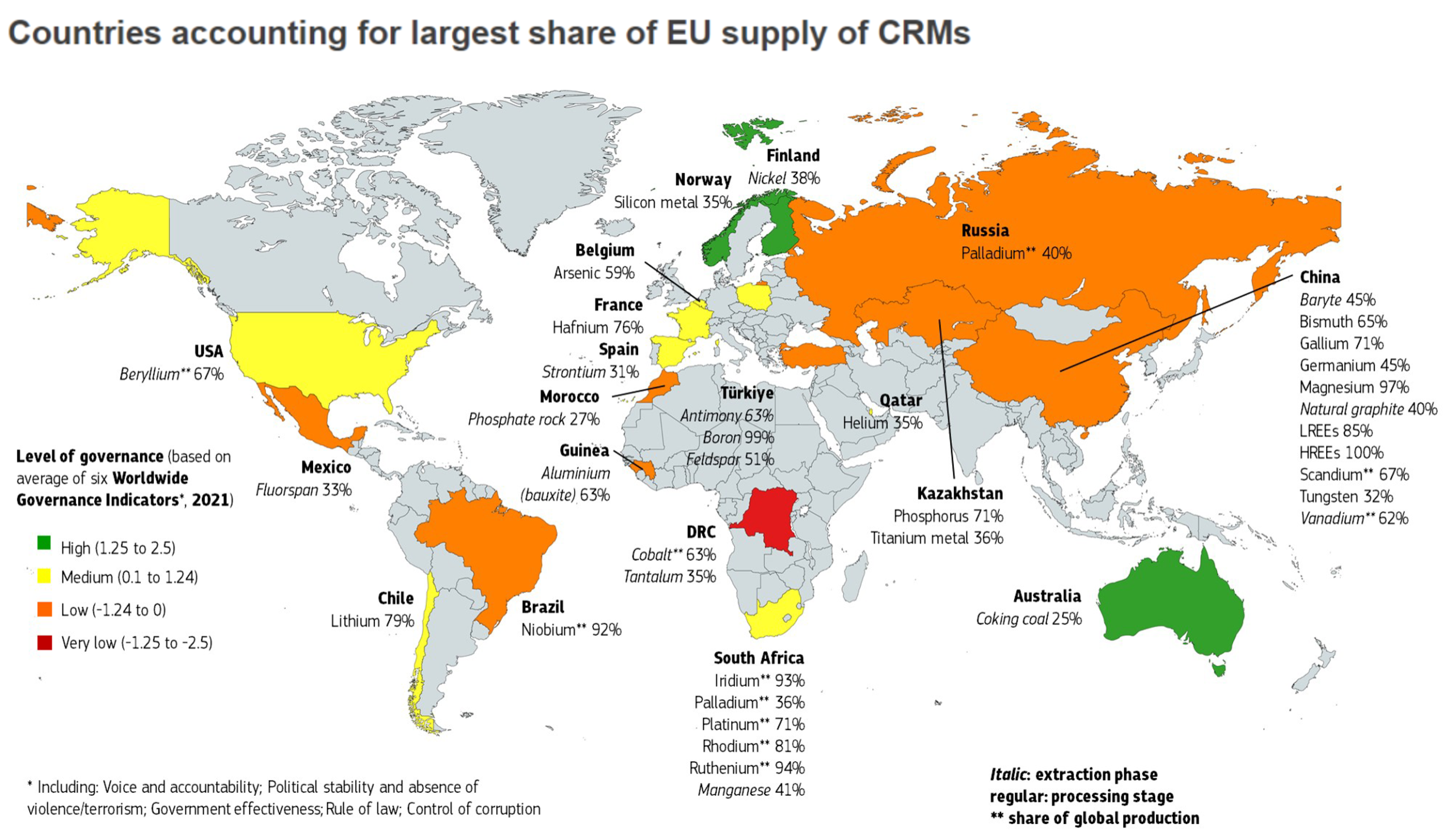
This major event has sent shockwaves through the industry, highlighting once again Europe's dependence on external supplies of rare earths (70% of European rare earth supplies come from China) and, more broadly, for all fossil fuels, including hydrocarbons.

Reducing Europe's consumption of fossil fuels is a major challenge for our sovereignty. It is also a major environmental issue.

Technology is regularly invoked as a solution to this problem because it is said to have the virtue of decoupling economic activity from resource consumption. However, this is only a partial vision, as technology itself is eminently made up of fossil resources from non-European territories, led by China.

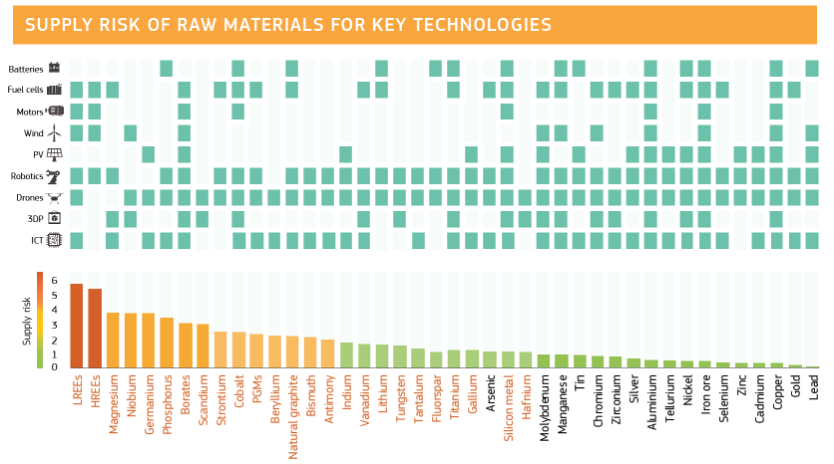
This first graph highlights the risk of European supply (bottom) of raw materials for a range of technologies (left) needed for environmental transitions.

Supply risk of raw materials for key technologies

Supply chain analysis and material demand forecast in strategic technologies and sectors in the EU - JRC Science for Policy Report

LREEs (Light Rare Earth Elements) and HREEs (Heavy Rare Earth Elements) top the list of raw materials most at risk for the technologies listed.

It's interesting to cross-reference this view with the following map, which shows the geographical origins of resources and the "Level of Governance", which can be interpreted as a country's level of stability, which is an approximation of the level of supply risk from a European perspective. It shows that most raw materials come from China and Africa.

Geographical origin of resources

Supply chain analysis and material demand forecast in strategic technologies and sectors in the EU - JRC Science for Policy Report

From the linear model to the circular economy: rethinking value creation

In the face of these vulnerabilities, a fundamental rethink of our economic approach is becoming imperative. The traditional "take-make-dispose" model is now revealing its structural limits. For a large proportion of the manufactured products we know, we can retain the following orders of magnitude: 90% of resources and 80% ofCO2 emissions are concentrated in the upstream phases of the value chain (extraction, production, assembly).

The circular economy responds to these realities by proposing a genuine paradigm shift. Rather than following a linear logic that progressively destroys value over the course of a product's life cycle, it structures flows around the preservation and optimization of that value.

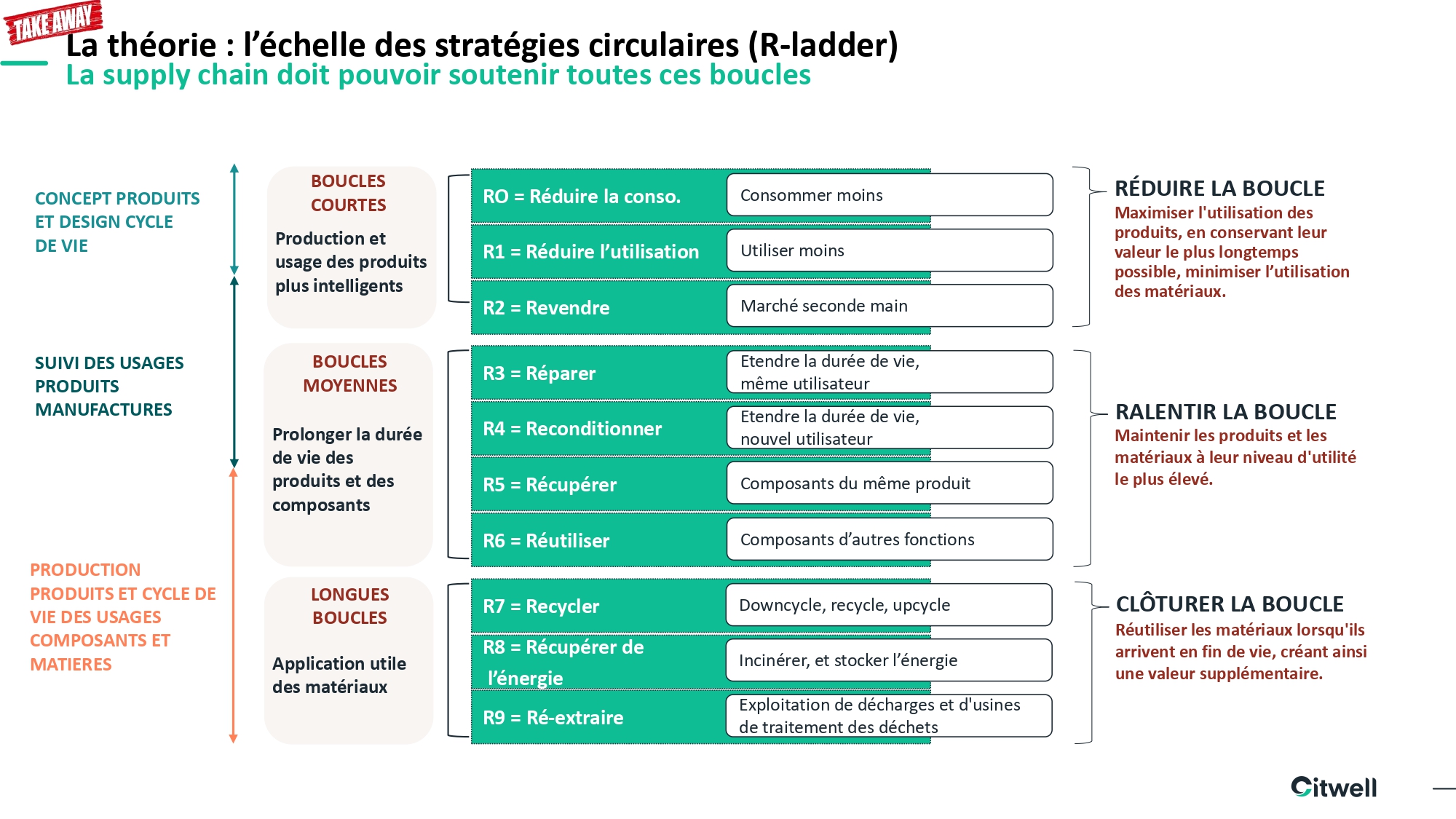
This approach is based on the "10 Rs" framework, which prioritizes circular strategies according to their impact. They are broken down into three main logics: reducing the loop (R0-R2), slowing the loop (R3-R6) and closing the loop (R7-R9).

Lifecycle and stages on the R-ladder

Lifecycle & stages on the R-ladder (Reike et al, 2018)

This prioritization provides companies with a compass for prioritizing their circular actions.

Photo by Jonathan Lecluze

Moving from a linear to a circular model is not just about adding recycling at the end of the cycle, but about completely rethinking the way we create and preserve value throughout the chain.

Jonathan Lecluze,
manager specialized in circular supply chain at Citwell

Inspiring pioneers

Several companies present at the workshop demonstrated the economic and environmental benefits of these circular approaches, while reinforcing the robustness of their supply chains. Among them:

  • Orange company logo

    Orange presents one of the most successful circular supply chain models. Today, one box in two comes from the circular supply chain, and each piece of equipment can be reconditioned up to 10 times, thanks to an eco-design that favors disassembly using screws rather than rivets. The benefits are many: significantly reduced supply costs, reduced environmental impact and secure production volumes.

  • Renault Group logo

    Renault is deploying a structured circular strategy with The Future is Neutral, a project to recycle metals and batteries from electric vehicles in order to secure supplies of critical materials.

  • Decathlon logo

    Décathlon is developing its circular business models, offering buy-back and resale of second-hand products, repair and rental of sports equipment.

How does circularity transform risks into opportunities?

These concrete examples illustrate how the circular economy transforms the vulnerabilities of supply chains into genuine levers of resilience and opportunities:

  • Securing supplies

    Circularity creates new sources of supply independent of traditional geopolitical constraints.

  • Economic stabilization

    By developing in-house recovery and recycling channels, companies can protect themselves against fluctuations in raw materials markets, thus ensuring greater cost predictability. Interface illustrates this approach by manufacturing nylon carpet tiles (derived from petroleum) from recycled fishing nets.

  • Regulatory anticipation

    The circular economy makes it possible to anticipate regulatory changes rather than undergo them, transforming these constraints into competitive advantages. Apple is investing in dismantling robots to anticipate legislation on repairs, while Europe's Critical Raw Materials Act now requires the sourcing of recycled magnets.

  • picto conserve

    Protection against reputational risk

    Protection against reputational risk in the textile sector, which is highly exposed to social and environmental controversies. This is the choice made by Patagonia through its Worn Wear program for the repair and resale of used clothing.

  • Better flow predictability and revenue diversification

    One example is Philips and its Lighting as a service model.

Challenges and recommendations for a successful transformation

Strategic lessons

Five fundamental principles emerged from this session to guide supply chain professionals.

  • Proactive solution
    Transforming risk management from a defensive to a value-creating approach
  • Profound transformation
    Need for in-depth rethinking of processes, information systems and organizations
  • Complementarity with sourcing strategies
    Convergence with multiple sourcing approaches (circular can be seen as a new form of sourcing), nearshoring (circular is essentially local)
  • Full-cost vision
    Inclusion of hidden costs and externalities in economic analyses to reveal the full potential of the circular
  • Strategic challenge
    The need for unfailing support at the highest corporate level

* Nearshoring, as opposed to offshoring, is the relocation of an economic activity to another region of the same country or to a nearby country.

NEWS

See all the news


EVENTS

PRESS
To go further

Read more

LAB Jeunes puts slow logistics under the microscope

A fundamental question arises: is speed at all costs the only possible path to a high-performance, desirable and sustainable supply chain? It is in this context of tension between the contradictory expectations of consumers and ecological and economic imperatives that the concept of slow logistics takes on its full meaning. Far from being a step backwards, this approach proposes a re-evaluation of speed, not as an end in itself, but as an element to be optimized in the service of more thoughtful, more resilient and more responsible logistics.

This article from LAB Jeunes invites you to demystify slow logistics and slow down. Because choosing "better" over "faster" is already changing the world.

The customer experience: Instantaneous versus Durability

Generations Y (Millennials), Z and the emerging Alpha Generation have profoundly transformed customer relations. Having grown up in a hyper-connected world, these demographic groups are characterized by a thirst for immediacy and an unprecedented demand for personalization.

For them, waiting has become an anomaly rather than a norm.

The notion of acceptable lead times has been drastically reduced: "delivered in 24 hours", or even on the same day. This demand for responsiveness imposes an unprecedented level of flexibility and precision on the supply chain, from automated inventory management to meticulous orchestration of logistics flows. The slightest delay or mishap can damage customer satisfaction, and even brand loyalty.

To meet these demanding needs, many companies have had to adopt omnichannel marketing. This customer-centric strategic approach harmonizes, integrates and synchronizes all communication, sales and service channels. Logistics thus become a key differentiating lever in a saturated market, where competition often comes down to the last few meters of delivery.

When customers also demand sustainability

Urban parcel flows are set to increase by 78% by 2030, threatening to saturate infrastructures and increase the carbon footprint of e-commerce.

Rodrigue Branchet Fauvet, permanent member of Lab Jeunes, E2E Supply Graduate Program at Renault Group

At the same time, these same consumers, particularly the younger generations, are increasingly sensitive to environmental issues. They expect brands not only to meet their immediate needs, but also to act responsibly. An eloquent figure underlines this trend: 80% of consumers say they are ready to switch brands in favor of a company more committed to sustainable development.

Companies must now combine immediacy and eco-responsibility, two often conflicting objectives. As a result of this dual requirement, and under increasing regulatory pressure, the link between Supply Chain and customer satisfaction has been considerably strengthened, particularly in the B2C e-commerce sector. One of the main challenges today is managing the last mile, i.e. the final delivery phase.

Often the most costly, the most polluting and the most visible for the consumer, last-mile management represents :

  • A key to meeting customer expectations: it directly influences customer satisfaction and loyalty. Some 88%[1] of e-buyers consider delivery to be an important purchasing criterion.
  • Rising logistics costs linked to personalized delivery (time slots, lockers, free returns, etc.).
  • Environmental impact: Light commercial vehicles used for deliveries account for around 30%[2] of greenhouse gas (GHG) emissions in cities, and urban travel accounts for a third of total freight transport emissions. The last mile accounts for around 25% of the supply chain's environmental footprint.

The World Economic Forum's 2024 report on urban logistics points out that urban parcel flows are set to increase by 78% by 2030, threatening to saturate infrastructures and increase the carbon footprint of e-commerce. Companies must therefore reinvent their business models by pooling deliveries, using soft modes (cargo bikes, electric vehicles), setting up urban micro-hubs and algorithmic route optimization.

LAB Jeunes' plea for a more effective slow logistics
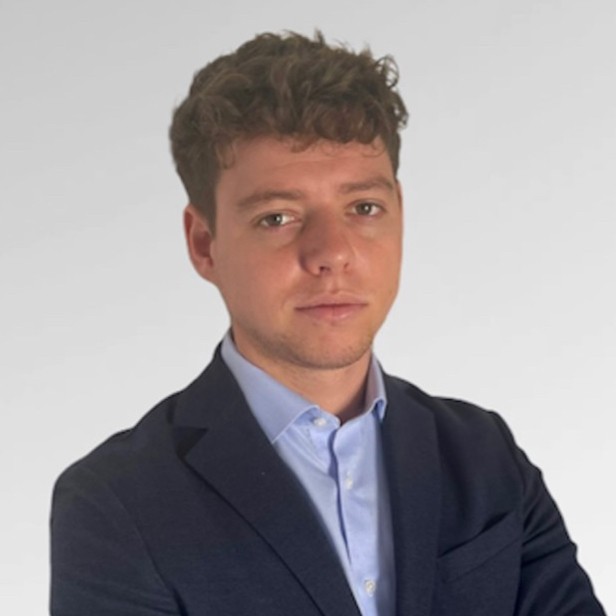
Slow logistics is not a morality of slowness, it's an intelligence of tempo.

Robin Thomas-Le Déoré, permanent member of Lab Jeunes, Operations & Performance Strategy Consultant at KPMG

This speed, the ultimate argument for pseudo-performance, has made us lose sight of the real issues and consequences of a chain that's running out of control. Slow logistics is not a morality of slowness, it's an intelligence of tempo. This emerging concept suggests rethinking logistics not from the angle of immediacy, but from that of responsibility.

This starts with a simple gesture: make the trade-offs visible. When making a choice, customers need to know what their option weighs in terms of CO², reliability and total cost. When the footprint and probability of delivery are displayed, the purchase ceases to be a gamble and the experience becomes enlightened and responsible.

Reprogramming the tempo means distinguishing the urgent from the hurried. Not everything deserves to arrive tomorrow morning. The vital, yes; the current, no. We would add that a high-performance chain :

  • assumes differentiated cadences ;
  • consolidates when relevant;
  • mutualize when possible.
  • is based on micro-hubs that bring people together without getting in the way;
  • shift to low-carbon modes that reduce the environmental footprint without sacrificing reliability;
  • is based on shared data that harmonizes rather than obscures.

As for the city, it can no longer absorb the infinite addition of solitary solutions. The next frontier isn't a higher warehouse or a faster van, it's interoperability (coordinated slots, common interfaces, hubs open to multiple operators and a shared data language).

We're convinced that where there's cooperation, the kilometers disappear, load factors rise, and the promise made to the customer becomes more reliable. Cooperation is not a concession; it's a productivity booster.

Emma Arrondeau, permanent member of Lab Jeunes, S&OP International Planner at L'Oréal

Our generation doesn't wait for permission to try: it tests, measures and publishes. Give it a year, and it will demonstrate that a proportion of urban flows can be shifted to rail, river or cargo bike; that returns can be avoided through better packaging design and more honest dialogue; that the promise "sober by default, express on justification" raises service levels without lowering satisfaction. Give it shared metrics, and the competition will be on total performance, not display speed alone.

This plea is not a renunciation of progress: it is its demand.

Progress isnot about arriving earlier and earlier, but about arriving at the right time, at the right cost, with the smallest possible footprint. No technology is hostile to this vision: AI that predicts, data that sheds light, tools that orchestrate rounds and avoid empty runs all serve the same ambition, as long as accountability is accepted.

The aim of LAB Jeunes, and of our generation as a whole, is to get to grips with these issues, which reconcile competition and cooperation, performance and efficiency, consumption and responsibility.

When intention collides with reality
Slowing down flows in order to think about them more effectively means accepting a new logistical grammar made up of correspondences, breathing spaces and fruitful downtime. But the market still conjugates everything in the present tense...

Maxime Bouquin, permanent member of Lab Jeunes

As soon as you open the door to a warehouse, the poetry of intention collides with the architecture of reality. Slowing down flows in order to think them through means accepting a new logistical grammar made up of correspondences, breathing spaces and fruitful downtime. But the market still conjugates everything in the present tense: saturated rails, limited river slots, micro-hubs that are all too rare outside hypercentres. Consolidation of orders promises better-filled trucks and more fuel-efficient shuttles, but it also brings uncertainty to the table. A storm on the Rhone corridor, a delay on a lock, and the whole score shifts. The "reasonable deadline" then becomes a fragile promise: too ambitious, it frustrates; too cautious, it discourages.

Economic truth speaks without emphasis

Building a "slow"network requires patient capital, an investment aimed at operational savings and reduced risk. Shared hubs that can't be rented by the day, reusable containers that need to be tracked, washed and repatriated, secure data platforms to orchestrate sharing between competitors: this is CAPEX at the service of a more sober OPEX.

The message to shareholders is clear: inventory is not the only item that ties up capital; the absence of shared infrastructure, reuse loops and interoperability also ties up value in empty runs, failed deliveries, returns, penalties and regulatory risks.

The payback here is in stable volumes, trust and transparency. The result: higher load factors, avoided kilometers, lower total cost of service and reduced non-financial risk. Slowness isn't just a fancy: it's a cost structure that improves over time.

The social limit is no less decisive

Cyclo-logistics is rightly celebrated for its discretion, its cleanliness, its way of stitching up the city. But the beauty of the gesture is not enough to protect the worker. Poorly supervised, the boom in cargo transport can create grey areas, where workers are paid by the hour and their working hours stretched to absorb irregular flows. Conversely, professionalizing the sector requires costly skills:

  • Multimodal planning ;
  • Data management ;
  • Mastery of interoperable information systems.

Slow logistics is not a return to rusticity; it's a new approach and a new way of thinking, less energy-intensive but more cognitive, which requires new skills and time.

Charly Suaire, permanent member of Lab Jeunes and Senior Consultant in Supply Chain and Operational Performance at Newton Vaureal Consulting

If fast fashion goes green, what's the point of slowing down?

And then there's our arch-rival: fast fashion and, even more so, its ultra-fast incarnation on the Web. They don't just sell clothes; they sell a permanent acceleration of desire. Micro-collections spring up every week, sometimes every day; the algorithm moves supply at the speed of a thumb, and logistics follow. Prices compressed to the extreme, fleeting traceability, instant gratification: this mechanism installs a pedagogy of reflex, an addiction to the "now" that makes any delay suspect.

The standard becomes invisible and tyrannical : delivering fast is no longer a performance, it's a must. In the face of this competition, innovation is not enough if it cannot be understood. Warehouse automation, AI for route optimization and electrified fleets are making fast logistics ever more efficient and, in some cases, less carbon-intensive.

It's a tough comparison: if fast is green, what's the point of slowing down? The answer can't be a sermon. It requires a clear contract with the customer: say what's urgent and what isn't; display, for each option, the total cost and the real footprint; recognize that waiting has a price, and that immediacy also has one, long hidden.

If slow logistics wants to make its mark... 

Slow logistics won't win by pitting morality against comfort, but truth against reflex. It must transform expectations into value, make the invisible visible (simple, published, comparable indicators) and, finally, turn cooperation into a competitive weapon. These are political as well as industrial gestures.

None of this will erase the attraction of "everything, right now". But economic history is also about storytelling and proof.

If slow logistics is to make an impact, it needs to offer both: a story that makes people want to wait, and evidence that closes the door on suspicions of inefficiency.

Gabrielle VENOT, Communication Manager for Lab Jeunes and Supply Chain Customer & Continuous Improvement Manager at ST Michel Biscuits

Only then will it be able to shift the center of gravity: no longer pitting slowness against modernity, but proposing a modernity that no longer confuses speed with progress.

At the end of the day, we never just deliver a package. We deliver a way of inhabiting time, the city and the planet. As long as speed reigns unchecked, slow logistics will appear to be in the minority. If it becomes legible, measurable and desirable, the law could change: the pace will cease to be a diktat and become a decision - ours.

Sources :

NEWS

See all the news


EVENTS

PRESS
To go further

Read more

5 SMEs talk about their participation in the eSCalade program

The 5 participating companies all agree that they are at a "pivotal point" in their development. A phase in which these SMEs and start-ups need to change dimension and scale up their processes. Supply Chain is a major lever in this process, and the program meets the expectations of these professionals, not least because it results in a concrete, high-quality action plan for each of them. This is made possible by personalized inter-session follow-up, exhaustive and in-depth training days, and lots of peer-to-peer sharing.

Interview at the closing day of the 6-month program at L'Oréal.

What convinced you to take part in eSCalade, and what's the biggest benefit of the program?

Why would you recommend eSCalade to another SME?

interview - quote

Benoit:

I'd recommend it for an SME that has a clear project for structuring its supply chain, and that has the support of its management to build something. You shouldn't get involved if you don't clearly know where you want to go, or if you don't have the support, backing and resources.

Myriam:

To put it very simply, I'd say it's for an SME looking for visibility over its supply chain. If the company is at a stage where it's trying to find its way, this program allows it to take a step back and define its major objectives, while at the same time making them very concrete. It's a good way to gain vision and clarity.

Benjamin:

It's really a program for gaining perspective, even if the company already has audits (as in the automotive industry)! Because you discover the problems of others who are in other sectors, you make them your own and you question yourself. Initially, I was worried that all the participants would be from the automotive sector, and would therefore come across the same issues (e.g. random forecasts and orders), but I realized that, despite the different backgrounds, many of the problems were similar.

Guillaume:

I'd recommend it above all for companies that want structure in their logistics approach, by providing a "backbone" that enables them to put their finger on the right issues very quickly, and to know how to deal with them right through to the end, with support throughout the process.

David:

I think that the greatest impact will be on people who are in the process of industrializing or increasing their volume, and who want to extend their supply chain capabilities to ISO resource, for example, or at any rate by putting in place procedures and tools, if they are already in place, but which enable all these processes to be tidied up a little, I think that this is really where the program is most relevant.

In any case, I know that in the start-up ecosystem, I think it's really a tool that can be very useful in bridging the "valley of death" gap. When you've finished R&D, you try to produce and launch something on the market. You've got the concept, you've got the market, but you've got to start producing, and that's where a lot of things fall apart, unfortunately.

Presentation of action plans

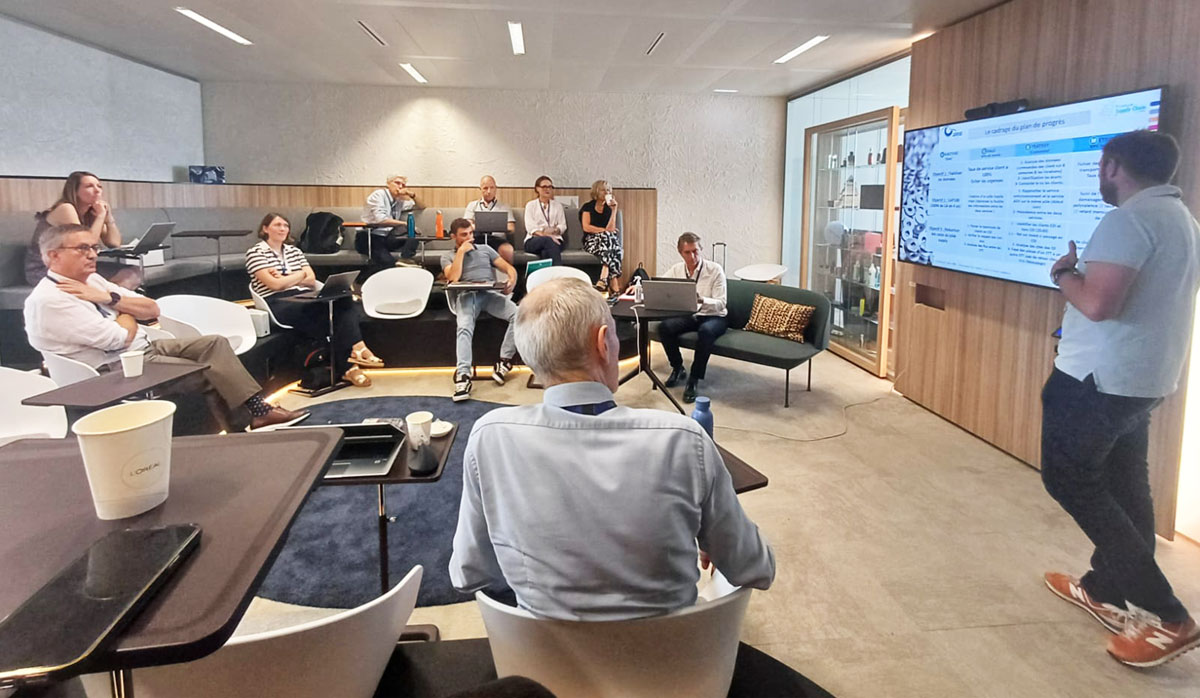
Presentation of action plans and progress plans by participants in front of trainers, network professionals and their sponsor, François PEIGNES, retired Vice President Supply Chain Operations at Orano.

What advice would you give to a small or medium-sized business taking part in the program to ensure its success?

idea exchange

David:

one of the prerogatives is to be equipped with at least an ERP, and therefore to have sufficient digital maturity to fully exploit the potential of the program and the tools offered, because a net requirement calculation in Excel is not viable over time.

Benoit:

It's also important for everyone to describe their motivations for following the program, as this provides a roadmap for the rest of the process and avoids any drift.

Benjamin:

Filling in the pre-training questionnaire, first on your own and then with your management (N+1), helps align expectations and define a clear training guideline.

Guillaume:

already have a real project approachto have something concrete to put into the machine during the sessions, rather than a purely theoretical idea, for a more effective application.

A Supply Chain self-diagnosis to assess its mastery of the fundamentals

In terms of your mindset and Supply Chain vision, is there a BEFORE/ AFTER eSCalade?

Cohesion

Myriam:

These 6 months have given meaning to our action plan. There were some ideas there, but we didn't really know where to start, so the fact that we were able to give a structure to our plan, I think, unblocked certain issues.

And on a more personal note, it's made me feel a bit more at ease. Yes, we're an SME, we're not up to date on everything, but we realize that in some areas things are fine. And there's this strong notion of arbitration and adaptation according to the business, which has really reduced the pressure to be "perfect" or to have to put in place all the great processes and good ways of doing things.

Benjamin:

In concrete terms, we've created a supply chain division, we've already moved people around and now we've got the scheduling, logistics and sales divisions together. We're aiming for smoother communication and mutual support.

And what's really nice is the "before/after" between each day of face-to-face training. That's the real plus of the training, having the two-hour inter-sessional sessions with Laurent (one of the trainers) every three weeks, allows us to dive back into the subject and, above all, to move forward.

David:

It enabled me to consolidate the action plan we had for the supply chain. Today, we're an old start-up, so there are a lot of things to do, to put in place, and it allows us to get feedback from everyone, to see what we're prioritizing so that we can already have a first draft of the supply chain, to have concrete actions right away.

One major contribution has been to put existing tools (often poorly mastered) back at the heart of processes, so that they can be better appropriated for the benefit of the company and the supply chain. In that sense, I think we've really succeeded.

Presentation of action plans

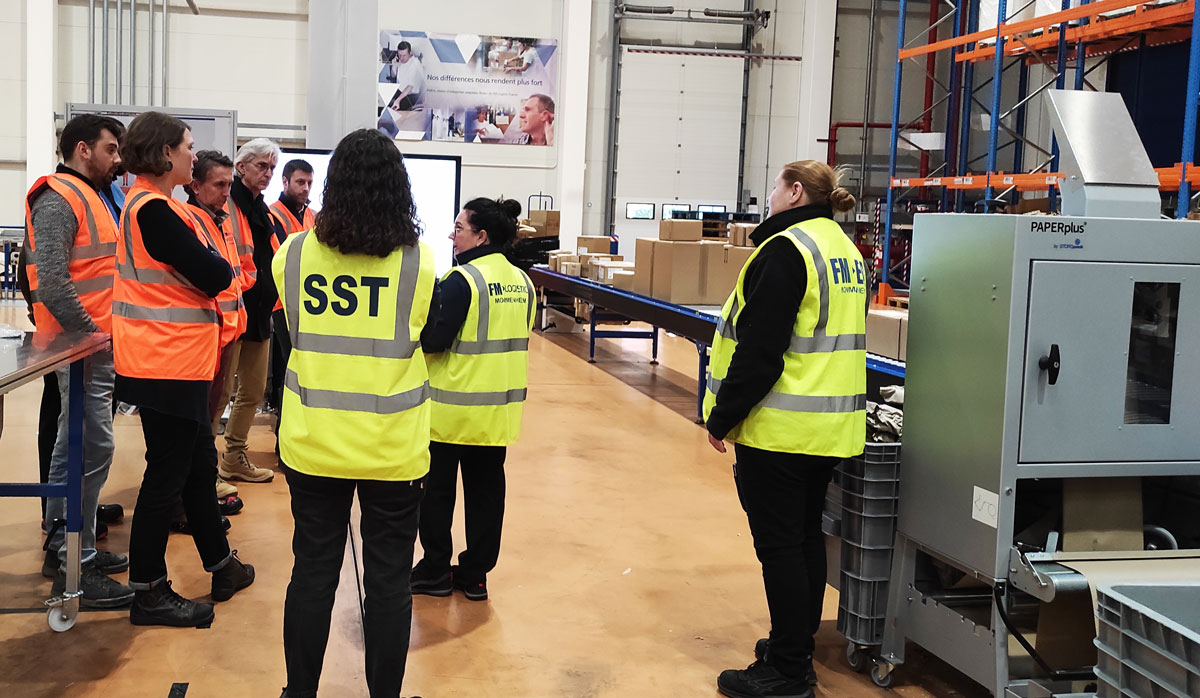
Visit to FM Logistic's Mommenheim logistics platform during the2nd day of training.

In short, the ideal company profile for the Escalade program:

    • In the industrialization or high-volume increase phase.
    • Seeking to increase the capacity of their supply chain with constant resources (at ISO Resource), in particular by implementing procedures and tools to streamline existing processes.
    • For start-ups, to get through the critical stage between the end of R&D and the launch of large-scale production (the "start-up valley of death"), where many fail.

The eSCalade program is proving to be an essential catalyst for SMEs and start-ups seeking transformation and growth. As participants testify, the program lives up to its name eSCalade (Ensemble pour une Supply Chain Agile, Lean, Attentionnée, Digitale, Durable et Efficace), enabling companies to climb the development ladder with confidence and structure.

Join the 4 companies already registered for the January session

eSCalade

Many thanks to our "climbers" for sharing their heartfelt experiences, and congratulations on the work already accomplished and to come!

  • Yann de Feraudy

    Myriam BIZOUARD

    Supply Chain Director

  • Guillaume DEGETZ

    Guillaume DEGETZ

    Supply Chain Manager

    Oceane Logo

  • Yann de Feraudy

    Benjamin FAUTER

    Scheduling and logistics manager

    Gris Group Logo

  • Yann de Feraudy

    David GROSCLAUDE

    Supply Chain Manager

    Cailabs Logo

  • Benoit MAISONHAUTE

    Benoit MAISONHAUTE

    Logistics Manager

    BONY SAS

NEWS

See all the news


EVENTS

PRESS
To go further

Read more

France Supply Chain's Foresight Workshop: Horizon 2040

France Supply Chain's Foresight Workshop: A look back at the 8 "Horizon 2040" sessions

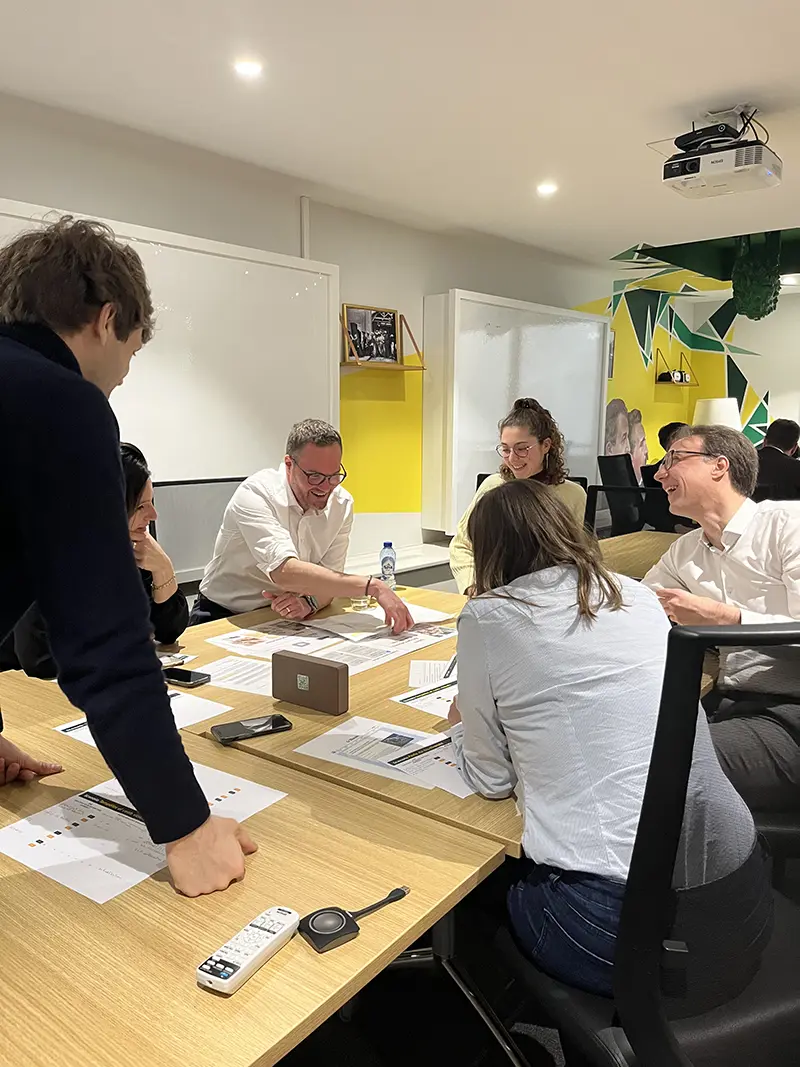
In the 1 year since the1st test workshop organized by France Supply Chain, Horizon 2040 has brought together some 260 players from a wide range of backgrounds to explore the future challenges facing the supply chain.

"It was a really interesting exercise, which makes you want to personalize it and make it your own for your perimeter. The power of this workshop is to be able to draw up an action plan/Roadmap" noted a manager from Saint-Gobain.

Through 2 inter-company sessions, 5 intra-organizational sessions and 3 higher education sessions, participants were able to immerse themselves in prospective scenarios, identify action levers and draw up strategic plans. The aim was to raise awareness and equip companies to deal with climate risks and sustainability issues. Today, we share with you the feedback from Michelin, Louis Vuitton, Renault and Kedge Business School, which testify to the positive impact of this workshop.

Michelin Retex

Populations
Engineering and Supply Chain Management
Objectives
  • The aim of the workshop was to encourage participants to take a longer-term view and feed initial actions into the company's 2025-2029 strategic plan.
  • The aim was to identify ways forward, and the levers and actions to be deployed to anticipate climate risks.
Post-game decision

management has integrated climate risks into the strategic plan and taken into account the actions identified by the engineers. Of particular note is the need to simulate the logistics network (digital twin) and design new solutions.

Game deployment method & recommendations

2 scenarios were selected from the 6 available to best meet their priorities. These were combined with 2 other Design Fiction scenarios relating to stores and team well-being.

They enjoyed

The participants appreciated the opportunity to express themselves on new subjects, outside their own expertise, and to take part in the action thanks to design fiction, which enabled real immersion. They also appreciated the opportunity to share their issues and meet each other.

Louis Vuitton Retex

Louis Vuitton logo

Populations
Supply Chain LV players already sensitive to the subject
Objectives
  • Questioning adaptation issues
  • Test the design fiction tool for deployment in terms of awareness, then action
Post-game decision
The innovative immersion format was selected for a future 2-day training course on sustainable operations, designed and delivered internally at Louis Vuitton.
Game deployment method & recommendations
A few minor adaptations enhance the tool: adapting the context (company names, sectors) and adding company-specific elements facilitate the (already self-supporting) animation. Work on immersion, using scenographic tricks, increases the impact on participants.
They enjoyed
Participants appreciated the scientific references, derived from in-depth prospective work, which made the game both factual and convincing. Immersion creates a sense of proximity to the future climate, and is more conducive to action than a fresco.

Renault Group Retex

Louis Vuitton logo

Populations
Manager representing the various Supply Chain professions
Objectives
  • The aim of the workshop was to continue disseminating the concept of risk - in this case, climate risk - to as many people as possible within the company. In this context, the pilot session was to determine whether this format was relevant, and if so, whether it could be included in the training catalog.
  • The aim was for participants to come away with an awareness of climate risk, a vision of the impact on their businesses, and to identify the levers for action to be deployed.
Post-game decision

The game has been integrated into the training catalog. 

Game deployment method & recommendations

4 scenarios were selected from the 6 available to best meet their priorities. The artefacts were adapted on the margins for better appropriation by the participants (e.g.: the names of the ports or the activity of the company were changed).

They enjoyed

Participants appreciated (rating 4.74 / 5):

  • In terms of form, the direct and striking immersion in the urgency of the situation, and the collaborative format, which allows us to break down the barriers between different professions, with a shared vision.
  • Basically, to be able to share what has already been done in each business, and above all to plan relevant, actionable short-term actions (which are included in the business roadmaps).
  • horizon-2040-2e-session-01

    The2nd inter-company session of HORIZON 2040 organized by France Supply Chain

  • horizon-2040-artefacts

    Some of the game's artifacts to take you back to 2040

Kedge Business School Retex

Kedge Business School logo

Populations

Business transformation for Sustainability Master's students, ISLI and IMS Master's continuing education students. As part of a module on sustainable supply chain, with the overall aim of carrying out a company's carbon footprint and proposing actions to decarbonize and adapt it to climate risks.

Objectives
  • Raise awareness of the need to integrate these aspects into the company's strategic decisions
  • Drawing up a decarbonization and adaptation action plan
Game deployment method & recommendations

The workshop enabled students to immerse themselves in real-life scenarios and propose concrete actions.

They enjoyed

The actionable nature of this workshop, and the results that emerged, will feed into their respective action plans.

How can I take part in or organize a "Horizon 2040" workshop?

Horizon 2040 workshop

This game was developed by the Supply Chain 4 Good community's "foresight" project. HORIZON 2040: LE DÉFI CLIMATIQUE DES SUPPLY CHAINS is a France Supply Chain by Aslog trademark, registered with INPI and available only to members of the association. Its use is subject to the signature and respect of a Usage Rights Agreement.

The game case is currently available in 3 versions:

  • French and physical
  • French and digital

    (customizable)

  • English and digital

    (customizable)

To obtain one, or to take part in the next multi-company workshop, the first step is to contact us and tell us about your project. We'll work with you to choose the optimum version and conditions for your workshop.

Get in touch free of charge

The project is constantly improving to offer you the best possible experience and generate greater impact for a more sustainable Supply Chain and world. Industrialists, distributors, logisticians, from all sectors, discover the perils that you will face on an almost daily basis, so that you can prepare for them. Armelle Perrier, Stef's CSR Director, told us : "I really enjoyed the exercise, which was very well documented, interesting and powerful. How about you?

NEWS

See all the news


EVENTS

PRESS
To go further

Read more

Supply Chain Day 2025: what can we learn from the day?

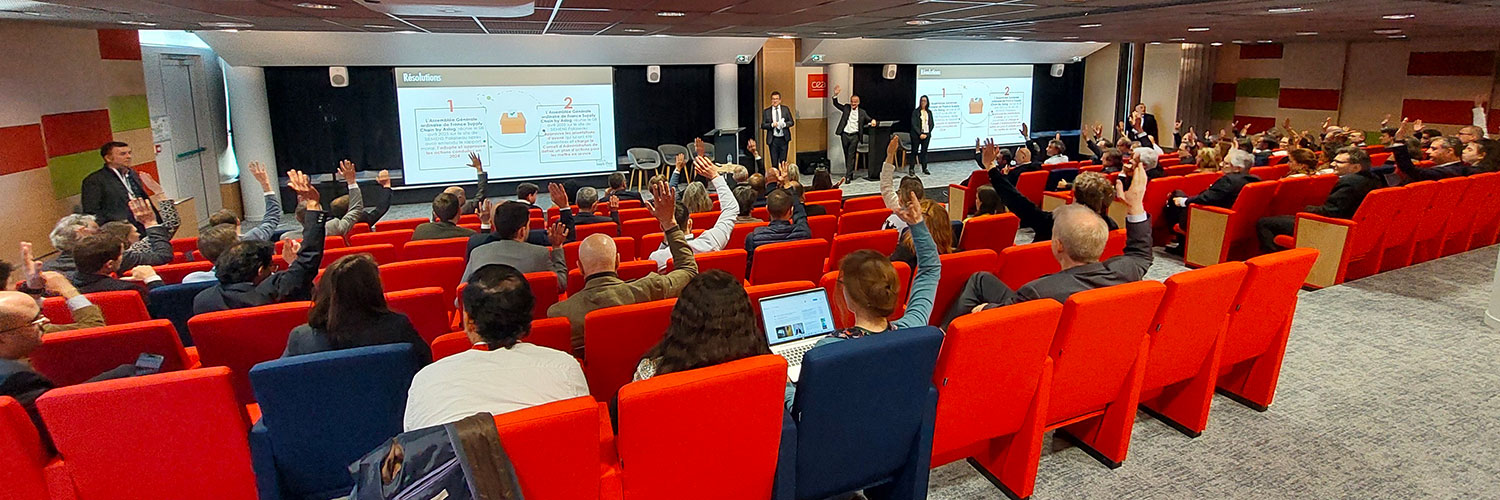
Supply Chain Day is an opportunity to look back on the major achievements of the association and its members, and to follow their development. This 2025 edition marks a turning point with a major change for France Supply Chain: twice as many productions, the creation of an endowment fund, new strategic partnerships and even more committed governance.

Discover in pictures the key moments and messages of the Annual General Meeting and the digital learning expedition that followed.

A new Board of Directors, but above all continuity

Chairmanship and Co-Chairmanship: changes to the bylaws

At the Extraordinary General Meeting, a major amendment to the bylaws was proposed concerning the association's governance. The presidency will remain unchanged in terms of required qualifications: the president must be a shipper, responsible for an international supply chain. However, a major innovation has been introduced, with the possibility of appointing a co-chairman. The co-chairman, who may be retired or have a reduced activity, must also come from College 1 shipper and have managed an international supply chain over the last five years. This measure is designed to relieve the Chairman of the many requests to attend meetings, and to distribute the workload more evenly.

Renewed governance, as committed as ever

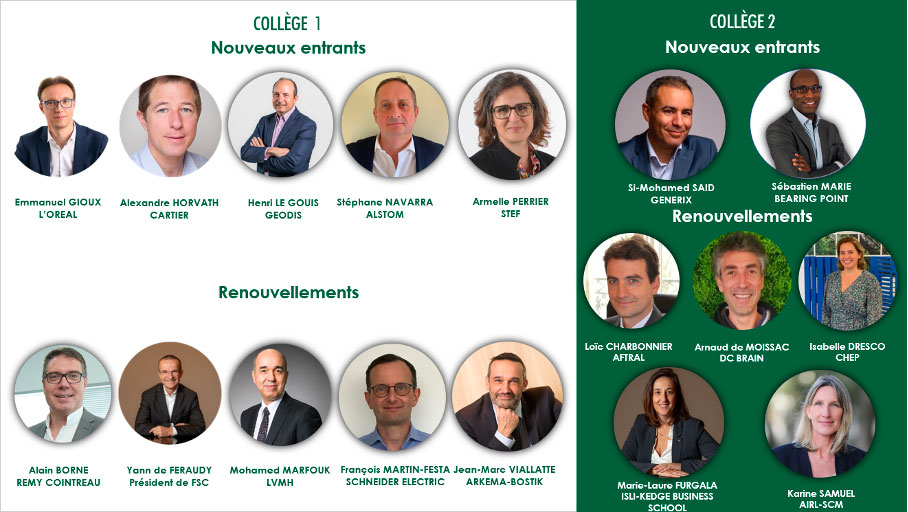
New members and renewed mandates on the France Supply Chain Board of Directors

New members and renewed mandates on the France Supply Chain Board of Directors

The Board of Directors (BOD) of an association plays a crucial role in the governance and management of the organization. It has a versatile and essential role, ranging from strategic definition to operational management, including representation and supervision. It is the guarantor of the association's smooth running and long-term viability, in direct contact with the team of permanent staff and active members.

At France Supply Chain, the Board of Directors takes the form of a "comité des sages" or scientific committee. It is made up of a diversity of profiles and complementary expertise: manufacturers, distributors, logistics service providers, academics, researchers, solution providers, real estate players, etc.

Following a vote at the Annual General Meeting, the Board will be given new responsibilities, in particular the management of membership fees, previously the responsibility of the Annual General Meeting. This reform will allow greater flexibility, as the Board meets four times a year, unlike the General Meeting, which only meets once a year. This reorganization is essential to keep pace with the association's growth, and requires greater commitment from its members. It is crucial that directors are available and involved to ensure effective and proactive management.

Discover all directors

An association on the move for ever more IMP'ACT!

The Association steps up a gear

The past year has been marked by a significant transformation of France Supply Chain, aimed at increasing its impact. The association has forged several strategic partnerships, such asAlliance for Logistics Innovation through Collaboration in Europe (ALICE) and Movin'On, giving it a European dimension and strengthening its ability to build powerful coalitions.

Other collaborations withADEME and the Institut du Développement Durable et des Relations Internationales (IDDRI) will add scientific depth, enriching the association's roadmaps and making its deliverables more robust. These partnerships are the fruit of growing recognition of the quality of France Supply Chain's productions, which have seen the number of publications double compared to the previous year, with almost one per month.

The key figure

1 production/month

in 2024

Lab Supply Chain 4 Good becomes an endowment fund.

A newcomer: the SUPPLY CHAIN 4 GOOD Endowment Fund

To support this growth, Lab Supply Chain 4 Good is transforming itself into an endowment fund. This change will give the association access to both financial and skills sponsorship. Skills sponsorship is particularly crucial to our ability to produce faster and, above all, to enhance the quality of our deliverables.

This endowment represents a major step forward, providing the resources needed to continue innovating and responding to the complex challenges of the Supply Chain, while strengthening the association's ability to influence and transform the sector towards frugal and desirable Supply Chains.

Human Resources are always at the heart of our work

Focus on inclusion: we have launched a discussion group on the inclusion of disabled and senior employees. The aim is to hold a Masterclass at the end of the year, with contributions from experts, specialist organizations and witnesses, in order to share best practices and answer questions.

Loïc Lassagne HR manager SC Renault and Madeleine HR manager Chep

Loïc Lassagne, HR manager SC Renault and Madeleine, HR manager Chep

LAB Jeunes renews itself

The new organization of Lab Jeunes aims to ensure its durability and impact by structuring it into centers of expertise, and by strengthening the support provided by PMOs/permanent members/former Lab Jeunes members who are now active.

A strong message: "Young people are ready to take risks, assume responsibility, and carry out projects with courage and ambition. However, this dynamic cannot be one-sided: the courage of young people must be supported by the commitment of mentors."

Emma, Demand Planner - Consumer Product Division L'Oréal and Robin Thomas le Déoré Consultant Operations & Performance Strategy KPMG

Emma, Demand Planner - Consumer Product Division L'Oréal and Robin Thomas le Déoré Consultant Operations & Performance Strategy KPMG

What about ETIs and SMEs?

  • Photo by Myriam Bizouard

    Myriam Bizouard

    Supply chain director

    Carniato Logo

  • Emmanuel Gioux

    Supplier Performance Development Program Director

    L'Oréal logo

  • François Peignes

    ex Vice President Supply Chain Operations

What better way to understand what makes the eSCalade difference than through the experience of a participant in the made-in-France Supply Chain coaching program? Read Myriam Bizouard's account of the site visits, the meetings with members and other participants, and the support provided by a mentor.

What did you expect from eSCalade? And who did you find? A participant's testimonial

Horizon 2040: The Climate Challenge for Supply Chains

In this case: 30 artifacts brought back from the future, for 6 immersive scenarios!

With design fiction, participants are immersed in a future that is contextualized, and which can be contextualized to your own sectors and companies. This workshop can be used as part of a collective awakening process, to improve your preparedness for climate risks, or to feed the supply chain strategic plan on risk and resilience aspects.
The tool is there, it's usable, it's at your disposal, it's yours!

Ask for it

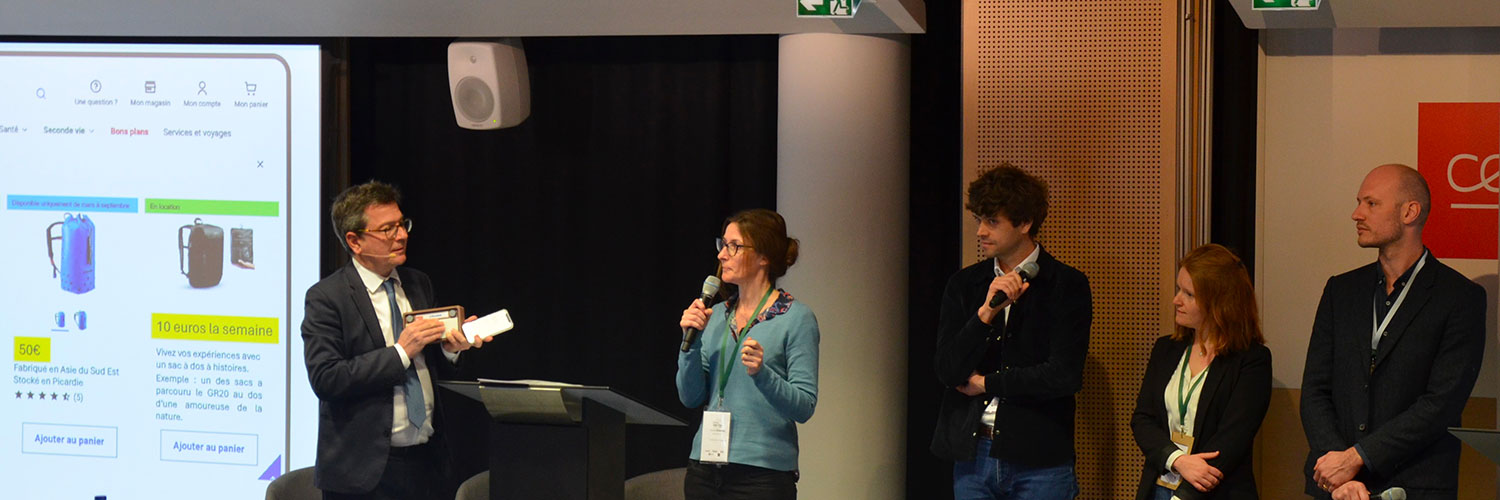
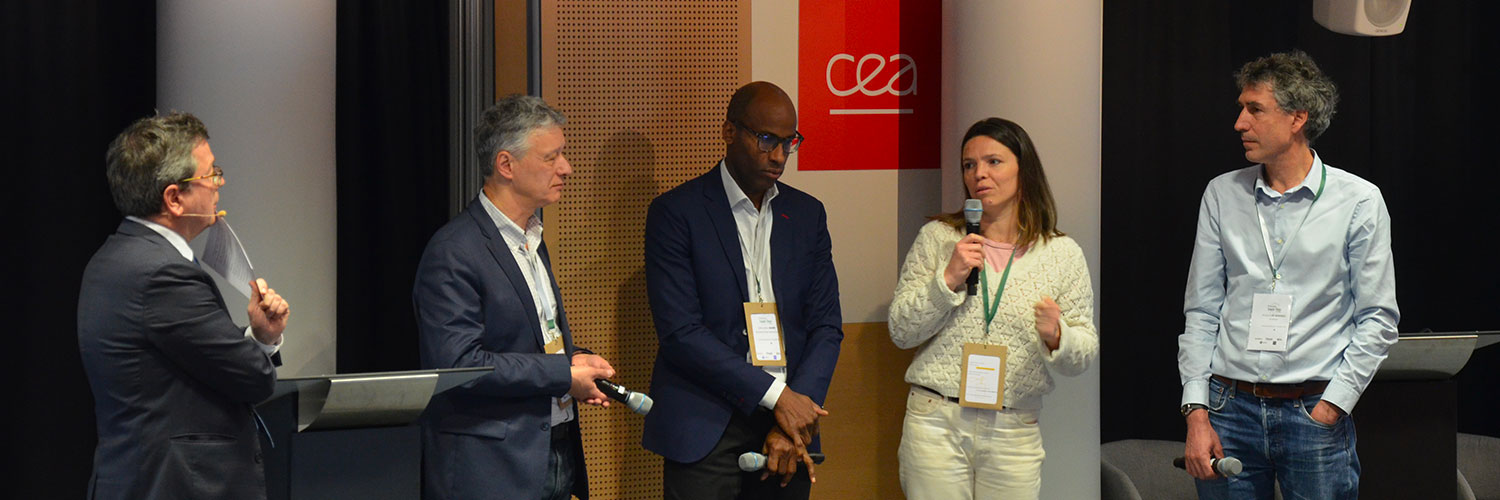
Jonathan LECLUZE, Manager Citwell, Alexandra SAMYN, Director of Circular Economy Operations MANUTAN, Aurélie Delemarle, Principal - Argon & Co and Morgan Dizier, Supply Chain Transformation Manager at Louis Vuitton

Jonathan LECLUZE, Manager Citwell, Alexandra SAMYN, Director of Circular Economy Operations MANUTAN, Aurélie Delemarle, Principal - Argon & Co and Morgan Dizier, Supply Chain Transformation Manager at Louis Vuitton

Live my life as a squad

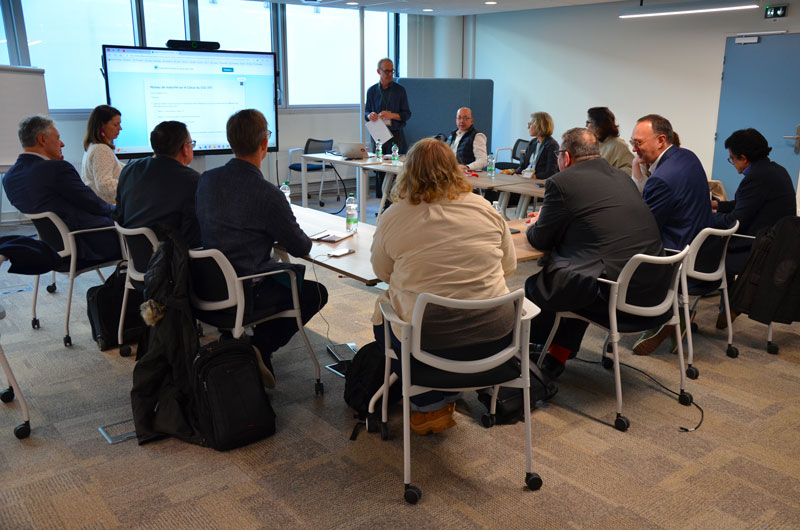
A strong message for the Digital & Techno LAB: no AI without data! With this in mind, during the morning, members presented how their work enables companies to gain in digital maturity, with a focus on data (quality, governance), which has been accentuated in 2025. The CO2 calculation and data component is also fully linked to the pillars of digital maturity and data! Here, the aim is to use data to limit and then reduce the supply chain's carbon footprint.

Sébastien Marie, Partner, BearingPoint, Florence Mazaud, Director, Decarbonation, Sightness, Arnaud de Moissac, President, DCbrain and Jérôme Bour, Partner, Newton Vaureal Consulting.

Sébastien Marie, Partner, BearingPoint, Florence Mazaud, Director, Decarbonation, Sightness, Arnaud de Moissac, President, DCbrain and Jérôme Bour, Partner, Newton Vaureal Consulting.

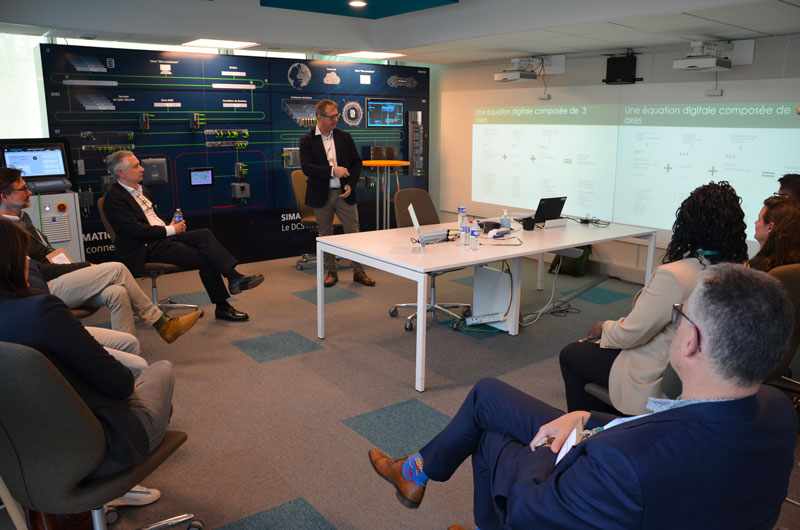
In the afternoon, the program was dedicated to digital transformations, with a learning expedition led by members at the Nano-innov center, and hosted by SIEMENS:

  • A plenary session on start-ups;

  • 2 immersive squad sessions on 4 themes:

  • Maturity grid - Gilles Verdier and Sébastien Marie

  • Data governance - Saad Kadioui and Sébastien Marie

  • Digital twin - Thibaud Maurin and Arnaud De Moissac

  • DataCO2 - Florence Mazaud and Marc Ortlieb

  • discover the IA FSC demonstrator currently being deployed thanks to our members!

  • supply-chain-day-2025-01

  • supply-chain-day-2025-02

  • supply-chain-day-2025-03

  • supply-chain-day-2025-04

Today, we are at a turning point. What we have already achieved is immense. But what lies ahead is even greater. Every action counts. Every commitment, every transformation brings us closer to our goal. Together, we are building a more efficient, more resilient, more humane model.

"Darkness cannot drive out darkness; only light can do that."

Dr. Martin Luther King

NEWS

See all the news


EVENTS

PRESS

Read more

Launch of the Supply Chain Resilience Observatory: global vision, concrete actions

Yann de Feraudy

I think there's a kind of myth behind resilience, and I think that when we got into the subject, we were actually looking for a score, we were looking for a champion, we were looking for the best, and so on. And I remember that we had a few sessions with the COPIL where it was quite tense because, ultimately, what we were looking for were best practices in order to highlight and share them.

With these words from Yann de Feraudy, President of France Supply Chain, we opened the evening's presentation of our White Paper: Supply Chain Resilience.

With this France Supply Chain/Sopra Steria Next co-publication, what we're interested in is the dynamic that companies are becoming part of. We also wanted to establish indicators of this resilience, because things that are measured are managed! That's why we've decided to build on this initial study to create an observatory of corporate resilience, the first of its kind, with the aim of :

  • Supply chain risk management

    Take regular stock of the situation, using an "index" of business resilience

  • Supply chain risk management

    Identify best practices

  • Supply chain risk management

    Offer feedback and expert advice

  • Supply chain risk management

    Provide food for thought with a compendium of outstanding studies and analyses

  • Supply chain risk management

    Share this with the supply chain community

The results show that their average supply chain maturity score will be 2.59 in 2025.

Assessing company maturity

The study is based on well-known supply chain benchmarks, examining planning, purchasing, production and distribution functions, as well as surrounding functions such as information systems and sustainability. "Companies are assessed on a maturity scale of 1 to 4, where 4 represents a competitive advantage. Resilience starts at maturity 3," explains Philippe Armandon, Director of Sopra Steria Next's Industrial Operations and Supply Chain Excellence practice, and leader of the study. Of the 39 companies that responded to the questionnaire, only 26 completed all the maturity questions. This dual approach enables us to obtain a global sample of organizational practices, and a smaller sample for detailed maturity analysis.

The results show that the average maturity score is 2.59, with only 6 companies reaching level 3, the threshold at which resilience becomes a strategic lever. The most advanced companies in this field regularly address supply chain issues at COMEX level, demonstrating the importance of integrated governance. As a link to the rest of this article, it is interesting to note that only 10% of companies have visibility over several levels of their supply chain, with complexity increasing significantly with lower-ranking suppliers.

Risk versus resilience

Before getting down to the nitty-gritty of the discussions, participants wanted to go back over the definition of these 2 terms. "Risk and resilience are notions that are a little different; there's an amalgam between the notions of risk and resilience. The essential distinction lies in the approach taken to events. When it comes to risk, the analysis focuses primarily on the events themselves and the vulnerability they may engender, whether in terms of climate risks, cybersecurity or other threats. This perspective emphasizes the identification and assessment of immediate threats likely to disrupt the business.

Resilience, on the other hand, is based on the assessment and strengthening of long-term capabilities. This approach includes in-depth consideration of capabilities in the broadest sense, encompassing planning, production, supply, distribution and communication.

Photo by Walid Klibi

These two notions are complementary. You have to start with risk analysis, because it provides the basis of vulnerability on which a layer of resilience can be added. And if we want to be truly resilient, there needs to be an alignment between vulnerability and the level of resilience invested.

 explains Walid Kibli, Research Professor at ISLI KEDGE, associated with MIT. This link ensures proactive, adaptable management in the face of hazards.

Assessing company maturity

Renault's risk strategy

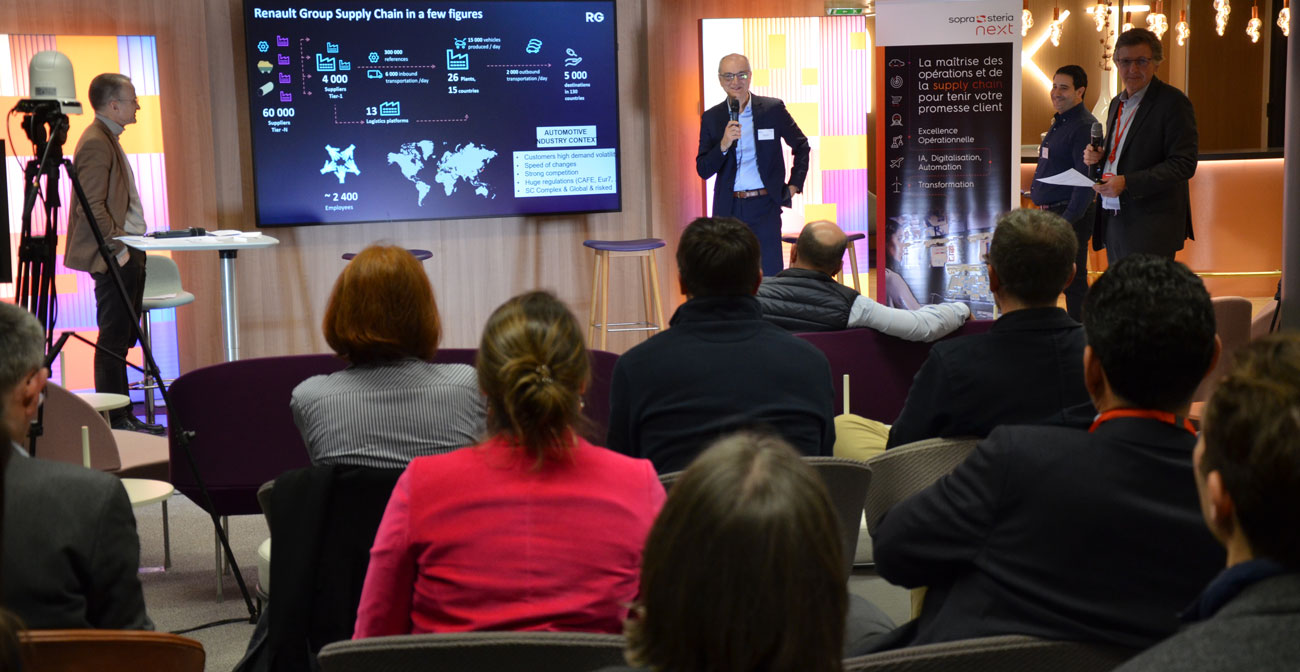
Thierry Blein, GM Supply Chain Risks and Business Continuity Plan, began by describing the complexity of Renault's supply chain. Production reaches 15,000 vehicles a day, with each car made up of around 2,000 parts from 4,000 first-tier suppliers. In depth, Renault works with almost 60,000 suppliers. Downstream, 2,000 trucks or ships transport vehicles daily to 5,000 sales outlets in 130 countries. This global, interconnected organization makes exposure to disruptions inevitable: "in 2024, in 7 months, we suffered 10 floods that impacted operations".

To strengthen its resilience, the Group has taken some structuring strategic decisions in recent years, notably by attaching the Supply Chain function to the CEO and investing in digitalization. This transformation has enabled us to decompartmentalize data and obtain a global view of supplier risks. Rather than focusing on the probability of risks occurring, Renault assesses their potential impact on the business. A cross-functional team, with a dedicated budget, analyzes vulnerabilities and anticipates crises by monitoring critical suppliers.

Renault has also set up a single risk management repository accessible to all stakeholders. This approach makes it possible to identify suppliers with multiple risk factors, and to assess the potential impact on production in the event of disruption. This methodology, focused on business impact, reveals vulnerabilities invisible with traditional probability-based approaches.

The complex subject of investing in resilience

"When you talk to people in the supply chain, they know what to do: they know where to invest, where to put flexibility, or strategic stocks. But there's a real difficulty in justifying these investments to top management." This observation highlights a fundamental paradox: investing in resilience means allocating resources to prevent events that we hope will never happen. In this context, conventional financial methods, such as return on investment (ROI) or net present value (NPV) analysis, often prove inadequate.

An alternative approach is to incorporate option theory, already used in technology sectors such as HP and Boeing. This theoretical framework introduces the principle of "the right and not the duty", offering the possibility of acting without immediate commitment. This method enhances the flexibility of decisions by taking future uncertainties into account. Adopting a logic of options enables companies to take preparatory measures (reservations, pre-actions) that facilitate a rapid response to crises when they occur. This approach reflects dynamic, adaptive risk management.

Technology and AI take center stage

Technology and AI take center stage

The use of digital technologies and artificial intelligence is essential to ensure accurate monitoring of supplier risks and early detection of weak signals, "A massive investment over 3 years has been made to digitize and de-risk our most impacting suppliers". Thanks to digital tools, Renault is able to continuously monitor its entire supply chain and detect the first signs of fragility among its suppliers. For example, AI-based risk management solutions can identify social tensions, environmental problems or financial difficulties that could affect suppliers.

Renault relies on two pillars to improve anticipation: visibility and agility. Visibility is based on real-time knowledge of logistics flows, thanks in particular to GPS tracking of trucks and ships. This constant monitoring makes it possible to quickly identify any climatic or logistical risks, and to adapt production forecasts according to recalculated ETAs (Estimated Time of Arrival) versus factory safety stocks. Agility, on the other hand, consists of developing pre-configured scenarios for dealing with disruptions, such as the use of interchangeable parts or alternative suppliers. These scenarios are centralized in a "Control Tower", facilitating real-time operational decision-making.

For further reflection

  • The importance of keeping one's feet on the ground and shortening the decision-making chain

    Direct coordination of Supply Chain crises is essential to maintain a concrete understanding of risks. Being in the field enables us to quickly identify malfunctions and assess whether better risk mapping would have enabled us to anticipate them. This dual role, both operational and strategic, promotes faster, more effective corrective loops.
  • The importance of simplifying the supply chain to improve resilience

    Multiplying suppliers to diversify sources of supply may seem an obvious solution, but it complicates operational management considerably. Without appropriate digital tools, it becomes difficult to locate suppliers precisely and detect signs of failure. Warehouse automation and mechanization also add complexity. Targeted simplification, supported by monitoring and analysis technologies, is essential to ensure lasting resilience, while avoiding the creation of overly cumbersome structures that are difficult to manage.
NEWS

See all the news


EVENTS

PRESS
To go further

Read more

The LAB ETI PME opens its one-stop shop and celebrates the first promotion of its support program

In 2025, more than ever, time is a decisive factor for small to medium-sized enterprises. The LAB acts as an accelerator for the transformation of SMEs. To support them, LAB members rely in turn on a powerful self-diagnosis of Supply Chain maturity, numerous resources, a large and diversified network and a brand new training and coaching program: eSCalade.

The France Supply Chain One-Stop Shop identifies the resources that meet your challenges

Are you lost in the hundreds of resources provided by the association? The members of the LAB are now committed to guiding you in order to find the right tools according to your needs. By need, they also mean: according to your maturity and as your transformation progresses.

This one-stop shop project is therefore a kind of member-to-member mentoring, designed for those who are not equipped like the large groups and who need to be even more efficient.

Prerequisites

carry out your free online self-diagnosis in 20 minutes

I'm taking the test

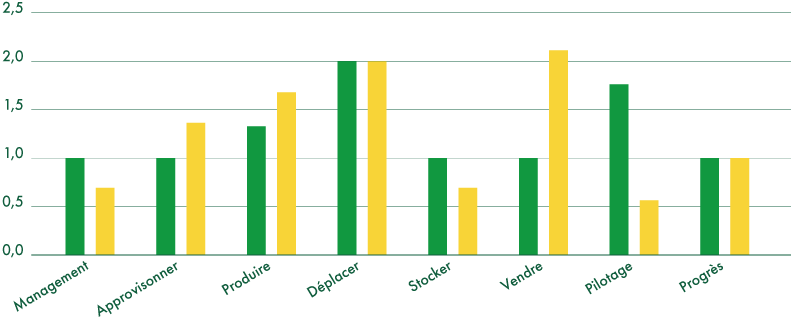
Comparative diagram between self-diagnosis and full diagnosis

Comparison Autodiag vs. Full diag

SME 80 employees

Autodiag
External Diag

Self-diagnosis quickly gives results very close to those of a thorough audit

With recommendations from your expert peers, you'll know which resources to consult for:

  • self-train on the new challenges of the Supply Chain;

  • keep you informed of the latest digital and technological advances;

  • avoid mistakes in all your transformation projects;

  • get started with decarbonizing your operations;

  • but also, find the right people to talk to within the network!

The 18 good practice sheets cover the key topics of SCs for ETIs and SMEs

To make it easier to get started, we recently published a version that brings together all the fact sheets. Created by members of the Lab ETI PME — with the support of the Lab Digital et Technologies — these summary publications cover the following major themes:

  • Change

    Strategy and Steering
  • picto adjust

    Cost and flow optimization
  • picto adjust

    Quality and customer service
  • Supply chain risk management

    Security and Compliance
  • Artificial intelligence

    Digitalization and innovation

Guide to reading and implementing the fact sheets

This guide is an essential resource for companies wishing to strengthen their Supply Chain performance by combining proven methodologies and technological innovations . Please note that access is restricted to FSC members.

We have added the last 2 factsheets published by the LAB Digital&Techno on S&OP and AI.

Download the new version containing all the files

5 SMEs have started their eSCalade, our 6-month support program

eSCalade — Together for an agile, lean, attentive, digital, sustainable and efficient Supply Chain — is a program dedicated to ETIs/SMEs. Organized by promotion of 6 to 10 companies maximum, it adapts to their needs according to their maturity and priorities.

The first session of promotion #1 took place on January 14 in Paris in the presence of the Supply Chain referents selected by each of the participating structures:

  • Carniato Logo

    We bring the excellence of Italian gastronomy to all restaurateurs in France - Wholesaler of Italian wines and food products, and producer of fresh pasta.

  • Cailabs Logo

    Design, manufacturing and integration of light shaping systems – Expert in optical satellite ground link (OGS).

  • Bony Logo

    Refractory brick manufacturer – From formulation to finished product.

  • Gris Group Logo

    High-speed cold metal cutting -
    Integrated into the heart of mechanisms to secure operation, guarantee clamping and optimize assembly, our parts are invisible but essential.

  • Oceane Logo

    Fresh fruit and vegetable market gardening cooperative with more than 60 members.

This program includes:
  • An assessment of the fundamentals completed by the identification of margins for progress
  • 4 days of training accompanied by a site visit
  • From intersession monitoring by a sponsor of the association
  • Access to the benefits of the France Supply Chain community (events, LABS, publications, network, mutual assistance and sharing).
The common thread is the construction of a quick wins action plan and its management.

Notice to companies in the network and in France: the 2nd promotion will start in June 2025.

To find out more about the tools dedicated to ETI SMEs, we invite you to watch the following replay and then contact us !

NEWS

See all the news


EVENTS

PRESS
To go further

Read more

6th Supply Chain Risk Barometer: the supply chain and the challenge of deglobalization

The KYU Supply Chain Risk Barometer, carried out in partnership with Arts & Métiers, France Supply Chain and AMRAE, aims to take the pulse of the supply chain, measure the evolution of the risks to which it is exposed,assess the maturity of organizations to face new challenges, and identify and share trends and best practices.

The year 2024 will have been marked by the definitive closure of the globalization cycle, driven by the universalization of the market economy and the lowering of borders. The election of Donald Trump in the United States, the rise of nationalism in elections in Europe and elsewhere, the intensification of conflicts in the Middle East and Ukraine, the expansion of the BRICS... usher in a new era, dominated by rivalry between powers, the return of the central role of states and protectionism.

International supply chain network

Companies have realized that the complexity and rigidity of their Supply Chain could represent an existential risk. The challenge now is to adapt their strategy to regain control in a world of multi-constrained uncertainties, where agility will be a determining factor.

In just a few years, the global system has become multipolar, heterogeneous, potentially conflict-ridden and, at the very least, highly uncertain. This fragmentation of the world is reflected in the reconfiguration of trade, with world trade now driven by the development of flows between emerging countries, and weakened by the multiplication of geopolitical tensions, by a Chinese economy in crisis, whose ability to bounce back is hard to gauge, and by the development of protectionist policies in the United States and elsewhere, which are bound to boost inflation.

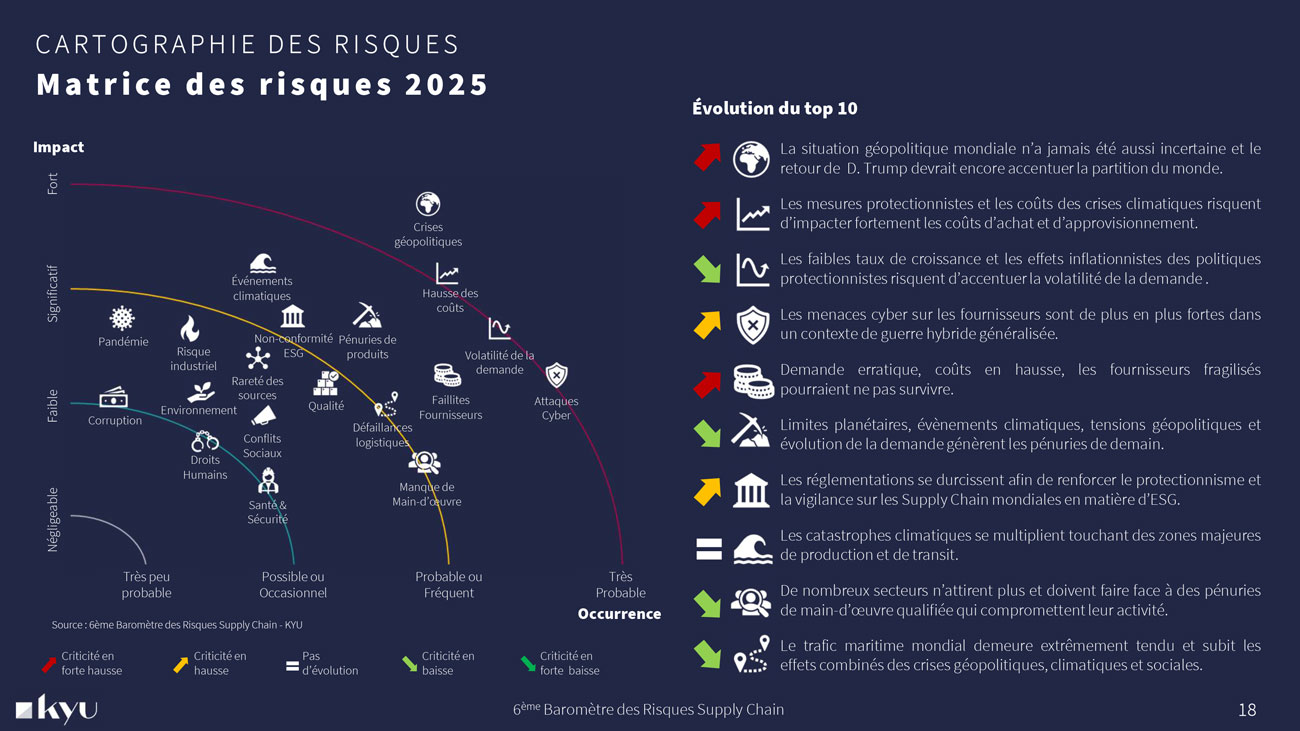
The report offers a sector-by-sector analysis highlighting the specific challenges faced by different industries, and identifies the top ten supply chain risks to 2025. Topping the list are geopolitical crises, rising costs, demand volatility, cyber attacks and supplier bankruptcies. These risks are analyzed in detail in the report, offering a clear mapping of future threats and the solutions favored by players in each sector.

Supply chain risk matrix 2025

Risk mapping 2025

So, faced with these challenges, combined with the need for an accelerated ecological transition, it is imperative for companies to rethink their models. They must continue to strengthen the resilience of their supply chains by diversifying their critical sources and reducing dependence on key zones, while complying with growing sustainability requirements.

It is now essential to build robust supply chains, which means proactively managing risks throughout the value chain, strengthening ties with strategic partners, diversifying critical supply sources, and increasing flexibility in managing requirements, thanks in particular to the integration of advanced technologies, to gain visibility and responsiveness in the face of disruption.

This necessary, albeit costly, transformation also represents a strategic opportunity: to gain competitive advantage in an unstable environment through agile, sustainable value chains.

However, it is important to note that we are not going to wipe out 30 years of globalization and de-industrialization with a wave of a magic wand. The idealized world in which we would have the capabilities to guarantee independence and growth does not exist. Capacities and skills have disappeared too long ago to be reconstituted so easily. To be viable, relocations must first and foremost be competitive if they are to be profitable. Companies are now just as dependent on the suppliers they have sourced in low-cost countries, as they are on the consumers in these same countries to whom they sell their products.

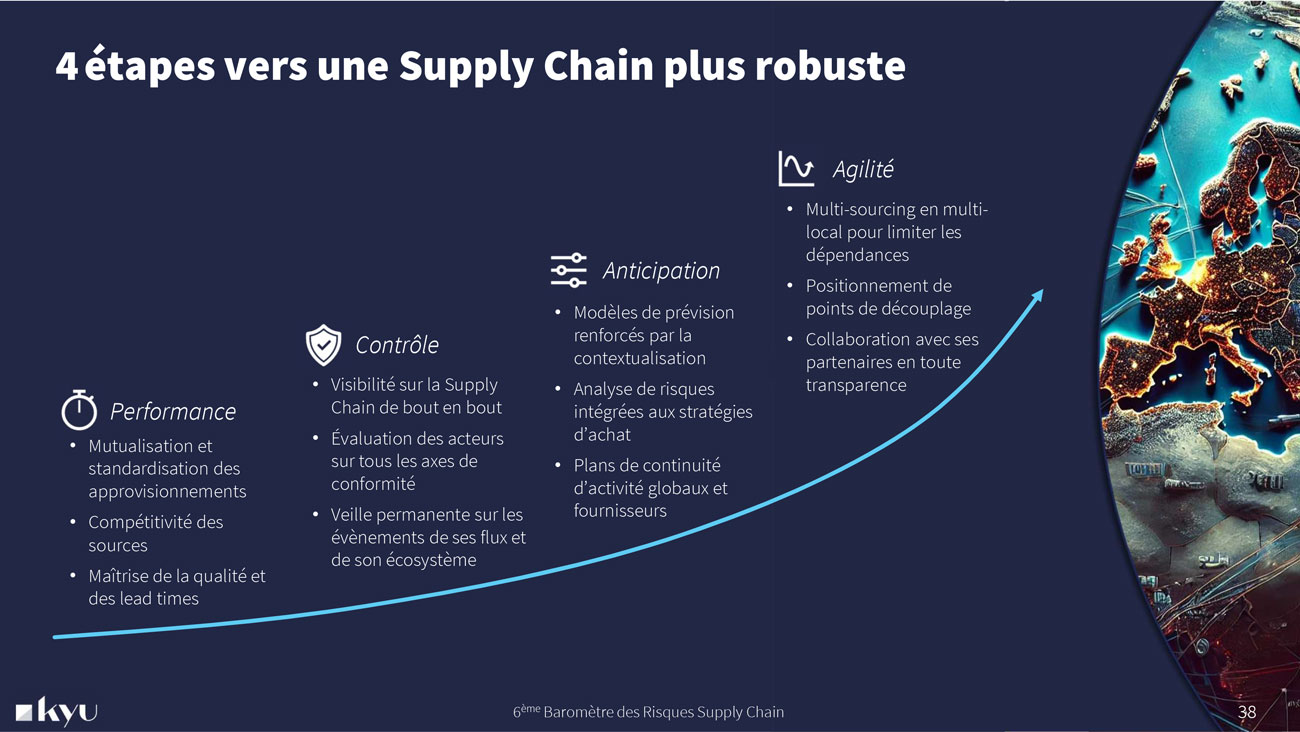
4 steps to a more robust supply chain

4 steps to a more robust supply chain

Today's supply chains are the product of a globalization that has come to an end, and are now exposed to a new geopolitical and climatic situation, forcing them to adapt at breakneck speed. To achieve this, they need to source competitive alternative suppliers in new, less risky zones, encourage their strategic suppliers to locate capacities close to consumption basins, and activate local circularity loops that create new added value.

This is a necessary investment if we are to have robust Supply Chains capable of meeting the challenges of a multi-polar, uncertain world. Companies need to prepare for these changes now, and adapt their supply chain strategy accordingly, in order to remain competitive and resilient in this new global environment.

Download the barometer to find out more

NEWS

See all the news


EVENTS

PRESS

Read more

Supply Chain Trends 2025: expert insights and recommendations

In 2025, the Supply Chain continues to deploy "Logistics 4.0", in reference to Industry 4.0, two of whose main features are automation with the deployment of robotized solutions and prediction orienting a world hitherto highly focused on reactivity towards the era of planning and simulation, all boosted by data and Artificial Intelligence algorithms.

Deciphering trends observed by Generix through case studies

Artificial Intelligence - AI - and Gen AI are more than ever tools for operational excellence and anticipation, thanks to high-performance prediction algorithms that enable simulation.

For their part, optimization calculations based on Operational Research benefit from the power of IT infrastructures, available on demand in the Cloud, to deliver exceptional results in record times, fully compatible with the pace of logistics and transport operations.

Let's share some 2025 trends through case studies of the use of these technologies in the supply chain: 

Automated systems and robots in the warehouse

They are packed with AI and data sensors (IoT - Internet of Things) so that they can reproduce, without ever getting tired or bored, highly repetitive tasks that humans can't perform as reliably over time. Automation, in whatever form, continues to be deployed in warehouses, bringing flexibility and productivity to logistics operations. Robots are becoming better at reproducing human gestures and decision-making processes, are less costly, and are quicker and easier to set up.

  • Computer vision

    Here's another technology that, like robots, replaces humans for tedious, repetitive, non-value-added tasks. Examples include inventory counting, or conformity and quality control of incoming goods or shipments. Although not yet widely deployed in logistics, AI-based control is one of the most frequent use cases in industry. It considerably reduces the cost of non-quality and lowers the risk for the company.

  • Advanced analysis

    This field aims to cross-reference all available or specifically collected data to understand the phenomena that impact performance. Advanced analysis models are trained to learn appropriate behaviors, then monitor execution data toprovide early warnings of potential deviations by comparing them to a standard. Only AI can monitor this huge volume of data, deduce operational risks in advance, and warn managers in good time to limit the impact of behavioral drift on performance. Currently, analyses use 3D graphical interfaces to represent operations and alerts in the form of HeatMaps. A second phase will involve teaching the models to apply corrective actions themselves, and modifying the parameters of the execution software.

  • Planning and anticipation

    Logistics 4.0 also means moving on from the era of hyper-reactivity, which is costly and exhausting for teams, to a mix with planning and anticipation, and thus apprehending the discipline of forecasting. AI algorithms make it possible to predict workload volumes: warehouse receiving or preparation, transport flows. These predictions form the basis of 2 levers for improving logistics and transport performance: planning and simulation. These simulation algorithms, connected to 3D graphic representations and a large number of parameters describing operational constraints, form the basis of the digital twins, which will certainly be implemented on an industrial scale after 2025. In the meantime, they can be used toplan resources, and that's already a great deal, especially in geographies where recruitment and retention are difficult.

These are just a few examples of the technologies that will be deployed in 2025 and beyond. We could also mention autonomous vehicles and a number of warehouse operations optimization topics such as slotting, task interleaving, parceling, truck filling and delivery round organization. These are just some of the applications that promise unprecedented efficiency.

For its part, GenAI will help to accelerate the development of logisticians' skills, both in terms of their profession and the use of IT solutions.

Women in the supply chain discuss artificial intelligence

Tips to avoid missing the "train" in 2025

But before we all head off to the beach and let AI handle the operation for you, we'd like to add a couple of observations.

Artificial intelligence

We're seeing a rise in corporate maturity when it comes to AI-related topics, among both users and solution providers.

In particular, there is a growing awareness of the need to be organized in order to maintain algorithm performance over time. Machine Learning models must continue to be trained to adapt to behaviors or phenomena unseen in their previous learning phases, at the risk of seeing them "hallucinate", which means they start suggesting anything... really anything. Between model training phases, you also need to monitor a number of indicators to measure the quality of the results delivered by the AI.

With GenAI in particular, we have also identified the need to set up data governance and training for people using these tools. This will enable them to make the most of these technologies, to become aware of the ethical issues surrounding data and AI, and to prevent corporate data from ending up freely available on the Internet, or being used free of charge to drive models that could benefit the competition. 

Change

Faced with the current slowdown or crisis in certain sectors, many companies are seeking to transform themselves, either out of necessity or in anticipation.

The digitization of business processes, or digital transformation, is a lever for cash generation and frees up the skills needed to establish and implement corporate strategies. In this way, it contributes to the company's long-term viability. 

So, in 2025, let's not wait for the crisis...

Isabelle Badoc

Product Marketing Director Supply Chain

NEWS

See all the news


EVENTS

PRESS

Read more