Strategic solution to supply chain problems

Circularity as a strategic solution for mitigating supply chain risks

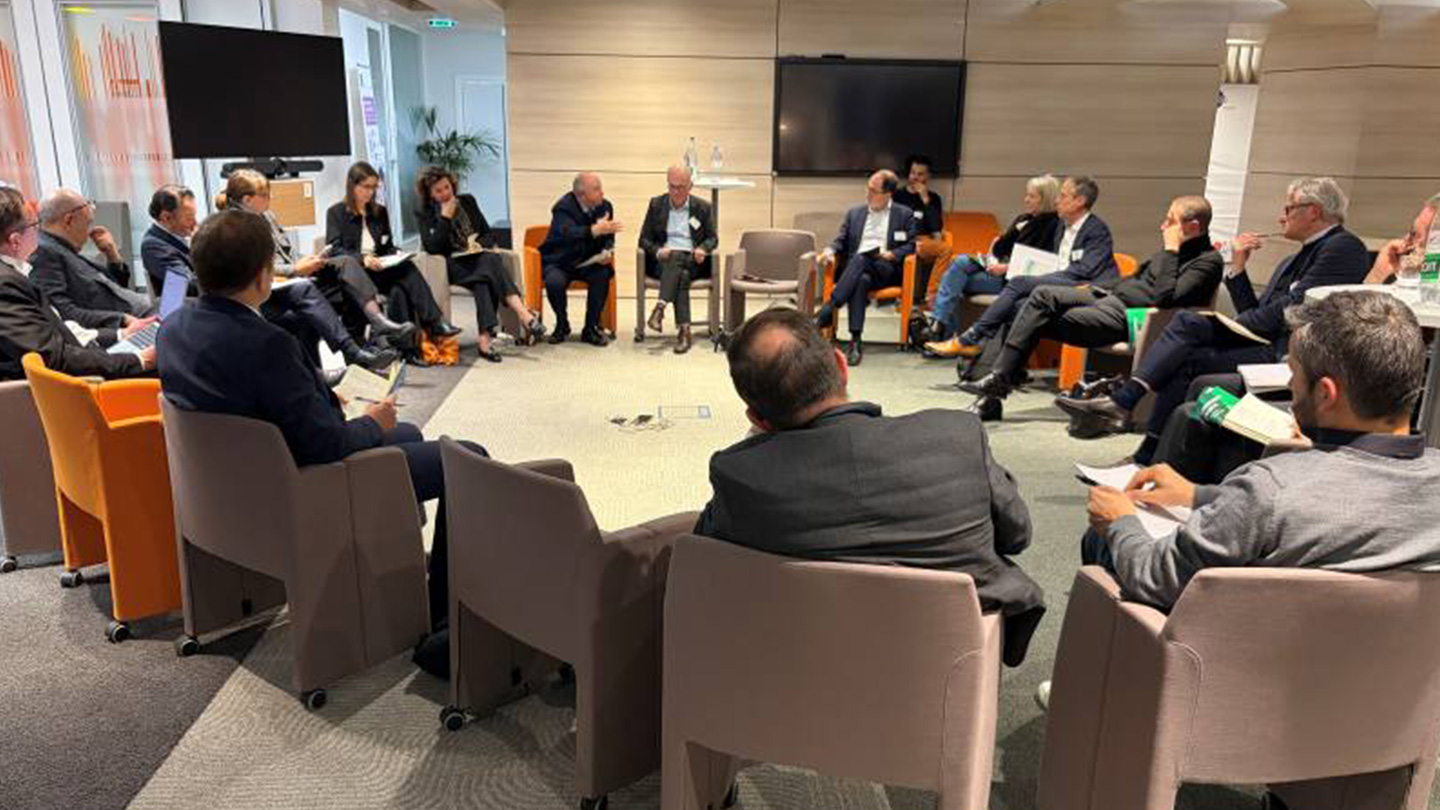
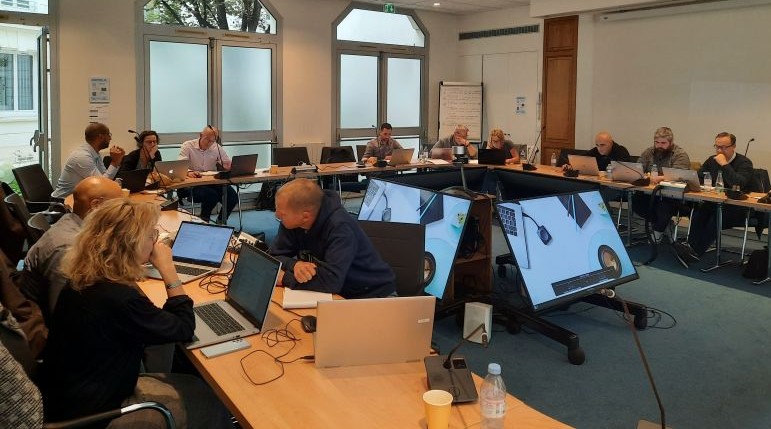
The interconnection between risk management and circular supply chain practices was on the agenda at the latest meeting of France Supply Chain's Risk Community. The session, moderated by Jonathan Lecluze, manager specialized in circular supply chain at Citwell, aimed to explore, through exchanges between participants, to what extent circularity constitutes a proactive solution to the risks faced by supply chains.

This meeting between professionals from different industrial sectors revealed major lessons about the necessary transformation of our business models to meet today's geopolitical, environmental and regulatory challenges.

Critical vulnerabilities call for a paradigm shift

On October 9, 2025, China announced extraterritorial measures for the traceability of rare earths.. In practice, any product containing more than 0.1% Chinese rare earths would have to apply for a license to be exported from China or from one third country to another.

This major event has sent shockwaves through the industry, highlighting once again Europe's dependence on external supplies of rare earths (70% of European rare earth supplies come from China) and, more broadly, for all fossil fuels, including hydrocarbons.

Reducing Europe's consumption of fossil fuels is a major challenge for our sovereignty. It is also a major environmental issue.

Technology is regularly invoked as a solution to this problem because it is said to have the virtue of decoupling economic activity from resource consumption. However, this is only a partial vision, as technology itself is eminently made up of fossil resources from non-European territories, led by China.

This first graph highlights the risk of European supply (bottom) of raw materials for a range of technologies (left) needed for environmental transitions.

Supply risk of raw materials for key technologies

Supply chain analysis and material demand forecast in strategic technologies and sectors in the EU - JRC Science for Policy Report

LREEs (Light Rare Earth Elements) and HREEs (Heavy Rare Earth Elements) top the list of raw materials most at risk for the technologies listed.

It's interesting to cross-reference this view with the following map, which shows the geographical origins of resources and the "Level of Governance", which can be interpreted as a country's level of stability, which is an approximation of the level of supply risk from a European perspective. It shows that most raw materials come from China and Africa.

Geographical origin of resources

Supply chain analysis and material demand forecast in strategic technologies and sectors in the EU - JRC Science for Policy Report

From the linear model to the circular economy: rethinking value creation

In the face of these vulnerabilities, a fundamental rethink of our economic approach is becoming imperative. The traditional "take-make-dispose" model is now revealing its structural limits. For a large proportion of the manufactured products we know, we can retain the following orders of magnitude: 90% of resources and 80% ofCO2 emissions are concentrated in the upstream phases of the value chain (extraction, production, assembly).

The circular economy responds to these realities by proposing a genuine paradigm shift. Rather than following a linear logic that progressively destroys value over the course of a product's life cycle, it structures flows around the preservation and optimization of that value.

This approach is based on the "10 Rs" framework, which prioritizes circular strategies according to their impact. They are broken down into three main logics: reducing the loop (R0-R2), slowing the loop (R3-R6) and closing the loop (R7-R9).

Lifecycle and stages on the R-ladder

Lifecycle & stages on the R-ladder (Reike et al, 2018)

This prioritization provides companies with a compass for prioritizing their circular actions.

Photo by Jonathan Lecluze

Moving from a linear to a circular model is not just about adding recycling at the end of the cycle, but about completely rethinking the way we create and preserve value throughout the chain.

Jonathan Lecluze,
manager specialized in circular supply chain at Citwell

Inspiring pioneers

Several companies present at the workshop demonstrated the economic and environmental benefits of these circular approaches, while reinforcing the robustness of their supply chains. Among them:

  • Orange company logo

    Orange presents one of the most successful circular supply chain models. Today, one box in two comes from the circular supply chain, and each piece of equipment can be reconditioned up to 10 times, thanks to an eco-design that favors disassembly using screws rather than rivets. The benefits are many: significantly reduced supply costs, reduced environmental impact and secure production volumes.

  • Renault Group logo

    Renault is deploying a structured circular strategy with The Future is Neutral, a project to recycle metals and batteries from electric vehicles in order to secure supplies of critical materials.

  • Decathlon logo

    Décathlon is developing its circular business models, offering buy-back and resale of second-hand products, repair and rental of sports equipment.

How does circularity transform risks into opportunities?

These concrete examples illustrate how the circular economy transforms the vulnerabilities of supply chains into genuine levers of resilience and opportunities:

  • Securing supplies

    Circularity creates new sources of supply independent of traditional geopolitical constraints.

  • Economic stabilization

    By developing in-house recovery and recycling channels, companies can protect themselves against fluctuations in raw materials markets, thus ensuring greater cost predictability. Interface illustrates this approach by manufacturing nylon carpet tiles (derived from petroleum) from recycled fishing nets.

  • Regulatory anticipation

    The circular economy makes it possible to anticipate regulatory changes rather than undergo them, transforming these constraints into competitive advantages. Apple is investing in dismantling robots to anticipate legislation on repairs, while Europe's Critical Raw Materials Act now requires the sourcing of recycled magnets.

  • picto conserve

    Protection against reputational risk

    Protection against reputational risk in the textile sector, which is highly exposed to social and environmental controversies. This is the choice made by Patagonia through its Worn Wear program for the repair and resale of used clothing.

  • Better flow predictability and revenue diversification

    One example is Philips and its Lighting as a service model.

Challenges and recommendations for a successful transformation

Strategic lessons

Five fundamental principles emerged from this session to guide supply chain professionals.

  • Proactive solution
    Transforming risk management from a defensive to a value-creating approach
  • Profound transformation
    Need for in-depth rethinking of processes, information systems and organizations
  • Complementarity with sourcing strategies
    Convergence with multiple sourcing approaches (circular can be seen as a new form of sourcing), nearshoring (circular is essentially local)
  • Full-cost vision
    Inclusion of hidden costs and externalities in economic analyses to reveal the full potential of the circular
  • Strategic challenge
    The need for unfailing support at the highest corporate level

* Nearshoring, as opposed to offshoring, is the relocation of an economic activity to another region of the same country or to a nearby country.

NEWS

See all the news


EVENTS

PRESS
To go further

Read more

LAB Jeunes puts slow logistics under the microscope

A fundamental question arises: is speed at all costs the only possible path to a high-performance, desirable and sustainable supply chain? It is in this context of tension between the contradictory expectations of consumers and ecological and economic imperatives that the concept of slow logistics takes on its full meaning. Far from being a step backwards, this approach proposes a re-evaluation of speed, not as an end in itself, but as an element to be optimized in the service of more thoughtful, more resilient and more responsible logistics.

This article from LAB Jeunes invites you to demystify slow logistics and slow down. Because choosing "better" over "faster" is already changing the world.

The customer experience: Instantaneous versus Durability

Generations Y (Millennials), Z and the emerging Alpha Generation have profoundly transformed customer relations. Having grown up in a hyper-connected world, these demographic groups are characterized by a thirst for immediacy and an unprecedented demand for personalization.

For them, waiting has become an anomaly rather than a norm.

The notion of acceptable lead times has been drastically reduced: "delivered in 24 hours", or even on the same day. This demand for responsiveness imposes an unprecedented level of flexibility and precision on the supply chain, from automated inventory management to meticulous orchestration of logistics flows. The slightest delay or mishap can damage customer satisfaction, and even brand loyalty.

To meet these demanding needs, many companies have had to adopt omnichannel marketing. This customer-centric strategic approach harmonizes, integrates and synchronizes all communication, sales and service channels. Logistics thus become a key differentiating lever in a saturated market, where competition often comes down to the last few meters of delivery.

When customers also demand sustainability

Urban parcel flows are set to increase by 78% by 2030, threatening to saturate infrastructures and increase the carbon footprint of e-commerce.

Rodrigue Branchet Fauvet, permanent member of Lab Jeunes, E2E Supply Graduate Program at Renault Group

At the same time, these same consumers, particularly the younger generations, are increasingly sensitive to environmental issues. They expect brands not only to meet their immediate needs, but also to act responsibly. An eloquent figure underlines this trend: 80% of consumers say they are ready to switch brands in favor of a company more committed to sustainable development.

Companies must now combine immediacy and eco-responsibility, two often conflicting objectives. As a result of this dual requirement, and under increasing regulatory pressure, the link between Supply Chain and customer satisfaction has been considerably strengthened, particularly in the B2C e-commerce sector. One of the main challenges today is managing the last mile, i.e. the final delivery phase.

Often the most costly, the most polluting and the most visible for the consumer, last-mile management represents :

  • A key to meeting customer expectations: it directly influences customer satisfaction and loyalty. Some 88%[1] of e-buyers consider delivery to be an important purchasing criterion.
  • Rising logistics costs linked to personalized delivery (time slots, lockers, free returns, etc.).
  • Environmental impact: Light commercial vehicles used for deliveries account for around 30%[2] of greenhouse gas (GHG) emissions in cities, and urban travel accounts for a third of total freight transport emissions. The last mile accounts for around 25% of the supply chain's environmental footprint.

The World Economic Forum's 2024 report on urban logistics points out that urban parcel flows are set to increase by 78% by 2030, threatening to saturate infrastructures and increase the carbon footprint of e-commerce. Companies must therefore reinvent their business models by pooling deliveries, using soft modes (cargo bikes, electric vehicles), setting up urban micro-hubs and algorithmic route optimization.

LAB Jeunes' plea for a more effective slow logistics

Slow logistics is not a morality of slowness, it's an intelligence of tempo.

Robin Thomas-Le Déoré, permanent member of Lab Jeunes, Operations & Performance Strategy Consultant at KPMG

This speed, the ultimate argument for pseudo-performance, has made us lose sight of the real issues and consequences of a chain that's running out of control. Slow logistics is not a morality of slowness, it's an intelligence of tempo. This emerging concept suggests rethinking logistics not from the angle of immediacy, but from that of responsibility.

This starts with a simple gesture: make the trade-offs visible. When making a choice, customers need to know what their option weighs in terms of CO², reliability and total cost. When the footprint and probability of delivery are displayed, the purchase ceases to be a gamble and the experience becomes enlightened and responsible.

Reprogramming the tempo means distinguishing the urgent from the hurried. Not everything deserves to arrive tomorrow morning. The vital, yes; the current, no. We would add that a high-performance chain :

  • assumes differentiated cadences ;
  • consolidates when relevant;
  • mutualize when possible.
  • is based on micro-hubs that bring people together without getting in the way;
  • shift to low-carbon modes that reduce the environmental footprint without sacrificing reliability;
  • is based on shared data that harmonizes rather than obscures.

As for the city, it can no longer absorb the infinite addition of solitary solutions. The next frontier isn't a higher warehouse or a faster van, it's interoperability (coordinated slots, common interfaces, hubs open to multiple operators and a shared data language).

We're convinced that where there's cooperation, the kilometers disappear, load factors rise, and the promise made to the customer becomes more reliable. Cooperation is not a concession; it's a productivity booster.

Emma Arrondeau, permanent member of Lab Jeunes, S&OP International Planner at L'Oréal

Our generation doesn't wait for permission to try: it tests, measures and publishes. Give it a year, and it will demonstrate that a proportion of urban flows can be shifted to rail, river or cargo bike; that returns can be avoided through better packaging design and more honest dialogue; that the promise "sober by default, express on justification" raises service levels without lowering satisfaction. Give it shared metrics, and the competition will be on total performance, not display speed alone.

This plea is not a renunciation of progress: it is its demand.

Progress isnot about arriving earlier and earlier, but about arriving at the right time, at the right cost, with the smallest possible footprint. No technology is hostile to this vision: AI that predicts, data that sheds light, tools that orchestrate rounds and avoid empty runs all serve the same ambition, as long as accountability is accepted.

The aim of LAB Jeunes, and of our generation as a whole, is to get to grips with these issues, which reconcile competition and cooperation, performance and efficiency, consumption and responsibility.

When intention collides with reality

Slowing down flows in order to think about them more effectively means accepting a new logistical grammar made up of correspondences, breathing spaces and fruitful downtime. But the market still conjugates everything in the present tense...

Maxime Bouquin, permanent member of Lab Jeunes

As soon as you open the door to a warehouse, the poetry of intention collides with the architecture of reality. Slowing down flows in order to think them through means accepting a new logistical grammar made up of correspondences, breathing spaces and fruitful downtime. But the market still conjugates everything in the present tense: saturated rails, limited river slots, micro-hubs that are all too rare outside hypercentres. Consolidation of orders promises better-filled trucks and more fuel-efficient shuttles, but it also brings uncertainty to the table. A storm on the Rhone corridor, a delay on a lock, and the whole score shifts. The "reasonable deadline" then becomes a fragile promise: too ambitious, it frustrates; too cautious, it discourages.

Economic truth speaks without emphasis

Building a "slow"network requires patient capital, an investment aimed at operational savings and reduced risk. Shared hubs that can't be rented by the day, reusable containers that need to be tracked, washed and repatriated, secure data platforms to orchestrate sharing between competitors: this is CAPEX at the service of a more sober OPEX.

The message to shareholders is clear: inventory is not the only item that ties up capital; the absence of shared infrastructure, reuse loops and interoperability also ties up value in empty runs, failed deliveries, returns, penalties and regulatory risks.

The payback here is in stable volumes, trust and transparency. The result: higher load factors, avoided kilometers, lower total cost of service and reduced non-financial risk. Slowness isn't just a fancy: it's a cost structure that improves over time.

The social limit is no less decisive

Cyclo-logistics is rightly celebrated for its discretion, its cleanliness, its way of stitching up the city. But the beauty of the gesture is not enough to protect the worker. Poorly supervised, the boom in cargo transport can create grey areas, where workers are paid by the hour and their working hours stretched to absorb irregular flows. Conversely, professionalizing the sector requires costly skills:

  • Multimodal planning ;
  • Data management ;
  • Mastery of interoperable information systems.

Slow logistics is not a return to rusticity; it's a new approach and a new way of thinking, less energy-intensive but more cognitive, which requires new skills and time.

Charly Suaire, permanent member of Lab Jeunes and Senior Consultant in Supply Chain and Operational Performance at Newton Vaureal Consulting

If fast fashion goes green, what's the point of slowing down?

And then there's our arch-rival: fast fashion and, even more so, its ultra-fast incarnation on the Web. They don't just sell clothes; they sell a permanent acceleration of desire. Micro-collections spring up every week, sometimes every day; the algorithm moves supply at the speed of a thumb, and logistics follow. Prices compressed to the extreme, fleeting traceability, instant gratification: this mechanism installs a pedagogy of reflex, an addiction to the "now" that makes any delay suspect.

The standard becomes invisible and tyrannical : delivering fast is no longer a performance, it's a must. In the face of this competition, innovation is not enough if it cannot be understood. Warehouse automation, AI for route optimization and electrified fleets are making fast logistics ever more efficient and, in some cases, less carbon-intensive.

It's a tough comparison: if fast is green, what's the point of slowing down? The answer can't be a sermon. It requires a clear contract with the customer: say what's urgent and what isn't; display, for each option, the total cost and the real footprint; recognize that waiting has a price, and that immediacy also has one, long hidden.

If slow logistics wants to make its mark... 

Slow logistics won't win by pitting morality against comfort, but truth against reflex. It must transform expectations into value, make the invisible visible (simple, published, comparable indicators) and, finally, turn cooperation into a competitive weapon. These are political as well as industrial gestures.

None of this will erase the attraction of "everything, right now". But economic history is also about storytelling and proof.

If slow logistics is to make an impact, it needs to offer both: a story that makes people want to wait, and evidence that closes the door on suspicions of inefficiency.

Gabrielle VENOT, Communication Manager for Lab Jeunes and Supply Chain Customer & Continuous Improvement Manager at ST Michel Biscuits

Only then will it be able to shift the center of gravity: no longer pitting slowness against modernity, but proposing a modernity that no longer confuses speed with progress.

At the end of the day, we never just deliver a package. We deliver a way of inhabiting time, the city and the planet. As long as speed reigns unchecked, slow logistics will appear to be in the minority. If it becomes legible, measurable and desirable, the law could change: the pace will cease to be a diktat and become a decision - ours.

Sources :

NEWS

See all the news


EVENTS

PRESS
To go further

Read more

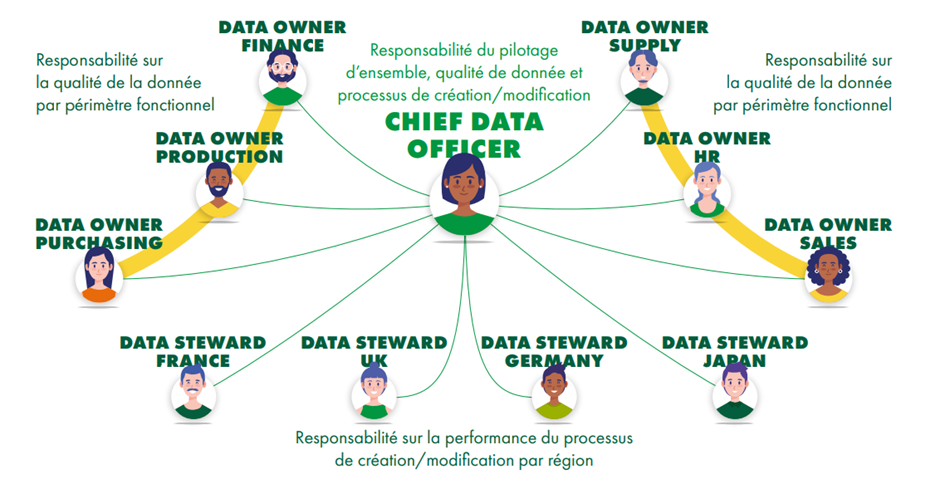
Digitizing better and more: the guide to putting your data under control

The data governance is a powerful lever for improving performance, securing operations and preparing for the future from Supply Chains (AI, automation, compliance, etc.). To reach this level of maturity progressive digitizationof the Supply Chain is essential. Discover in this article the work of the members of LAB Digital et Technologies who who have been working on the subject since 2024, to provide accessible tools even with limited and expertise.
No AI without data

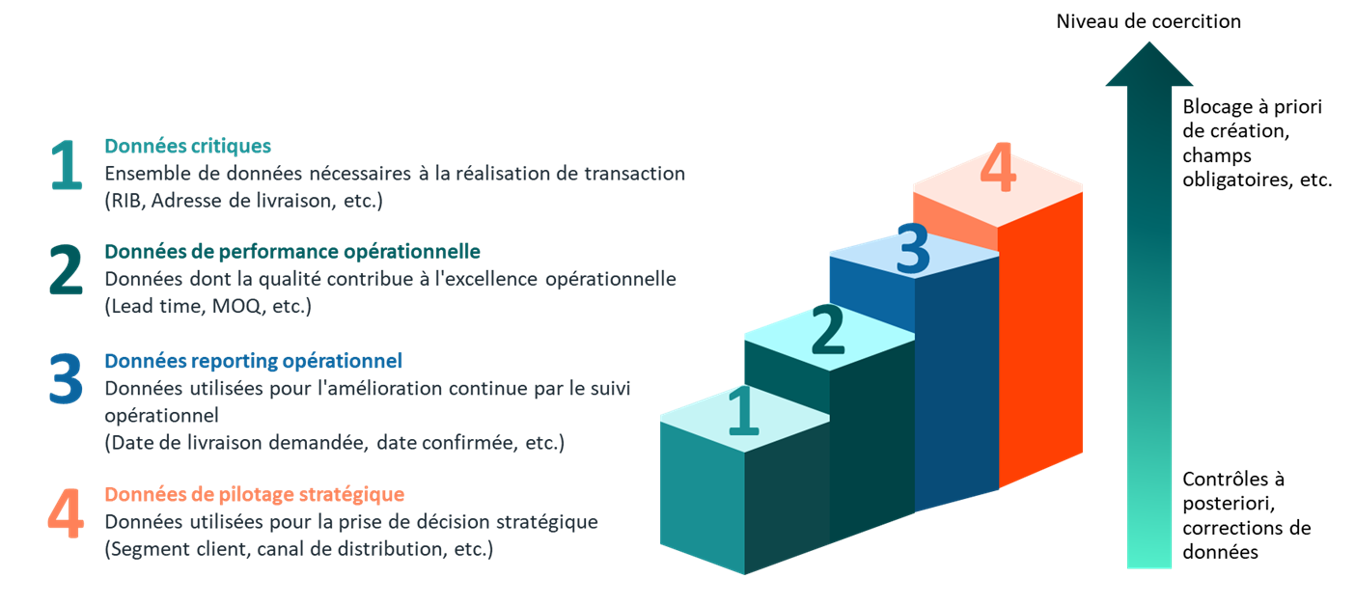
The story began a year and a half ago, with the design of a "digital maturity grid". This resource enables us to define a company's transformation potential a company's transformation progressin complete autonomy (link at end of article).
The major finding of the discussions and design of this 1st guide was: no maximum digital maturity, no logical Event Driven logic (i.e. an augmented operator and a system that acts) without complete complete mastery of its data.

The "maturity grid" squad was transformed in 2025 into a new squad with a focus data governance.

This new group of members is now publishing its practical guide. 

Guide reserved for association members

Download

photo by Saad KADIOUI

Saad KADIOUI

Partner / Head of IS Transformation CITWELL

"Data quality is key to supply chain efficiency chainData quality is key to supply chain efficiency, but I find that many of my customers have poor control over it. This is precisely where governance plays a central role: although it is often neglected as being restrictive and not very visible in the short term, it is the essential lever for this control. Without it, it's impossible to guarantee reliable data, and the the company misses out on the real opportunities for excellence provided by new data technologies (data science, data platform, AI, etc.).. "

PHOTO BY Philippe gourbeyre

Philippe GOURBEYRE

Supply Chain Owner - Michelin

"Faced with the rapid proliferation of data, the need for responsiveness in decision making, compliance in an increasingly large ecosystem, and opportunities with new technologies (Artificial Intelligence, Machine Learning, ...), Data transformation requires well-defined roles and responsibilities. Setting up governance will enable everyone in the company to understand their role in the data lifecycle and assume responsibility for it."

Pragmatic digitalization accessible to all

The 2 publications follow the same same guiding principle: to aim for operational practices that are easy to implement. With these tools, the members demonstrate that digitizing the supply chain is accessible even with limited resources, as it is a gradual process (we have included a glossary for the uninitiated).

Two guides offering a pragmatic, step-by-step approach step-by-step, pragmatic approach to structuring yourto structure your practices around pillars.

The 3 pillars of Supply Chain digitalization :

        • DATA

        • HUMAN

        • TECHNOLOGICAL BUILDING BLOCKS

        The 4 pillars of data governance :

              • Clear, recognized roles and responsibilities.

              • Reliable, shared data reliable and shared.

              • Safety adapted to uses and regulations.

              • Management processes controlled, documented and measured.

                    When we talk about alignment with the field, we're referring first and foremost to tests and implementations of the grid carried out by other squads and members on topics such as S&OP, data governance for CO2, bonded warehousing or AI GEN.

                    In the context of data governance, recommendations can seem very theoretical and rigid, but here we remind you of the importance of taking into account the reality on the ground. This guide and its pillars must be adapted to your reality.

                    Being concrete and actionable has always been a priority for LAB. This is also reflected in the availability of techniques and methods methods (diagnostic tables, concrete examples, diagrams) to facilitate implementation in your context.

                    A guide to mastering your data: a rewarding co-construction project

                    Let's talk to the guide's editors to understand the importance of this project for organizations.

                    Photo by Olivier Weis

                    Olivier Weis S&OP Business Development Manager - Renault Trucks

                    "In Business Development activities within the S&OP department at Renault Trucks, being able to rely on quality data, i.e. data in which there is a high level of confidence, is essential. This is all the more true where the concept of "Citizen Development" is concerned (i.e. user departments develop their own tools on the basis of the data models made available to them). 

                    Raw or, more often than not, transformed, data is the indispensable cement in the management of our supply chain , and in the decision-making process. That's why data governance processes, which are increasingly solid, structured and documented, are becoming more and more important, enabling us to make better use of our data on a daily basis. 

                    Photo by Olivier Weis

                    Delphine CUVELLIER French Customs Manager - ALSTOM

                    "When we think of customs, the first thing that comes to mind isn't necessarily data. However, we are also impacted by digitization, which is changing our practices and professions, and this is only the beginning. We are at the dawn of a data-driven revolution, which is redefining not only our tools, but also the interactions between public and private players. That's why I wanted to take part in this work. 

                    In the customs field, this transformation is accelerating thanks to the transposition of the Union Customs Code (UCC) into data and the imminent arrival of the European Data Hub. These developments mark a strategic turning point: data is becoming an essential lever for performance, compliance and anticipation.  

                    For customs authorities, the challenges are many and varied. Firstly, to intelligently target goods flows by detecting anomalies and fraud risks, such as undervaluation or inconsistencies in declarations. Improving service performance, by providing an overview of an operator's exchanges. And combat illicit trafficking by exploiting massive data with the help of artificial intelligence. 

                    For economic operators, data is also becoming a strategic tool. It enables them to anticipate protectionist measures and adjust sourcing strategies. It facilitates the integration of customs regulations and associated costs into the supplier selection process. And it helps secure supply chains and optimize international flows.  

                    It's always a great pleasure to share and exchange ideas on key subjects, and I hope that this collaborative work will be of use to other professions." 

                    The adventure continues - contact us to find out more!

                    NEWS

                    See all the news


                    EVENTS

                    PRESS
                    To go further

                    Read more

                    A career in Supply Chain: is BAC +5 the key?

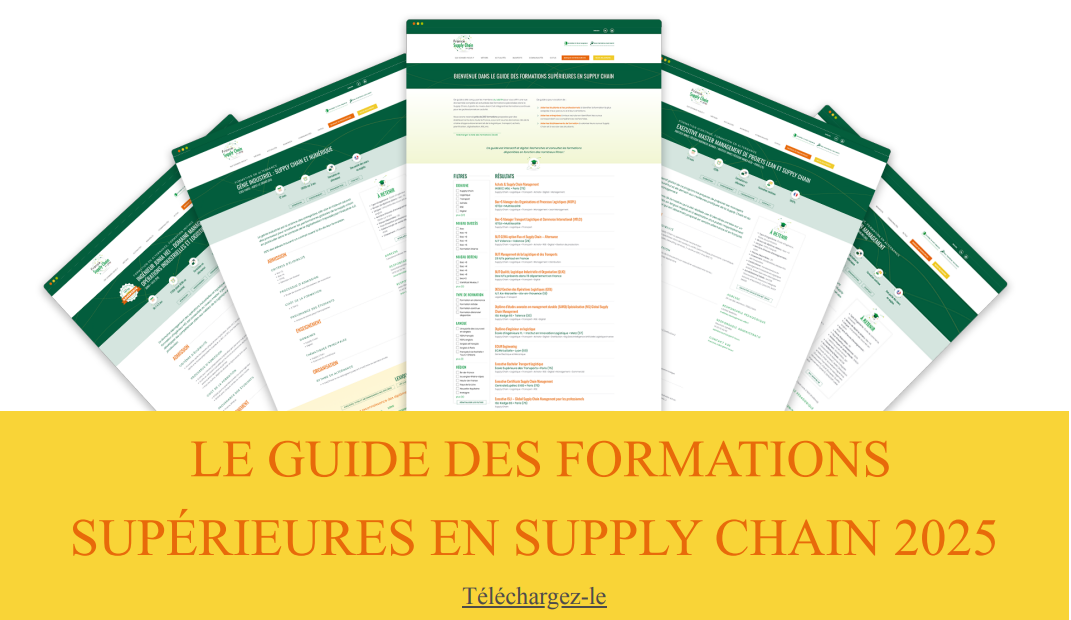
                    To mark the launch of the 3rd edition of our "Guide des formations supérieures en Supply Chain", students, parents and professionals came together on September 23 for an evening dedicated to one question: is a 5-year degree the key to a career in Supply Chain?
                    Behind this question lies the whole relationship between qualifications, skills and developments in the sector, which was debated by our speakers with varied and inspiring backgrounds.

                    How it all began

                    " The range of Supply Chain training courses continues to develop and evolve. How can we find our way through this profusion? How can we help young people identify the training that best suits them?

                    After the first 2 editions, France Supply Chain worked for a year, with the help of an apprentice, Houlda WOROU, to gather all the necessary information and prepare a3rd edition, which we wanted to be entirely digital to make it easier to update and consult.

                    Loic LASSAGNE, leader of the HR lab, at the microphone to explain why the guide was created.

                    It's a major undertaking, and we hope it will prove a useful tool for everyone. Loïc LASSAGNE -HR General manager - Supply Chain at Renault Group & Leader of LAB Richesses Humaines.

                    A career in supply chain: training is still essential

                    At a time when the supply chain sector is booming, it is still too little known to the younger generation. Our guide is designed to help them make the right choices.

                    • More than 200 listed training courses, including 30 new ones, covering the whole of France.
                    • A 100% digital format, interactive and updated in real time, to keep pace with developments in the sector.
                    • Greater accessibility: students, professionals undergoing retraining and companies will all find solutions tailored to their needs.

                    It is aimed at 3 main audiences:

                    • Students looking for training, and possibly their parents or financial sponsors.
                    • Companies looking for young or not-so-young supply chain talent.
                    • To training institutes and organizations that can showcase their courses while looking at what's being done elsewhere.

                    All roads lead to Rome...or to the Supply Chain

                    Throughout the evening, our speakers reminded us that there is no single standard route into the supply chain professions. A wide variety of career paths are possible, from Bac+2 to Bac+5, not forgetting continuing education for working professionals.

                    The proof is in the pictures:

                    diagram of the different paths leading to supply chain jobs

                    Today's Supply Chain is enriched by multiple trajectories, and our speakers have clearly understood this. From schema to reality, their backgrounds and advice give you an overview:

                    Vincent Barale, Vice President Supply Chain at Louis Vuitton

                    • University career
                    • His position as logistics manager at Carrefour took him as far as Hong Kong
                    • Executive at Louis Vuitton for 22 years

                    "If you have a 5-year higher education diploma or an engineering degree, it's to move up the hierarchy and take up a management position. In a management position, you're going to be asked to have a global view, to be able to draw up a strategic plan, to make structuring choices for the company, sometimes heavy investments, and so on. But to be credible at this level, you need to be close to the field. An engineer who stays behind his screens won't get very far.

                    On the other hand, if you've just graduated from a BTS or IUT, you already know the terrain. You need to educate yourself. Go to exhibitions, go to the cinema, read books, but get out of the field, otherwise you'll be seen as mega-operational".

                    Photo by Rodrigue Branchet-Fauvet, E2E Supply Graduate Program at Renault Group

                    Rodrigue Branchet-Fauvet, E2E Supply Graduate Program at Renault Group

                    • University career
                    • Completed two Master's degrees: one at university, the other at a business school to specialize in Supply Chain
                    • Has had the opportunity to go abroad through internships and international exchanges
                    • Now working for Renault Group

                    "When I did my first Master's, I decided to do a second one to specialize and understand what Supply Chain was, and not go straight into the world of work lost and without a global vision because at first I summed it up as trucks and pallet trucks, but it's not that at all.

                    This second master's degree gave me this more global vision, but I lacked the professional experience that I hadn't gained in my university career, where I had taken advantage of internships abroad and international exchanges."

                    Photo by Baptiste Coccia, stock management and logistics project manager on a work-study program at CNR (Compagnie Nationale du Rhône).

                    Baptiste Coccia, Inventory management and logistics project manager on a work-study program at CNR (Compagnie Nationale du Rhône).

                    • BTS in international trade
                    • A year in New Zealand to learn English
                    • 8 years in transport and logistics
                    • Travelled in Asia and Australia
                    • Has resumed her studies and has just started her Master's degree in Lyon on a sandwich course.

                    "My aim in going back to school and taking this Master's degree is to acquire all the skills I didn't necessarily have, since I was really specialized in sea and air transport.

                    So now I'm involved in logistics and stock management, and in parallel with my Master's degree, I'm specializing in purchasing, which will give mea real diversity of skills, and I think these are profiles that are in demand on the job market, particularly in the supply chain. What's more, this Master's degree is recognized internationally , so it will be easier for me to apply for jobs abroad." 

                    Photo by Laurence Papeil, Supply Chain Director at RAJA

                    Laurence Papeil, Supply Chain Director at RAJA

                    • Worked 10 years after BTS
                    • Returned to school at 32 with three young children to "tick the bac+5 box".
                    • Master International Logistics and Transport
                    • This determination led her to Energizer's world headquarters in the USA as Global Logistics and Distribution Director.

                    "You can't systematically start out with a Bac +5, but it's more afterwards, how you manage all the opportunities you may have and I think that's what's important, it's to make structuring choices, good ones, sometimes bad ones too, but the important thing is to bounce back, and really move forward regardless of whether or not you have a level of study that corresponds to the position you're given."

                    The last word

                    Throughout the round table, they reminded us that there is no linear path to success in the world of Supply Chain. So, yes, studying at a grande école and doing long studies will always be valued, but experience is a social springboard for climbing the ladder. You can start at the bottom of the ladder and quickly build up your skills and responsibilities.

                    Today, many choose the academic route. The real question then becomes: how do you stand out from the crowd? Here's a roundup of advice from our speakers:

                    • Get out in the field: experience the plant and warehouse to understand operational reality and prepare for the move to management.
                    • Broaden your culture: nurture your strategic vision beyond technical expertise.
                    • Make the most of your differences: open up to the world, learn English and more, develop your interpersonal skills.
                    • Project yourself 20 years from now: define a long-term career vision and ask yourself whether the path you've taken is still in line with your desires.
                    • Dare: remain curious, test, take risks.
                    • Maintain your network: prolong exchanges and networking.

                    Le Mensuel de la Supply Chain #32

                    Find this month :

                    • A new addition to the team!

                    • Women at the heart of the Supply Chain
                    • With great power comes great responsibility
                    • New best practice fact sheets: Digital Twin and AI
                    • Exoskeletons in the Supply Chain
                    • What to expect in the coming months

                    MANIFESTO FOR A FRUGAL AND DESIRABLE SUPPLY CHAIN

                    Download it at

                    4 job and internship offers, over 40 candidate CVs , updated weekly, are available on our site.

                    A new addition to the team!

                    Behind the scenes

                    We're delighted to introduce Alexandre, who joins the team for a year!

                    Alexandre, work-study communications manager at France Supply Chain

                    Opening quotation marks
                    Hello, I'm Alexandre, 22 years old. I'm doing a work-study program as a communications manager at France Supply Chain.

                    My role? To create impactful, engaging and inclusive communications. In short, to try as much as possible to get you involved in the association's actions.
                    Closing quotation marks

                    Women at the heart of the Supply Chain!

                    The actors

                    On July 17, Renault welcomed the women's community for an afternoon of games on the theme of inclusion. On the program:

                    • The game

                      The strong link

                      animated by Anne Tran (Renault Pre-Project Manager) and the game's creator, Roxane de Pelet

                      Introducing the "Strong Link" game

                      Strong link" game board

                    • The game

                      Sexism

                      moderated by Elise Gonfroy-Alliot, STEF's gender equality officer

                      Presentation of the "Sexism, not in our house" game

                      Game board "Sexism, not in our house!"

                    Join the #femmesensupplychain community

                    On display

                    Yann de Feraudy

                    With great power comes great responsibility

                    We are pleased to announce the appointment of our Chairman Yann de Feraudy as Vice-Chairman of the Board of Directors of the ELA (European Logistics Association). ELA brings together 22 national associations and represents over 55,000 logistics professionals across Europe.

                    This responsibility testifies to France's influence on a European scale.


                    Generative AI, predictive AI and digital twins: best practice guides

                    We're delighted to present our new practical guides, designed to accelerate and structure your digitalization projects. Over a period of almost 4 months, the AI and Jumeau Numérique teams have combined their expertise and field feedback to produce 3 practical, actionable fact sheets.


                    Collaborative workshop on exoskeletons in the supply chain

                    Exoskeletons: when innovation doesn't yet meet the field

                    France Supply Chain's occupational health and safety experts warn that, despite promising innovations, the actual adoption of exoskeletons remains limited.

                    Discover the complete analysis and the levers proposed to accelerate their deployment in the field.

                    Discover the press release

                    The next sessions

                    DATES NOT TO BE MISSED

                    • [Reunion]

                      17/09

                      Risk community

                    • [Evening]

                      23/09

                      Launch of the Guide des Formations supérieures en Supply Chain

                    • [Reunion]

                      17/09

                      Co-lab ODASCE

                    • [Reunion]

                      30/09

                      IMP'ACT! #2

                    • [Workshop]

                      07/10

                      HORIZON 2040: The climate challenge for supply chains

                    • [Salon]

                      08/10

                      PRODURABLE 2025

                    • [Salon]

                      14/10

                      SUPPLY CHAIN EVENT

                    • [Salon]

                      16/10

                      Autumn SUPPLY DAYS

                    Find out more about Supply Chain events

                    4 job offers and over 40 candidate CVs, updated weekly, are available on the site

                    Discover

                    NEWS

                    See all the news


                    EVENTS


                    PRESS

                    Read more

                    Le Mensuel de la Supply Chain #31

                    Find this month :

                    • Have a great vacation!
                    • Students still looking for work-study contracts
                    • An English version of the Resilience White Paper
                    • IMP'ACT! round 2
                    • A podcast at the heart of the news
                    • What to expect in the coming months

                    Manifesto for a supply chain

                    MANIFESTO FOR A FRUGAL AND DESIRABLE SUPPLY CHAIN

                    Download the

                    4 job and internship offers, over 40 candidate CVs, updated weekly, are available on our site.

                    The France Supply Chain team wishes you happy vacations!

                    Behind the scenes

                    Car on the way to vacation

                    The association will be closed from August 4 to 22 inclusive. We too must recharge our batteries, but we're already looking forward to seeing you again in September for new projects!

                    Have a great summer!

                    The search for work-study opportunities continues!

                    The actors

                    Work-study program

                    Summer's here, but many students are still looking for work-study placements for the start of the new school year. If you're a company looking for committed, motivated talent, it's not too late to post your vacancies.

                    Head to our site to discover all the available offers and, perhaps, find your next nugget.

                    On display

                    • White paper on business resilience in English!

                      Our White Paper on business resilience is now available in English!

                      As a reminder, FRANCE SUPPLY CHAIN by Aslog and Sopra Steria Next have carried out a study to measure the level of resilience of companies and identify concrete levers for action. For the benefit of those beyond our borders, we are making available the English version of our white paper.

                      The English version is here

                    • IMP'ACT: a first under the France Supply Chain banner

                    • impact01

                    • impact02

                    • impact03

                    The 1st session of our IMP'ACT! collaborative workshop, co-constructed with Brainergies, took place on June 10. Companies from a wide range of backgrounds came together with the same objective: to develop their internal practices and come up with concrete action plans to reduce the carbon impact of their end-to-end Supply Chain. The workshop explored the pillars of the Manifesto, with an unprecedented integration of the "Circular Supply Chain" dimension.

                    The next session takes place on September 30 in Paris, so what are you waiting for?

                    I would like to register for the afternoon session on 09/30


                    A topical interview!

                    Crisis management in the supply chain, intercultural communication and the outlook for international supply chains are on the agenda of the Lab Jeunes interview with Fatoumata Ndjim.

                    Listen to the podcast

                    The next sessions

                    DATES NOT TO BE MISSED

                    • [Reunion]

                      03/09

                      LAB ETI PME

                    • [Reunion]

                      04/09

                      SUPPLYCHAIN4GOOD

                    • [Reunion]

                      09/09

                      HR LAB

                    • [Reunion]

                      10/09

                      Customs Community

                    • [Reunion]

                      17/09

                      Risk community

                    • [Reunion]

                      18/09

                      LAB Digital & Technologies

                    • [Evening]

                      23/09

                      Launch of the Guide des Formations supérieures en Supply Chain
                    • [Reunion]

                      30/09

                      Co-lab Odasce
                    • [Reunion]

                      30/09

                      IMP'aCT #2

                    Find out more about Supply Chain events

                    4 job offers and over 40 candidate CVs, updated weekly, are available on the site

                    Discover

                    NEWS

                    See all the news


                    EVENTS


                    PRESS

                    Read more

                    5 SMEs talk about their participation in the eSCalade program

                    The 5 participating companies all agree that they are at a "pivotal point" in their development. A phase in which these SMEs and start-ups need to change dimension and scale up their processes. Supply Chain is a major lever in this process, and the program meets the expectations of these professionals, not least because it results in a concrete, high-quality action plan for each of them. This is made possible by personalized inter-session follow-up, exhaustive and in-depth training days, and lots of peer-to-peer sharing.

                    Interview at the closing day of the 6-month program at L'Oréal.

                    What convinced you to take part in eSCalade, and what's the biggest benefit of the program?

                    Why would you recommend eSCalade to another SME?

                    interview - quote

                    Benoit:

                    I'd recommend it for an SME that has a clear project for structuring its supply chain, and that has the support of its management to build something. You shouldn't get involved if you don't clearly know where you want to go, or if you don't have the support, backing and resources.

                    Myriam:

                    To put it very simply, I'd say it's for an SME looking for visibility over its supply chain. If the company is at a stage where it's trying to find its way, this program allows it to take a step back and define its major objectives, while at the same time making them very concrete. It's a good way to gain vision and clarity.

                    Benjamin:

                    It's really a program for gaining perspective, even if the company already has audits (as in the automotive industry)! Because you discover the problems of others who are in other sectors, you make them your own and you question yourself. Initially, I was worried that all the participants would be from the automotive sector, and would therefore come across the same issues (e.g. random forecasts and orders), but I realized that, despite the different backgrounds, many of the problems were similar.

                    Guillaume:

                    I'd recommend it above all for companies that want structure in their logistics approach, by providing a "backbone" that enables them to put their finger on the right issues very quickly, and to know how to deal with them right through to the end, with support throughout the process.

                    David:

                    I think that the greatest impact will be on people who are in the process of industrializing or increasing their volume, and who want to extend their supply chain capabilities to ISO resource, for example, or at any rate by putting in place procedures and tools, if they are already in place, but which enable all these processes to be tidied up a little, I think that this is really where the program is most relevant.

                    In any case, I know that in the start-up ecosystem, I think it's really a tool that can be very useful in bridging the "valley of death" gap. When you've finished R&D, you try to produce and launch something on the market. You've got the concept, you've got the market, but you've got to start producing, and that's where a lot of things fall apart, unfortunately.

                    Presentation of action plans

                    Presentation of action plans and progress plans by participants in front of trainers, network professionals and their sponsor, François PEIGNES, retired Vice President Supply Chain Operations at Orano.

                    What advice would you give to a small or medium-sized business taking part in the program to ensure its success?

                    idea exchange

                    David:

                    one of the prerogatives is to be equipped with at least an ERP, and therefore to have sufficient digital maturity to fully exploit the potential of the program and the tools offered, because a net requirement calculation in Excel is not viable over time.

                    Benoit:

                    It's also important for everyone to describe their motivations for following the program, as this provides a roadmap for the rest of the process and avoids any drift.

                    Benjamin:

                    Filling in the pre-training questionnaire, first on your own and then with your management (N+1), helps align expectations and define a clear training guideline.

                    Guillaume:

                    already have a real project approachto have something concrete to put into the machine during the sessions, rather than a purely theoretical idea, for a more effective application.

                    A Supply Chain self-diagnosis to assess its mastery of the fundamentals

                    In terms of your mindset and Supply Chain vision, is there a BEFORE/ AFTER eSCalade?

                    Cohesion

                    Myriam:

                    These 6 months have given meaning to our action plan. There were some ideas there, but we didn't really know where to start, so the fact that we were able to give a structure to our plan, I think, unblocked certain issues.

                    And on a more personal note, it's made me feel a bit more at ease. Yes, we're an SME, we're not up to date on everything, but we realize that in some areas things are fine. And there's this strong notion of arbitration and adaptation according to the business, which has really reduced the pressure to be "perfect" or to have to put in place all the great processes and good ways of doing things.

                    Benjamin:

                    In concrete terms, we've created a supply chain division, we've already moved people around and now we've got the scheduling, logistics and sales divisions together. We're aiming for smoother communication and mutual support.

                    And what's really nice is the "before/after" between each day of face-to-face training. That's the real plus of the training, having the two-hour inter-sessional sessions with Laurent (one of the trainers) every three weeks, allows us to dive back into the subject and, above all, to move forward.

                    David:

                    It enabled me to consolidate the action plan we had for the supply chain. Today, we're an old start-up, so there are a lot of things to do, to put in place, and it allows us to get feedback from everyone, to see what we're prioritizing so that we can already have a first draft of the supply chain, to have concrete actions right away.

                    One major contribution has been to put existing tools (often poorly mastered) back at the heart of processes, so that they can be better appropriated for the benefit of the company and the supply chain. In that sense, I think we've really succeeded.

                    Presentation of action plans

                    Visit to FM Logistic's Mommenheim logistics platform during the2nd day of training.

                    In short, the ideal company profile for the Escalade program:

                      • In the industrialization or high-volume increase phase.
                      • Seeking to increase the capacity of their supply chain with constant resources (at ISO Resource), in particular by implementing procedures and tools to streamline existing processes.
                      • For start-ups, to get through the critical stage between the end of R&D and the launch of large-scale production (the "start-up valley of death"), where many fail.

                    The eSCalade program is proving to be an essential catalyst for SMEs and start-ups seeking transformation and growth. As participants testify, the program lives up to its name eSCalade (Ensemble pour une Supply Chain Agile, Lean, Attentionnée, Digitale, Durable et Efficace), enabling companies to climb the development ladder with confidence and structure.

                    Join the 4 companies already registered for the January session

                    eSCalade

                    Many thanks to our "climbers" for sharing their heartfelt experiences, and congratulations on the work already accomplished and to come!

                    • Yann de Feraudy

                      Myriam BIZOUARD

                      Supply Chain Director

                    • Guillaume DEGETZ

                      Guillaume DEGETZ

                      Supply Chain Manager

                      Oceane Logo

                    • Yann de Feraudy

                      Benjamin FAUTER

                      Scheduling and logistics manager

                      Gris Group Logo

                    • Yann de Feraudy

                      David GROSCLAUDE

                      Supply Chain Manager

                      Cailabs Logo

                    • Benoit MAISONHAUTE

                      Benoit MAISONHAUTE

                      Logistics Manager

                      BONY SAS

                    NEWS

                    See all the news


                    EVENTS

                    PRESS
                    To go further

                    Read more

                    France Supply Chain's Foresight Workshop: Horizon 2040

                    France Supply Chain's Foresight Workshop: A look back at the 8 "Horizon 2040" sessions

                    In the 1 year since the1st test workshop organized by France Supply Chain, Horizon 2040 has brought together some 260 players from a wide range of backgrounds to explore the future challenges facing the supply chain.

                    "It was a really interesting exercise, which makes you want to personalize it and make it your own for your perimeter. The power of this workshop is to be able to draw up an action plan/Roadmap" noted a manager from Saint-Gobain.

                    Through 2 inter-company sessions, 5 intra-organizational sessions and 3 higher education sessions, participants were able to immerse themselves in prospective scenarios, identify action levers and draw up strategic plans. The aim was to raise awareness and equip companies to deal with climate risks and sustainability issues. Today, we share with you the feedback from Michelin, Louis Vuitton, Renault and Kedge Business School, which testify to the positive impact of this workshop.

                    Michelin Retex

                    Populations
                    Engineering and Supply Chain Management
                    Objectives
                    • The aim of the workshop was to encourage participants to take a longer-term view and feed initial actions into the company's 2025-2029 strategic plan.
                    • The aim was to identify ways forward, and the levers and actions to be deployed to anticipate climate risks.
                    Post-game decision

                    management has integrated climate risks into the strategic plan and taken into account the actions identified by the engineers. Of particular note is the need to simulate the logistics network (digital twin) and design new solutions.

                    Game deployment method & recommendations

                    2 scenarios were selected from the 6 available to best meet their priorities. These were combined with 2 other Design Fiction scenarios relating to stores and team well-being.

                    They enjoyed

                    The participants appreciated the opportunity to express themselves on new subjects, outside their own expertise, and to take part in the action thanks to design fiction, which enabled real immersion. They also appreciated the opportunity to share their issues and meet each other.

                    Louis Vuitton Retex

                    Louis Vuitton logo

                    Populations
                    Supply Chain LV players already sensitive to the subject
                    Objectives
                    • Questioning adaptation issues
                    • Test the design fiction tool for deployment in terms of awareness, then action
                    Post-game decision
                    The innovative immersion format was selected for a future 2-day training course on sustainable operations, designed and delivered internally at Louis Vuitton.
                    Game deployment method & recommendations
                    A few minor adaptations enhance the tool: adapting the context (company names, sectors) and adding company-specific elements facilitate the (already self-supporting) animation. Work on immersion, using scenographic tricks, increases the impact on participants.
                    They enjoyed
                    Participants appreciated the scientific references, derived from in-depth prospective work, which made the game both factual and convincing. Immersion creates a sense of proximity to the future climate, and is more conducive to action than a fresco.

                    Renault Group Retex

                    Louis Vuitton logo

                    Populations
                    Manager representing the various Supply Chain professions
                    Objectives
                    • The aim of the workshop was to continue disseminating the concept of risk - in this case, climate risk - to as many people as possible within the company. In this context, the pilot session was to determine whether this format was relevant, and if so, whether it could be included in the training catalog.
                    • The aim was for participants to come away with an awareness of climate risk, a vision of the impact on their businesses, and to identify the levers for action to be deployed.
                    Post-game decision

                    The game has been integrated into the training catalog. 

                    Game deployment method & recommendations

                    4 scenarios were selected from the 6 available to best meet their priorities. The artefacts were adapted on the margins for better appropriation by the participants (e.g.: the names of the ports or the activity of the company were changed).

                    They enjoyed

                    Participants appreciated (rating 4.74 / 5):

                    • In terms of form, the direct and striking immersion in the urgency of the situation, and the collaborative format, which allows us to break down the barriers between different professions, with a shared vision.
                    • Basically, to be able to share what has already been done in each business, and above all to plan relevant, actionable short-term actions (which are included in the business roadmaps).
                    • horizon-2040-2e-session-01

                      The2nd inter-company session of HORIZON 2040 organized by France Supply Chain

                    • horizon-2040-artefacts

                      Some of the game's artifacts to take you back to 2040

                    Kedge Business School Retex

                    Kedge Business School logo

                    Populations

                    Business transformation for Sustainability Master's students, ISLI and IMS Master's continuing education students. As part of a module on sustainable supply chain, with the overall aim of carrying out a company's carbon footprint and proposing actions to decarbonize and adapt it to climate risks.

                    Objectives
                    • Raise awareness of the need to integrate these aspects into the company's strategic decisions
                    • Drawing up a decarbonization and adaptation action plan
                    Game deployment method & recommendations

                    The workshop enabled students to immerse themselves in real-life scenarios and propose concrete actions.

                    They enjoyed

                    The actionable nature of this workshop, and the results that emerged, will feed into their respective action plans.

                    How can I take part in or organize a "Horizon 2040" workshop?

                    Horizon 2040 workshop

                    This game was developed by the Supply Chain 4 Good community's "foresight" project. HORIZON 2040: LE DÉFI CLIMATIQUE DES SUPPLY CHAINS is a France Supply Chain by Aslog trademark, registered with INPI and available only to members of the association. Its use is subject to the signature and respect of a Usage Rights Agreement.

                    The game case is currently available in 3 versions:

                    • French and physical
                    • French and digital

                      (customizable)

                    • English and digital

                      (customizable)

                    To obtain one, or to take part in the next multi-company workshop, the first step is to contact us and tell us about your project. We'll work with you to choose the optimum version and conditions for your workshop.

                    Get in touch free of charge

                    The project is constantly improving to offer you the best possible experience and generate greater impact for a more sustainable Supply Chain and world. Industrialists, distributors, logisticians, from all sectors, discover the perils that you will face on an almost daily basis, so that you can prepare for them. Armelle Perrier, Stef's CSR Director, told us : "I really enjoyed the exercise, which was very well documented, interesting and powerful. How about you?

                    NEWS

                    See all the news


                    EVENTS

                    PRESS
                    To go further

                    Read more

                    Le Mensuel de la Supply Chain #30

                    Find this month :

                    • A look back at recent visits
                    • Who better than YOU to talk to young people about Supply Chain?
                    • Retex eSCalade by Myriam Bizouard
                    • The panorama of players is back
                    • Data &CO2 calculation
                    • The return of S&OP
                    • What to expect in the coming months

                    Manifesto for a supply chain

                    MANIFESTO FOR A FRUGAL AND DESIRABLE SUPPLY CHAIN

                    Download it at

                    13 job and internship offers, over 40 candidate CVs, updated weekly, are available on our site.

                    A look back at recent visits

                    Behind the scenes

                    • visit-site-placo-01

                    • visit-site-placo-02

                    The Entrepôts et Logistique community had the opportunity to visit the PLACO France site in Vaujours. On the program: safety, AI integration, flow management and automation.

                    GXO opened its doors to our ergonomics and prevention community. Automation, innovation and technology in ergonomics, indicators and safety were at the heart of this day.

                    Who better than YOU to talk to young people about Supply Chain?

                    The actors

                    Expert testimonials

                    Today, we'd like you to share your experiences and careers where it all begins: in the schools.

                    We're looking for speakers to talk about the supply chain, introduce students to the association and, above all, inspire them. 

                    Maybe even a future active member... or even the future president of France Supply Chain.

                    Interested? Write to us here

                    On display

                    The eSCalade program as seen by a participating SME

                    SHARING and TRANSPARENCY at the heart of the eSCalade project.

                    Myriam Bizouard, Supply Chain Director at Carniato, talks about her expectations and what she discovered as an SME during the 6-month support program.


                    Panorama of Supply Chain, Logistics and Transport players 2025

                    A new look for our player panorama!

                    Rediscover the wide range of activities covered by the Supply Chain through diagrams and infographics that will help those who are still looking for answers to their questions.

                    Download the presentation here


                    CALCULATINGCO2eqEMISSIONS: Alstom's Scope 3 experience feedback

                    What data are needed to calculateCO2 emissions from the supply chain?

                    Calculating data andCO2

                    A white paper to identify the key data to be collected according to stages, scopes and level of digital maturity. In addition, Alstom shares concrete feedback on the calculation of its scope 3, useful for taking action.

                    THE RETURN OF S&OP: Best practice sheets

                    S&OP today and tomorrow: feedback from expert members

                    The return of S&OP

                    An overview of best practices, the benefits of data and tech, and case studies based on maturity level.

                    And to go further, a podcast with feedback from Michelin, Renault Trucks and Celonis on their choices, their tools, and their advice on how to develop their S&OP.

                    The next sessions

                    DATES NOT TO BE MISSED

                    • [Reunion]

                      25/06

                      Risk community

                    • [Reunion]

                      27/06

                      Digital Lab and Technologies

                    • [Reunion]

                      02/07

                      SupplyChain4Good

                    • [Reunion]

                      09/07

                      Customs Community

                    • [Reunion]

                      11/07

                      Packaging Community

                    • [Reunion]

                      16/07

                      Risk community

                    • [Reunion]

                      17/07

                      Women in Supply Chain

                    Find out more about Supply Chain events

                    NEWS

                    See all the news


                    EVENTS


                    PRESS

                    Read more

                    Le Mensuel de la Supply Chain #29

                    Find this month :

                    • The manifesto is public!

                    • Lab jeunes: conquering high school students
                    • RISC: the history of the Shipper Coalition
                    • The complete guide to best practices
                    • What to expect in the coming months

                    The manifesto is now public!

                    Behind the scenes

                    Practical information from the France Supply Chain manifesto

                    To further our mission and increase our Impact, we're opening access to the "For a frugal and desirable Supply Chain" manifesto!

                    • 4

                      chapters

                    • 19

                      files

                    • +100

                      examples

                    Discover this document, the fruit of several months' reflection for our members, which embodies our values and our commitment to a more responsible and innovative future.

                    Download the manifesto

                    LAB Jeunes continues to raise awareness

                    The actors

                    Lab Jeunes actors to promote a sustainable Supply Chain

                    On April 17, Lab Jeunes member Baptiste Coccia visited the Village Logistique to talk with high school students. It was an opportunity to introduce them to the vast and diverse world of the Supply Chain, thanks in particular to the Lab Jeunes comic strip project.

                    Find out more about Lab Jeunes

                    On display

                    • Collaborative ecosystem: the story of the Shipper Coalition
                      The story of a collaboration between shippers born to transform maritime transport and build the first low-carbon container ships on an industrial scale.

                      Discover the replay

                    • A circular supply chain at scale: Retex from Manutan and Orange

                      Between organization and optimization, discover how Manutan and Orange are integrating circularity at the heart of their transformation.

                      With Anaïs LEBLANC, Jean-Claude CAQUELOT and Alexandra SAMYN.

                      View the webinar


                    Best practice files: the complete guide
                    All our data sheets in one place: stock, planning, indicators, digitization, projects, etc.

                    Go ahead and click, we know you're curious.

                    The next sessions

                    DATES NOT TO BE MISSED

                    • [Forum]

                      23/05

                      ISLI: Aeronautics - Aerospace - Defence

                    • [Reunion]

                      30/05

                      Packaging & Conditioning Community
                    • [Evening]

                      05/06

                      Intergenerational meetings

                    • [Reunion]

                      06/06

                      Packaging & Conditioning Community

                    • [Salon]

                      11/06

                      PREVENTICA PARIS - A look at exoskeletons in the supply chain: Promises kept or hopes dashed?

                    • Encounters]

                      12/06

                      Matinée CNE PACK ESSENTIEL "Emballages & mutations sociétales" (Packaging & societal changes)

                    • [Reunion]

                      13/06

                      Experts planning community

                    • [Encounters]

                      19/06

                      WIND FOR GOOD

                    • [Reunion]

                      24/06

                      HR Lab

                    • [Reunion]

                      25/06

                      Risk community

                    • [Reunion]

                      27/06

                      Digital and Technology Lab

                    Find out more about Supply Chain events

                    13 job offers and over 40 candidate CVs, updated weekly, are available on the site.

                    Discover

                    NEWS

                    See all the news


                    EVENTS


                    PRESS

                    Read more