Circular Supply Chain: 1rs retex of the 4 workshops

As part of the transition to a circular economy, companies are seeking to transform their models to meet environmental and societal challenges. However, this transition remains complex, particularly for Supply Chains, where flow management, traceability and interoperability are essential. In collaboration with Citwell, we ran a series of workshops throughout 2024 dedicated to building circular Supply Chains.

Circularity

A circular supply chain: yes, but how?

Moving to a circular supply chain is a pressing necessity for many companies seeking to adopt more sustainable models. However, the complexity lies not only in managing flows. 

Many manufacturers and economic players would like to switch to the circular economy, but don't have all the information and skills they need to make this pivot.

Camille Demarquilly,
Michelin Vice President Global Supply Chain Engineering

That's why our workshops aim to provide concrete tools and feedback to help you take this step. The supply chain is a crucial lever in the successful transition to the circular economy. In-depth collaboration, inventory and demand planning, and flow optimization are becoming priorities for ensuring effective circularity.

Key Themes for a Successful Circular Supply Chain

Our workshops cover several areas critical to the success of a circular supply chain, including :

  • Circular planning

    Adapt traditional planning tools to meet the specific needs of the circular economy.

  • Extending product lifespan

    Thanks to eco-design, remanufacturing, repair and retrofit, products are used longer, reducing the demand for new resources.

  • Circular logistics

    Optimizing return flows and managing logistics loops make these new models competitive.

  • Traceability

    Transparency about the flows and players involved is essential for an efficient circular supply chain.

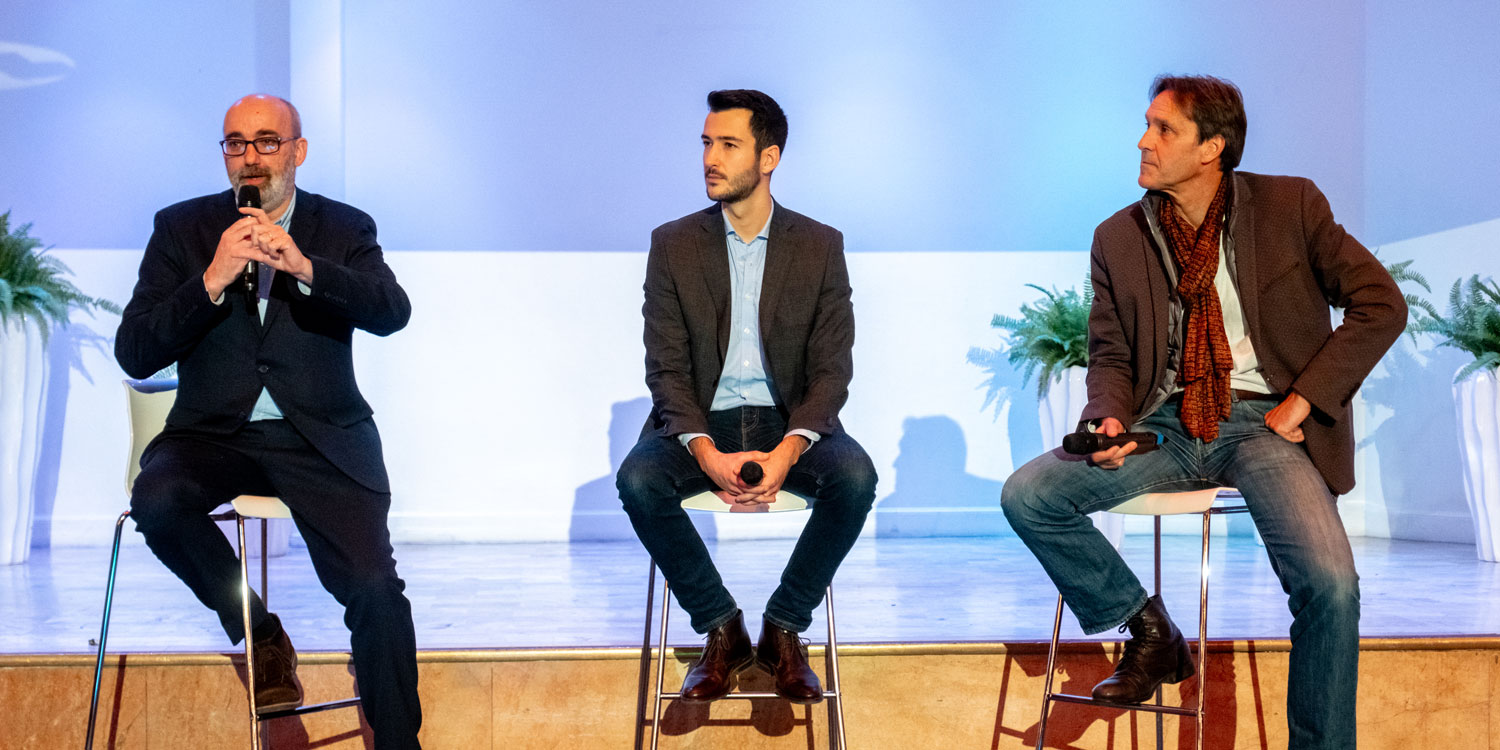
These topics were addressed through concrete testimonials from various companies, and were complemented by working sessions in sub-groups on the notions of sizing and multi-locality, circularity management, and data and operational management.

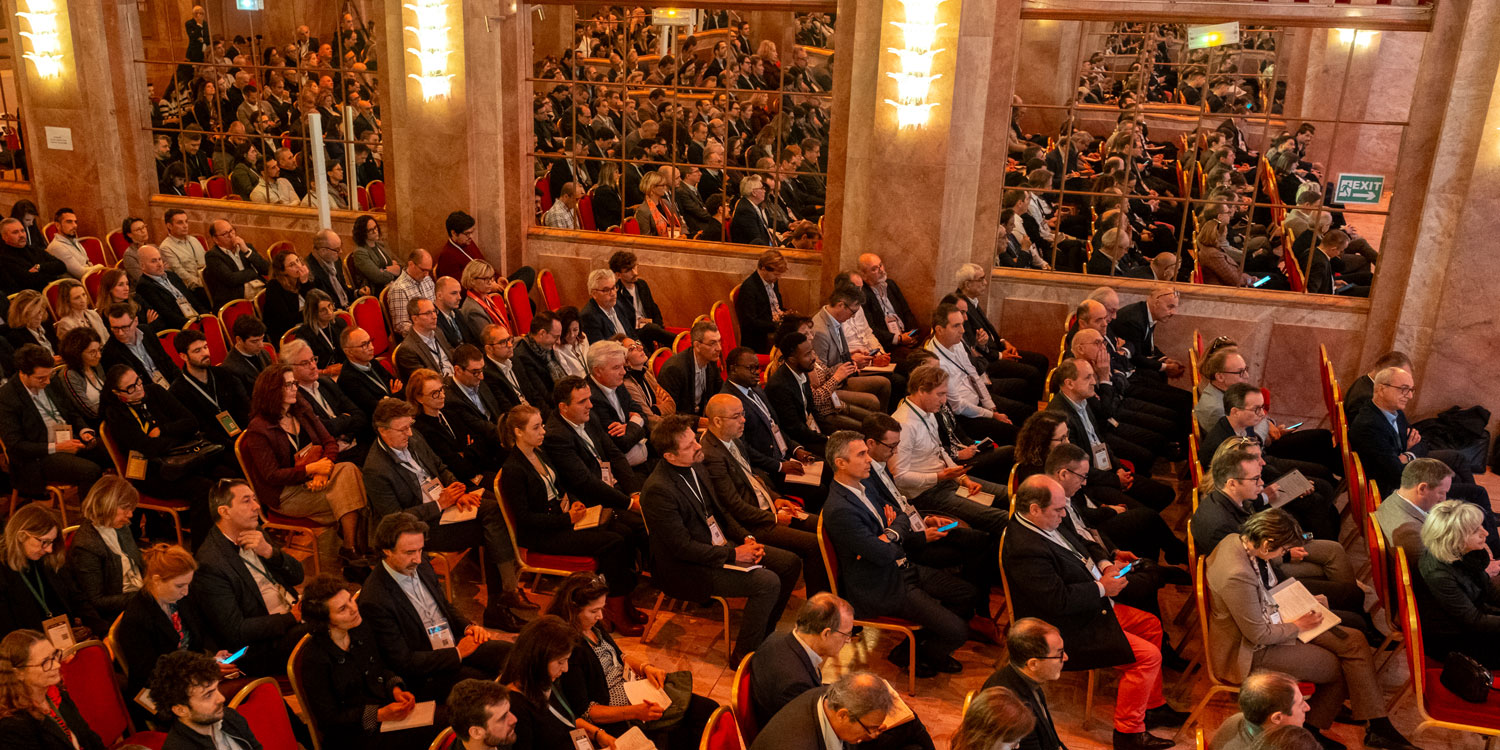
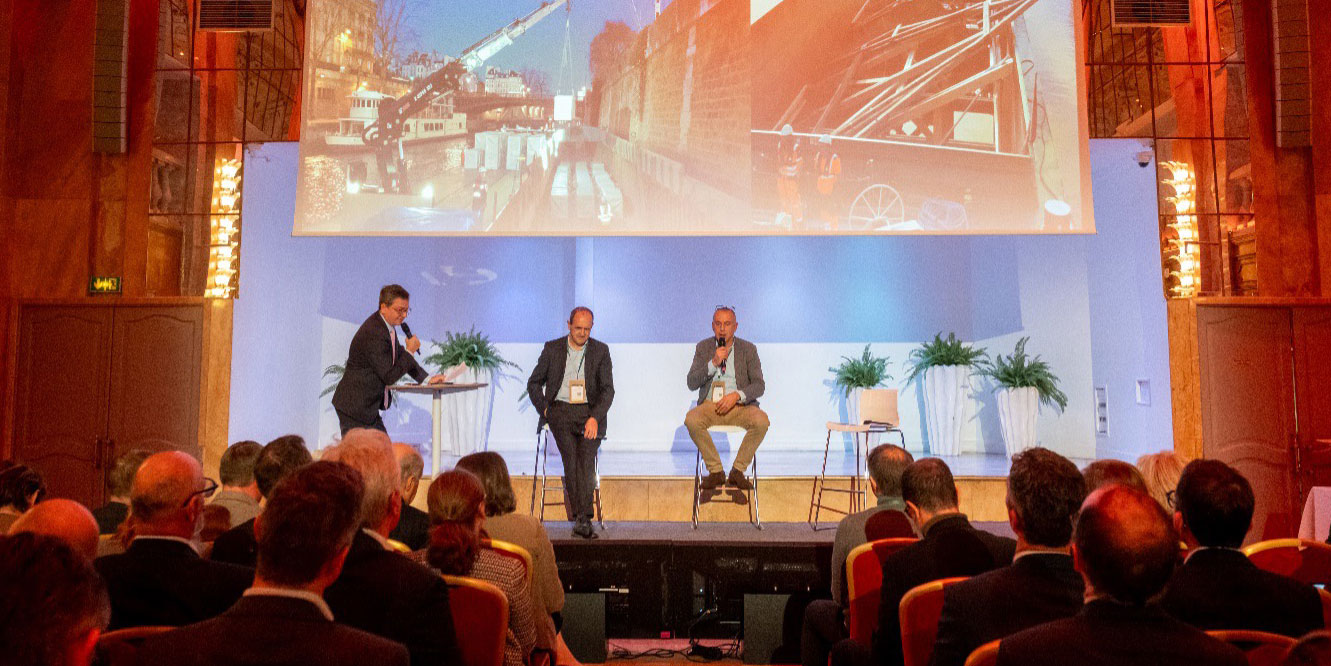
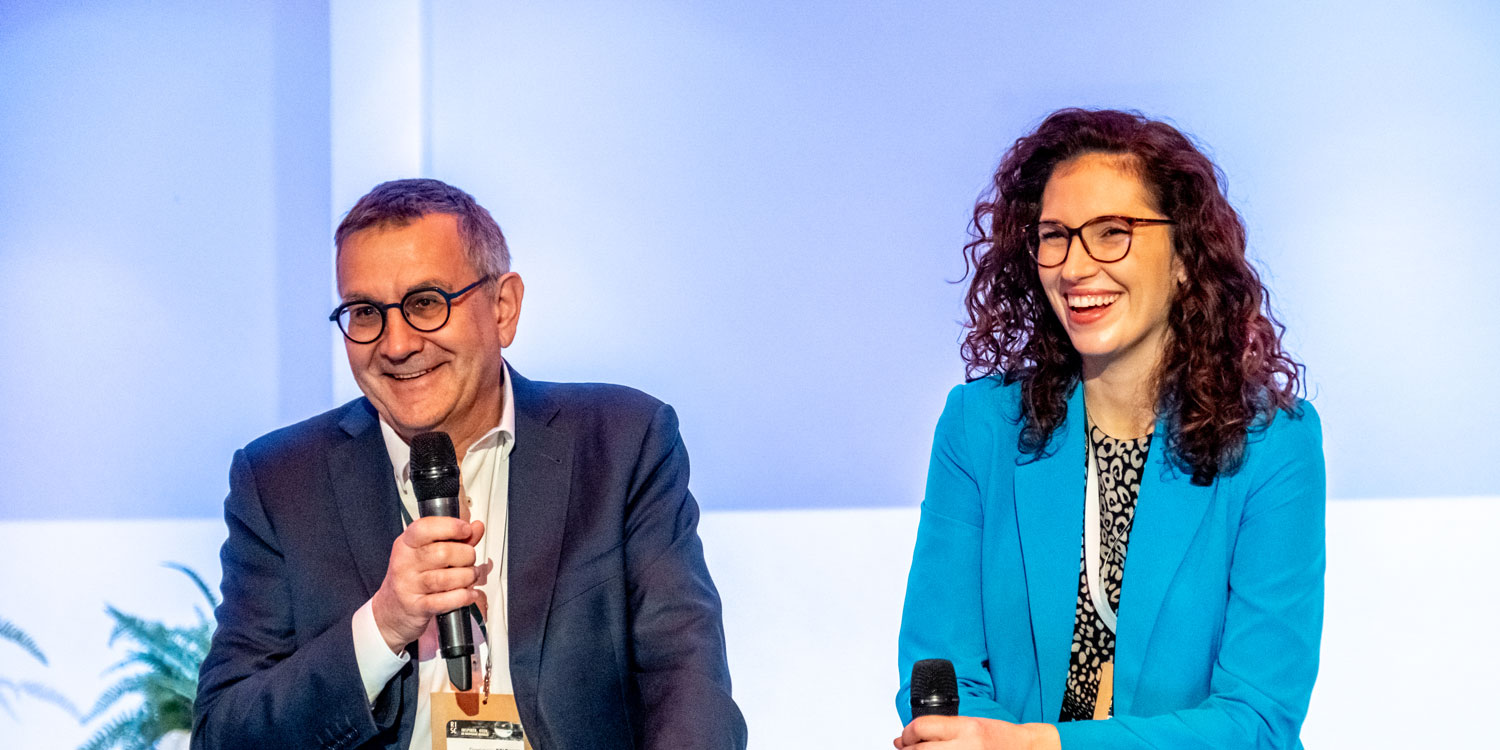
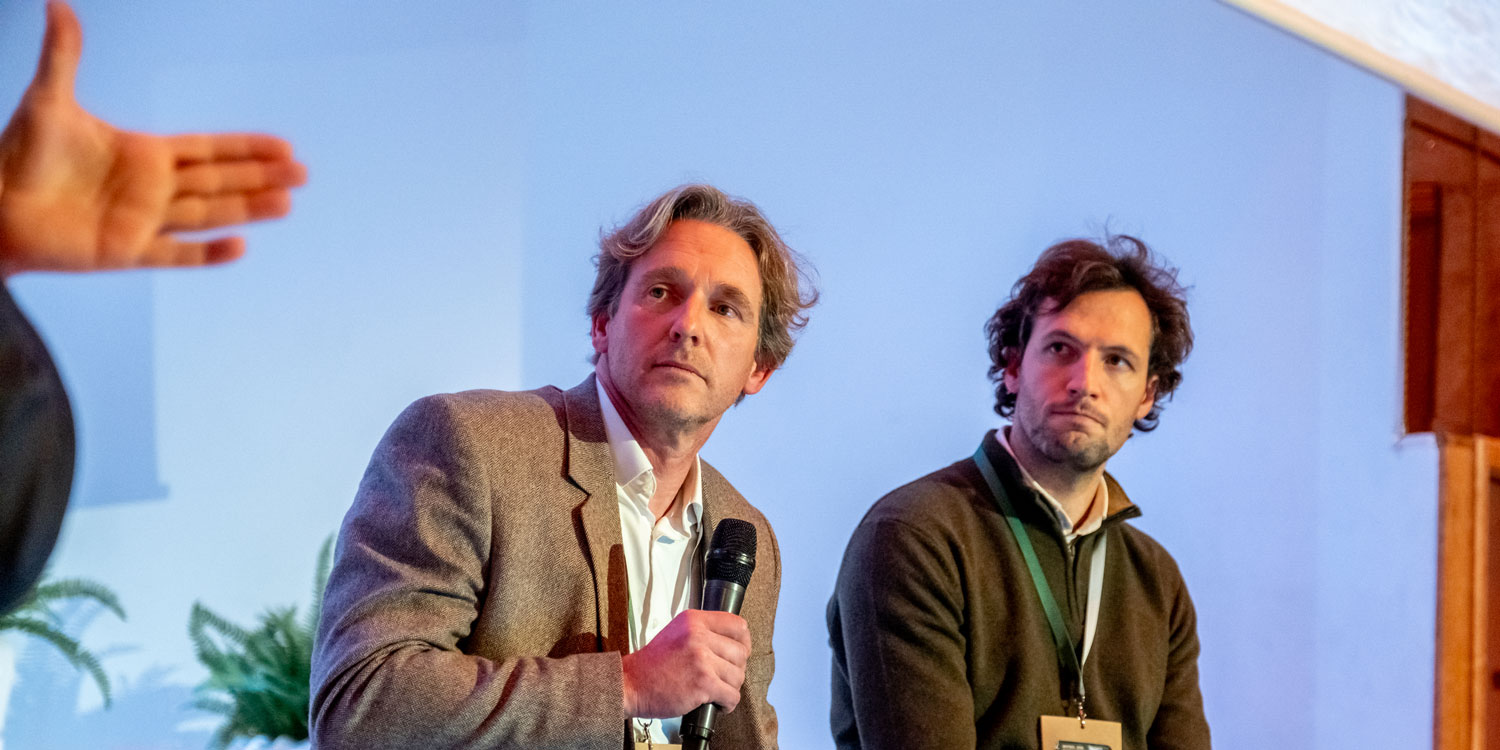
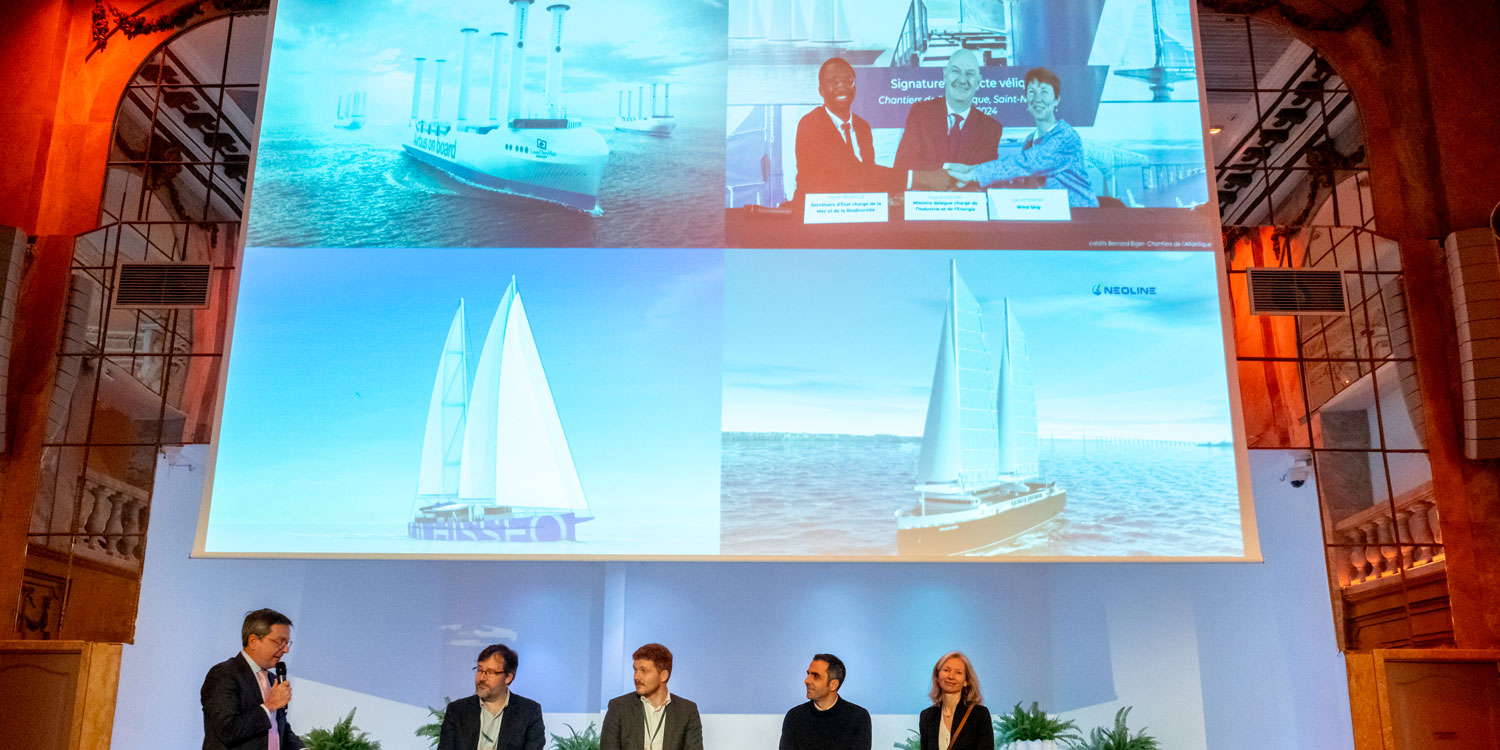
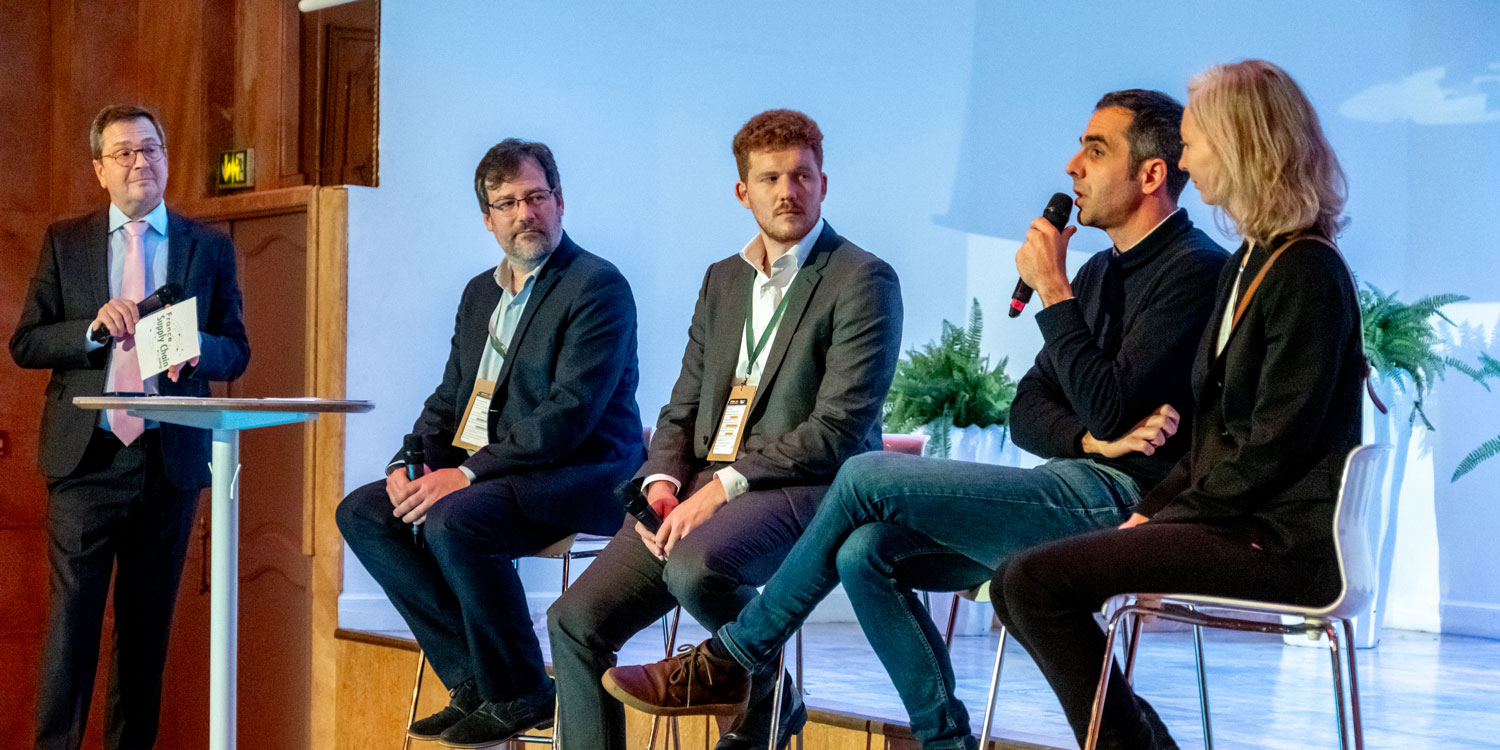
Opening workshop bringing together institutions, researchers and supply chain players

Opening workshop bringing together institutions, researchers and supply chain players.

The Orange Example: Traceability and Value Sharing

Orange is a good example of how a circular supply chain can be both efficient and inclusive. The model for their boxes, designed to be circular from the outset, is based on total control of the loop, ensuring exemplary traceability. Orange limits the diversity of its models (only a dozen or so), which facilitates repair, renovation and continuous improvement processes. Their model also includes a strong partnership with ESATs, reinforcing the social value of the system.

Some key points of their approach:

  • Owned by Orange

    Control of the supply chain is facilitated by the fact that the boxes remain the property of the company, which simplifies monitoring and equipment renovation.

  • Partnership with manufacturers
    Eco-design becomes a necessity to harmonize the two models, circular and linear.
  • Continuous improvement
    Orange regularly demands innovations and improvements from its suppliers, integrating environmental and financial performance criteria at every stage of the product life cycle.

This cooperation between the various players creates shared value, while integrating the social and environmental dimension into every decision.

The workshops conducted with Citwell on building circular Supply Chains clearly show that the transition to a circular economy is not only possible, but also beneficial for businesses, the environment and society. Concrete examples from our members demonstrate that this transformation, although complex, can bring increased resilience to the Supply Chain, while generating opportunities for innovation and collaboration.

The publication of a methodological guide at the end of these workshops will provide the community of supply chain professionals with the tools they need to succeed in this transformation, while reconciling economic performance and environmental impact.

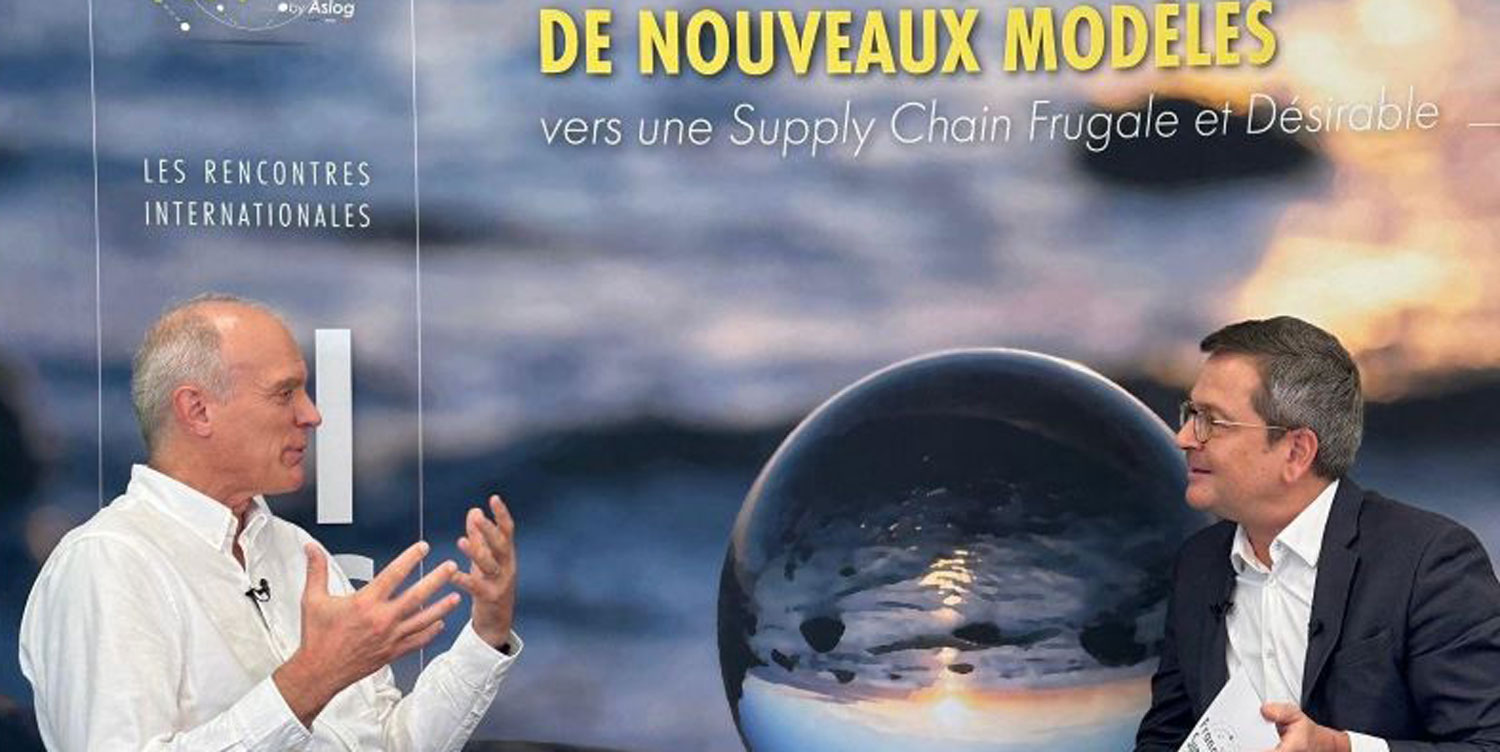
RISC: inspiring and daring new models for a frugal and desirable supply chain

RENDEZ-VOUS

DECEMBER 5 AT RISC

TO FIND OUT ALL YOU NEED TO KNOW

NEWS

See all the news


EVENTS

PRESS
To go further

Read more

Le Mensuel de la Supply Chain #21

Find this month :
  • FSC Talks: Episode3

  • IA Gen in SC
  • What about supply chains in 2040?
  • A plea for a circular supply chain

  • What to expect in the coming months
Welcome to our new members from CARTIER, NEWTON VAUREAL and AXA DCP.
AXA DCP who have joined us since our last newsletter.

RISC: inspiring and daring new models for a frugal and desirable supply chain

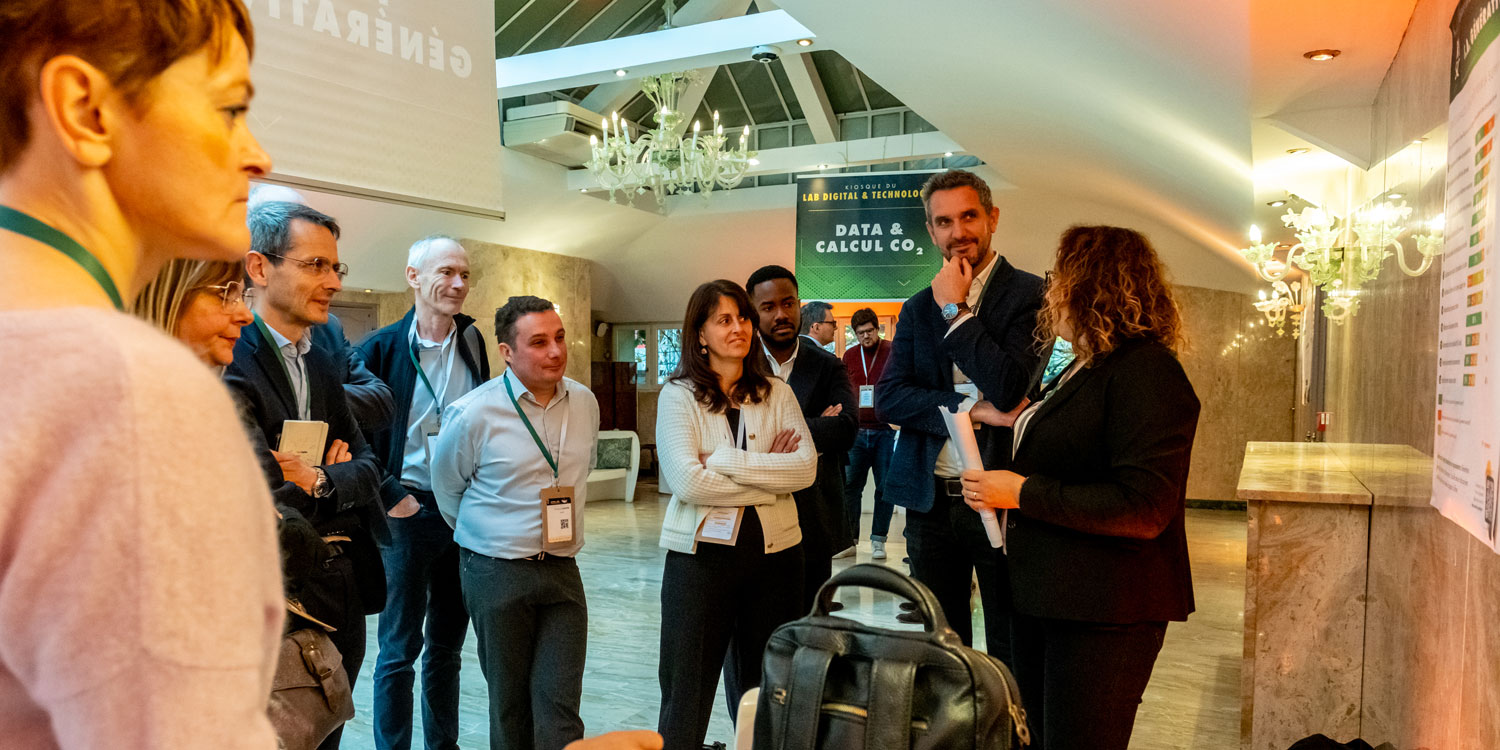
RISC 2024: permanent staff and members of the Digital and Technologies LAB in action

Behind the scenes

The team was once again on site at the next Rencontres Internationales de la Supply Chain, this time to prepare the layout of the booths.

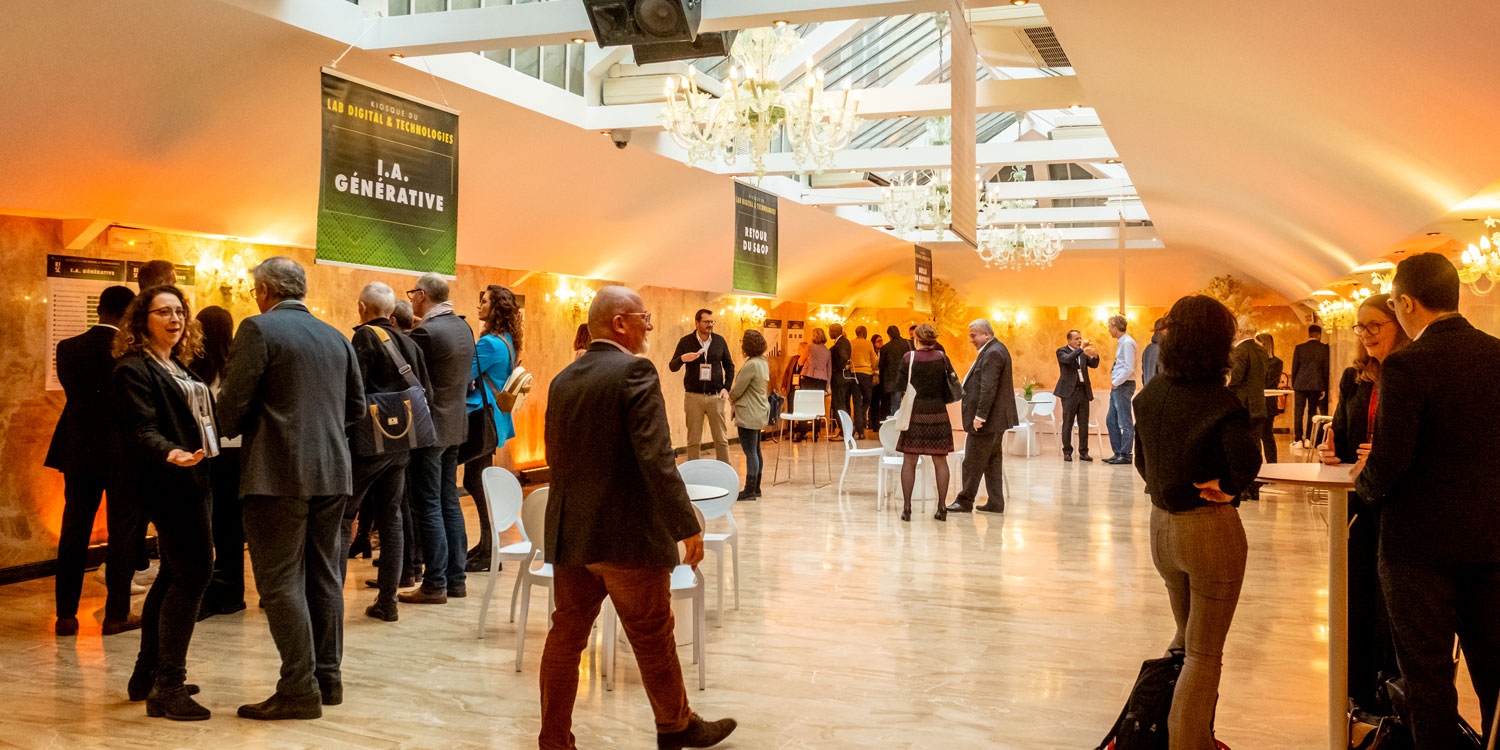
6 pitch zones and Questions/Answers with the curious on :

  • SC's digital maturity
  • Generative AI
  • The return of S&OP
  • CalculatingCO2 emissions
  • The intralog
  • Traceability

Discover the program

Rodrigue Branchet-Fauvet, from LAB Jeunes to Renault's Graduate Program

The actors

[the association] firstly, it gives you self-confidence, let's face it...
...
FSC wanted to democratize the voice of young people, so I also had the opportunity to integrate the work of other LABs (other than LAB Jeunes), so it really opened up a field of possibilities and gave me an open mind about the Supply Chain.

In this video interview, the LAB Jeunes co-leader answers questions from Elorri Thicoïpé, the association's communications manager.

On display

  • Brainstorming during the foresight workshop

    Foresight Workshop

    Experiencing the Impacts of Climate Change on the Supply Chain to Build a Desirable Future

    Objective: to raise awareness and get as many supply chain players on board as possible, in order to build desirable scenarios and strategies for adapting supply chains to climate risks.

    Back to the perils workshop

  • Sheet cover :

    Generative AI for the supply chain

    When and how can it be used?

    This fact sheet offers a detailed overview of generative AI applications in the Supply Chain, identifying the most appropriate models and platforms for each use case.

    View results (in English & French)

  • Sheet cover :

    A plea for a circular supply chain

    A white paper revealing the central role of supply chains in green reindustrialization.

    to be read before PRODURABLE!

Read the CITWELL study

Manifesto for a supply chain

MANIFESTO FOR A FRUGAL AND DESIRABLE SUPPLY CHAIN

Have you read it?

The next sessions

DATES NOT TO BE MISSED

  • [Visit]

    19/09

    Methanization site

  • [Visit]

    24/09

    Renault Villeroy's automated warehouse

  • [Live demo]

    24/09

    AI use cases for the Supply Chain by ServiceNow

  • [Workshop]

    25/09

    Decarbonation Plan Challenge - The Shift Project / IDDRI #4

  • [Reunion]

    27/09

    FSC Central Europe meeting

  • [Workshop]

    30/09

    Circular supply chain: shipper testimonials #3 

  • [Salon]

    03/10

    Eco Class Logistics Forum

  • [Reunion]

    03/10

    Planning Experts Community

  • [Ceremony]

    03/10

    ELA Awards 2024         

  • [Workshop]

    08/10

    Supply Chain, Logistics, Transport: focus on feedback on prevention - PREVENTICA

  • [Workshop]

    10/10

    Reinvesting in the long term and circularity for a sustainable supply chain - PRODURABLE

  • [Workshop]

    10/10

    Michelin, Orange, Mob-Ion: the secret of large-scale circular flows - PRODURABLE

  • [Encounter]

    11/10

    Financing your ecological transition

  • [Reunion]

    06/11

    Customs Community

  • [Visit]

    27/11

    2 Alstom sites: industrial logistics VS platform logistics and eco logistics

  • [Congress]

    05/12

    RISC 2024 - International Supply Chain Meetings

Find out more about Supply Chain events

10 job offers and over 40 candidate CVs, updated weekly, are available on the site.

Discover

NEWS

See all the news


EVENTS


PRESS

Read more

Le Mensuel de la Supply Chain #20

Find this month :

  • Decarbonation Plan Challenges: unique private workshops

  • Traceability X Supply Chain: the public White Paper

  • Boost your supply chain's digital maturity: all public resources

  • What to expect in the coming months

RISC: inspiring and daring new models for a frugal and desirable supply chain

We're back!

Behind the scenes

After a summer break, France Supply Chain is back. The end of the year promises to be particularly dynamic and rich, with the arrival of two new alternates to our team. Between new projects, innovations and reinforced initiatives, we can't wait to let you discover all the news that awaits you. Stay tuned so you don't miss a thing!

Vacations

France Supply Chain will be closing its doors from August 3 to 25, and we wish you a happy vacation!
We're back in top form for what promises to be a stunning second half.

On display

  • Plant composed of networks

    Decarbonation Plan Challenges :

    exclusive private workshops

    Since 2023, in a small, private setting, 3 engaging workshops have been conducted as part of France Supply Chain's SuppplyChain4Good Lab in collaboration with 2 think tanks. Find out more in this interview with experts from the SHIFT Project and IDDRI.

    Read the article

  • White paper

    Traceability x Supply Chain

    disruptive technologies for rapid response

    This white paper presents current solutions for ensuring traceability, then zooms in on the IoT: what use cases, what benefits, challenges and risks, and finally what data to produce and how best to exploit it?

    Read the white paper


Boost your supply chain's digital maturity

Is AI the solution to all #SupplyChain challenges? Why is digitalization crucial in this field?

Discover how to boost the digital maturity of your Supply Chain with our #AUTODIAGNOSTIC grid. This video will guide you through the essential steps and levers to transform yourself, and help you justify your investment requests.

Read the article

Manifesto for a supply chain

MANIFESTO FOR A FRUGAL AND DESIRABLE SUPPLY CHAIN

Have you read it?

The next sessions

DATES NOT TO BE MISSED

  • [Lab]

    03/09

    HR Lab

  • [Lab]

    04/09

    Lab ETI/PME

  • [Community]

    04/09

    Customs experts

  • [Lab]

    05/09

    Lab SupplyChain4Good

  • [Salon]

    10/09

    European Transition Conference

  • [Visit]

    12/09

    Electric trucks - Renault Trucks site

  • [Community]

    13/09

    Packaging

  • [Lab]

    13/09

    Digital & Technologies Lab

  • [Visit]

    19/09

    Methanization site

  • [Visit]

    24/09

    Tour of Renault Villeroy's automated warehouse
  • [Workshop]

    25/09

    Decarbonation Challenge Plan - The Shift Project / IDDRI #4
  • [Workshop]

    30/09

    Circular supply chain: shipper testimonials #3
  • [Ceremony]

    03/10

    ELA Awards 2024
  • [Salon]

    03/10

    ECO Class Logistics Forum
  • [Preventica Round Table]

    08/10

    Supply Chain, Logistics, Transport: feedback on prevention initiatives

  • [Produrable Round Table]

    10/10

    Reinvesting in the long term and circularity for a sustainable supply chain

  • [Produrable Round Table]

    10/10

    Testimonials from precursors of the circular supply chain

  • [Congress]

    05/12

    RISC 2024 - International Supply Chain Meetings

Find out more about Supply Chain events

3 job offers and over 40 candidate CVs, updated weekly, are available on the site

Discover

NEWS

See all the news


EVENTS


PRESS

Read more

Boost the digital maturity of your supply chain: steps and levers to achieve it

  • Is AI the solution to all Supply Chain challenges?
  • Why is digitalization so important in our businesses?

In a fast-moving, uncertain world, we face a number of supply chain challenges. Digitization is one of the major levers identified for successfully transforming our Supply Chains. Another reason to embrace the subject: those who are the most mature will be able to turn it into a competitive advantage.

In this video, you'll find out how it's done, based on our grid. The chapters that interest you most are directly accessible and visible in the timeline:

  • 00:00:00 the genesis and benefits of the approach
  • 00:02:03 The 5 stages of progressive supply chain digitization
  • 00:06:13 the 3 axes that define your digital maturity
  • 00:09:00 Digital twins, process mining and other data-driven approaches: where do supply chains stand?
  • 00:11:35 Testimonial on the implementation of the grid: the case of the bonded warehouse
  • 00:15:16 Questions/Answers and now how do we move forward?
  • 00:18:08 Questions / Answers What level of digital expertise do you need to use the grid?
  • 00:19 :17 Questions / Answers Is the ultimate level for bonded warehousing accessible?
  • 00:22: 25 Things to remember and next steps

With
  • Yann de Feraudy

    Sébastien MARIE

    Partner

  • Yann de Feraudy

    Delphine CUVELLIER

    Customs Manager France

  • Yann de Feraudy

    Gilles VERDIER

    Innovation leader Supply Chain

This work will also enable you to

make the case for the investments you need to transform your business!

In the coming weeks, keep an eye out for upcoming LAB publications directly related to this work (SQUADs Generative AI, S&OP, data and CO2 emissions calculation), and look out for the team at RISC(Rencontres Internationales de la Supply Chain) on December 5 in Paris, where we'll be manning a booth dedicated to Digital Maturity, where you can chat with participants.

NEWS

See all the news


EVENTS

PRESS
To go further

Read more

Le Mensuel de la Supply Chain #19

Find this month :

  • France Supply Chain closes its doors

  • Les Entretiens FSC: Episode2
  • HR at a glance
  • Hospital and medical logistics
  • Shared modal shift objective
  • What's in store for back-to-school

Welcome to our new DAHER members who have joined us since our last newsletter.

RISC: inspiring and daring new models for a frugal and desirable supply chain

France Supply Chain closes its doors!

Behind the scenes

Vacations

France Supply Chain will be closing its doors from August 3 to 25, and we wish you a happy vacation!

We're back in top form for what promises to be a stunning second half.

Vacations

France Supply Chain will be closing its doors from August 3 to 25, and we wish you a happy vacation!
We're back in top form for what promises to be a stunning second half.

Madeleine Deby, HR Manager at CHEP testifies

The actors

The HR Lab is also an opportunity to showcase our in-house talent and benchmark best practices.

Madeleine Deby, HR Manager at CHEP

In this video interview, the LAB Richesses Humaines co-leader answers questions from Elorri Thicoïpé, the association's communications manager. Find out more :

  • How she became involved in the association ;
  • What's in it for him?
  • Finally, find out more about our member: a discovery, a conviction, a project that's close to his heart perhaps?

Watch or listen to the full 7-minute interview

On display

HR at a glance

The "Regards croisés RH" series offers you a glimpse of the exchanges taking place at Human Resources Lab meetings. Discover our members' best practices in :

  • Onboarding resources
  • Internal recruitment
  • Interim management
  • Employment of seniors
  • working with employees from different cultures and countries
  • trends in supply chain professions, skills and profiles

Discover


  • Santexpo partnership signed

    Hospital and medical logistics

    Agence nationale de la performance sanitaire et médico-sociale (anap) and France Supply Chain by aslog sign partnership agreement

    Anap, with the support of France Supply Chain, would like to support the transition of hospital and medico-social logistics into a Supply Chain, and promote the use of technological solutions to make it more efficient.

    Read the article

  • Webinar on modal shift solutions

    Pooling between shippers :

    the key to accelerating global carryover?

    Building low-carbon transport solutions and creating new rail and river routes - that's what this replay is all about.

    See the answers at the end of the article

Manifesto for a supply chain

MANIFESTO FOR A FRUGAL AND DESIRABLE SUPPLY CHAIN

Have you read it?

The next sessions

DATES NOT TO BE MISSED

  • [Lab]

    03/09

    HR Lab

  • [Lab]

    04/09

    Lab ETI/PME

  • [Community]

    04/02

    Customs experts

  • [Lab]

    05/09

    LAB Supplychain4Good

  • [Salon]

    10/09

    European Transition Conference

  • [Visit]

    12/09

    Electric trucks - Renault Trucks site

  • [Community]

    13/09

    Packaging

  • [Lab]

    13/09

    LAB Digital & Technologies

  • [Visit]

    19/09

    Methanization site

  • [Workshop]

    19/09

    Sharing decarbonation plans with The Shift/IDDRI

  • [Ceremony]

    03/10

    ELA Awards 2024

  • [Salon]

    03/10

    ECO Class Logistics Forum

  • [Preventica Round Table]

    08/10

    Supply Chain, Logistics, Transport: feedback on prevention initiatives

  • [Produrable Round Table]

    10/10

    Reinvesting in the long term and circularity for a sustainable supply chain

  • [Produrable Round Table]

    10/10

    Testimonials from precursors of the circular supply chain

  • [Congress]

    05/12

    RISC 2024 - International Supply Chain Meetings

Find out more about Supply Chain events

3 job offers and over 40 candidate CVs, updated weekly, are available on the site

Discover

NEWS

See all the news


EVENTS


PRESS

Read more

Pooling flows to accelerate modal shift

Shipper pooling: the key to accelerating modal shift?

Are you working to develop low-carbon transport solutions? Would you like to create new rail and river routes? 

to view the replay and the speakers' detailed answers

Since 2022, a SC4Good LAB group has been dedicated to multimodal transport. Its aim is to identify opportunities for pooling the use of rail transport. The initial group, made up of nine shippers, shared and mapped their logistics flows, identifying common corridors between France and Spain, as well as East-West flows.

However, analysis showed that there weren 't enough of us to create a significant mass effect. To explore the subject of pooling in greater depth, group leader Florence Ughetto, Sustainable Development & Logistics Expert for Renault Supply Chain, organized this webinar.

Academic viewpoint on mutualization: what solutions for modal shift?

Hannah Yee, a post-doctoral researcher at École des Ponts ParisTech, presented strategies for decarbonizing freight transport via a modal shift from road to intermodal rail. She explained that rail is used for long distances, while road is used for the first and last kilometers, using the same loading unit throughout. This reduces carbon emissions, as rail transport is less carbon-intensive than road transport.

The researcher went on to discuss the concept of mutualization, where several shippers group together to share transport volumes, thereby reducing fixed costs and obtaining volume-based discounts. She pointed out that intermodal rail is often more expensive than road transport, due to terminal handling costs and first and last mile charges.

Four stages have been identified for setting up a pooling solution:

  • Chapter 1

    Identify

    flows eligible for intermodal rail transport

  • Chapter 2

    Find

    partner shippers with similar origins and destinations

  • Chapter 3

    Set up

    a cooperation agreement between shippers

  • Chapter 4

    Define

    a pooling strategy to organize collaborative transport in practice

She stressed the importance of a holistic approach and supply chain perspective to synchronize shippers and optimize transportation and inventory management costs simultaneously.

The free Appel d'air platform: find or create intermodal transport solutions

Bernard Guilbot presented the Appel d'Air tool, developed by the AI-Cargo Fondation association, of which he is Honorary Chairman, to help decarbonize freight transport by facilitating modal shift. Financed by energy saving certificates, this application is free of charge for shippers.

Appel d'Air uses the Cumulus digital platform to help shippers find existing intermodal transport solutions or pool their flows to create new services. The platform features maps detailing Europe's rail and river networks, with the option of zooming in on stations and ports.

Users can carry out simple searches by entering details such as zip code, city, delivery date, and by defining distance or time criteria for pre- and post-carriage. The tool then provides relevant services, ranked byCO2 savings.

For more complex analyses, users can import CSV files containing their transport flow data. The platform then assesses the eligibility of these flows for modal shift based on existing services, and suggests pooling options to maximize efficiency andCO2 savings . All data is anonymized to protect shippers' confidentiality.

Example of analytical mapping on the platform

Example of analytical mapping on the platform

Michelin's experience of using the platform to optimize transport flows

For the past five years, Michelin has had an ambitious roadmap for reducing its carbon emissions. The company is working on multimodal solutions, starting with rail transport in Europe, using private trains.

For the past two years, Michelin has been using AI Cargo to optimize the decarbonization of its transport volumes. A collaboration initiated with France Supply Chain.

The benefits of the application according to Denis Brangeon, Network Capacity Analyst:

  • Decarbonize our remaining, lower volumes thanks to ai cargo and mutualization

  • Provide visibility to open up the train to other, smaller players, by supplying their entire transport plan. 

  • Chews up some of the work previously done manually

  • Easy to use, with support available from a firm

  • It's free!

If, like us, you are convinced that mutualization and massification will enable us to accelerate this modal shift,

contact us and we'll relaunch our group based on this promising Appel d'air project.

Contact us

to discover the replay and all the questions/answers

  • Does Appel d'air distinguish between hazardous and non-hazardous products?

    Yes, in the templates, we indicate whether products are hazardous or temperature-controlled. What's more, we've launched an algorithm to identify the nature of the flows, to see whether loading is compatible or incompatible.

  • How can I get in touch with other loaders?

    In fact, the initiative comes from Appel d'air, which means that as soon as there are mass flows that enable the creation of a potential service, Appel d'air will contact the shippers to see if they agree to set up a working group with operators to launch a project.

  • What about the platform's perimeter?

    The platform's scope is not European.

    Today, it's loaded with practically all existing services in France. Some of the European services are included, and I think that before the end of the year, we'll have all the existing services in Europe. On the other hand, for prospective services, it is valid for all 27 European countries.

  • What are the frequencies?

    On the frequencies, we see the frequencies as I showed them earlier in the search engine. When I display the results of a search engine, the results are displayed over 7 days.

    As for the rest, what I forgot to mention is that when we carry out flow eligibility tests, the shipper carrying out the test can download a CSV file, retrieve the entire file with the eligibility results, and then see that there is conformity between the actual departure dates and the corresponding services operated.

  • Does Appel d'air work with consular chambers, etc.?

    Yes, we're working with the consular chambers, we're working with all the working groups and associations, particularly on the rail and river aspects. These days, we're getting more and more involved in the regions.

    I would also like to say that for shippers, when there are difficulties, etc., the Appel d'air program also provides a form of support, i.e. the services of a consultancy firm, for a limited period, of course, but completely financed by the Appel d'air program, i.e. it remains free of charge for the shipper, to enable him to formalize his flows and use the platform. This support is also provided for the duration of the program, so that results can be measured, notably in terms of tonne-km carried and tonne-km carried forward.

  • Concerning theCO2 savings given by Appel d'Air, which platforms are calculated?

    So, they are calculated according to the standards laid down by ADEME. We're completely in line with ADEME's calculations. And the calculation is made by comparing the road flow with the pre-carriage, main carriage and post-carriage flows.

  • What has been the impact of modal shift on delays, service rates, etc.?

    As Anna explained, these are generally longer solutions, because there are load breaks on both sides. And it's a different mode of transport. You can't compare road with multimodal.

    It's really a transfer, a switch to another mode of transport that requires buffers, because when a train is late, it's not a quarter of an hour or half an hour. It's usually half a day or more. And then it has to recover its slots to be unloaded at the terminals. This can be problematic when the terminals used are congested. So there are impacts that need to be potentially deconstructed upstream with buffers, already to ensure a service rate that is almost equivalent to road. It's also difficult to achieve a modal shift with a service rate that's good enough not to impact supply chains, especially when you're in industry and production.

    There really needs to be a desire, a commitment to make this shift. Because today, unfortunately, the ton of CO2 is not sufficiently valued, and there are no real financial gains to be made from a modal shift, because we don't get paid, because we produce CO2 emissions. Logic also really applies to our companies.

    There are impacts, but they can be overcome. As shippers, we're not yet where we want to be. Today, we need to achieve a modal shift of around 5 to 6%, compared with 1% five years ago, on 300,000 FTL journeys in Europe. We're continuing to try and create new projects, new corridors on different routes. We hope this will accelerate with tools like AI. We hope to reach 15% by 2030.

  • Can your platform be connected to a TMS?

    So it can be connected to a TMS, yes, you need to create the appropriate APIs, and depending on the type of TMS, you can even finance the creation of these APIs.

  • if I work with a 3PL forwarder who manages my flows, what synergy is there on the platform?

    Freight forwarders are not necessarily the companies that are the biggest drivers of change, so that's why, under the Appel d'Air program, we titillate shippers so that they see the benefits of modal shift and can then put pressure on their freight forwarder to switch to these modal shift phases.

    So the freight forwarder can play a full part in the Appel d'Air program, there's no problem, we just have to make sure that there's no redundancy of flows, i.e. that we don't get flows from both the shipper and the freight forwarder, we just have to identify them to avoid this redundancy of flow, but the freight forwarder is welcome, on the contrary, to participate since in the modal shift.

NEWS

See all the news


EVENTS

PRESS
To go further

Read more

A new partnership for new solutions: France Qualité and France Supply Chain join forces for your competitiveness

General mutual aid

A new partnership for new solutions: France Qualité and France Supply Chain join forces for your competitiveness

The partnership between France Qualité and France Supply Chain is a unique opportunity for companies to prepare for future challenges by combining their expertise. The complementary nature of the two associations will enable them to develop innovative solutions and boost competitiveness in the global marketplace. In an increasingly complex and uncertain environment, this initiative appears to be an appropriate response to current and future challenges. Let's take a look back at the main points discussed at the meeting, to understand the ins and outs of this promising partnership.

Securing transformations

Transformation is a major challenge for companies in an uncertain economic climate. Pierre GIRAULT, President of France Qualité, emphasized the importance of drawing lines of force to prepare for the future. Supply Chain and Quality teams play a strategic role, both upstream and downstream, in listening to stakeholders and implementing concrete guidelines. By pooling the strengths of our 2 associations, the aim is to consolidate synergies and continuously improve processes in the service of stakeholders, by integrating essential dimensions such as CSR.

This collaborative approach enables us to better anticipate regulatory changes, share best practices and develop innovative solutions to secure operations. In addition, it aims to strengthen the resilience of companies in the face of market disruptions, whether technological, economic or environmental. This strategic alliance is based on a shared vision of the future, and on the desire to make transformation a lever for sustainable competitiveness.

Replay of the webinar presenting the partnership to members of the 2 associations

Renewing our Cost/Delivery/Quality approach

Yann de Feraudy, President of France Supply Chain, emphasized the need to reassess the trilogy of costs, lead times and quality from an integrated perspective. The Supply Chain must guarantee the right product, in the right place, at the right time, while respecting optimal quality and cost criteria. The methodological approach, whether derived from total quality or Supply Chain-specific practices, needs to be harmonized to maximize overall efficiency.

Cost time quality

This partnership seeks to go beyond traditional boundaries and offer an enriched combination of the two disciplines. By integrating advanced management tools and innovative technologiesThe two associations aim to optimize every stage of the process, from sourcing to distribution. This new approach also makes it possible to better meet customer expectations and enhance their satisfaction. In addition, it offers companies the opportunity to gain in flexibility and agility, two essential qualities for adapting quickly to market changes. Ultimately, this collaboration aims to create a more robust and efficient value chain.

Respond to the survey on Your priorities and suggestions for the partnership

Members are invited to actively contribute by proposing concrete themes to be explored within the framework of this partnership. This webinar marks the start of a promising collaboration to secure and optimize the transformations necessary for our companies' success. Through joint initiatives such as working groups and pilot projects, members will be able to leverage this synergy to overcome current constraints. Collective commitment and knowledge sharing will be the keys to the success of this alliance, paving the way for a new era of performance for our members.


France Qualité Performance logo

About France Qualité

The Association France Qualité Performance (AFQP), also known as France Qualité, brings together nearly 2,000 public and private organizations in France through its 11 regional components. It promotes a "New Quality" that integrates Management, Strategy, QVCT, Customer Experience, CSR, Operational Excellence, etc., in order to manage all the components of an organization's performance. To this end, France Qualité promotes the sharing of best practices, produces reference publications such as Quali'Bord and White Papers, and organizes regional and national forums and events, as well as the Prix Nationaux de la Qualité and the Trophée Leader Qualité. 

NEWS

See all the news


EVENTS

PRESS
To go further

Read more

Foresight Workshop: Experiencing the Impacts of Climate Change on the Supply Chain to Build a Desirable Future

"The human brain needs to know what the future will be made of", says Sébastien Bohler, and the conviction of the Foresight working group is that the future is being built! They therefore worked to raise awareness and get as many Supply Chain players on board as possible, in order to build desirable scenarios and strategies for adapting Supply Chains to climate risks. Here's a look back at the first deliverable from the project after a year of collective work: the Perils Workshop.

The prospective construction site :

beyondCO2

Weak signals are already present in 2024, as numerous press articles show. In 2040, managing the impacts of climate change will be part of our daily lives.

How can we adapt to new expectations, regulations and climate change? What adaptation strategies should companies be building, starting today? Are the actions taken by companies sufficient and realistic?

Most climate-related efforts are focused on decarbonizing transport, yet other elements linked to climate change are already having a marginal impact on supply chains, but will become more significant in the future, and need to be considered now to transform companies.

  • prospective-future-desirable-workshop-02

  • prospective-workshop-future-desirable-05

  • prospective-workshop-future-desirable-03

  • Team brainstorming on the question of a desirable future

    prospective-prospective-workshop-future-desirable-04

Participants in the feedback workshop.

The design fiction workshop :

making the foresight project a reality

An enthusiastic group guided by Aurélie Delemarle, Principal at Argon&Co, embarked on a year of collective work following a series of methodological choices:

  • Study scope: the 6 perils rather than the 9 planetary limits. The perils can be experienced and appeal to the emotions. What's more, they allow us to take into account all the categories of the European taxonomy, i.e. :

    1. rising temperatures ;
    2. an increase in violent storms;
    3. loss of biodiversity;
    4. flooding ;
    5. rising waters;
    6. water stress.
  • Impact scenarios rather than transition or climate change scenarios: the study focuses on the direct or indirect impacts on the 4 essential Supply Chain functions (demand, procurement, production and logistics distribution).

The results of this work will be published over the course of the year (Livrable péril, PESTELs, Nouveaux Récits, 1 or 2 scientific articles). The first of these was the subject of a full-scale test with members of the SupplyChain4Good Lab.

The group's first deliverable took the form of a 3-hour foresight workshop by design fiction. The reason for this choice was to get the participants involved in the story, and to help them experience and measure the impact of climate change.

Focus on the tools used during the workshop

The artefacts of biodiversity peril

This immersive approach won over customers, reinforcing their commitment to take action.

Participants are provided with a game kit containing artifacts (objects straight from 2040) and an explanatory note for facilitators, including the context of the scenario synthesized via a PESTEL.

Biodiversity:

The "poor relation" of climate change issues as a whole

Here's an issue that was close to the hearts of some of the participants, as rising temperatures, for example, are much more often talked about than biodiversity. "We're talking about supply footprint"Tariel Chamerois, CSR & Sustainability Manager France & Morocco for DB Schenker, tells us that companies are obliged to reduce their production sites, in this case wind farms, because they are located in a bird migration zone.

Silver

This "biodiversity peril" workshop raises the issue of limiting access to land, with sanctuarized zones where no one will be able to settle.

Then, of course, there's the question of budgeting and the impact on prices. How is biodiversity valued? What is the price of fish? What is the price of birds? Biodiversity provides a whole host of resources and/or ecosystem services that are currently free, or considered to be free, and so the first idea would be to reintegrate it into future budgets.

Today there is no value, so the group of the day concludes that the regulatory framework must and will evolve.

If we take the case of fishing again, today what is included in the sale price of fish is only the energy and human resources required to catch the fish, but not at all the fish resource, which is free once it has been caught. Tomorrow, we may have to consider regenerating the resource, as the FSC model does so well today (planting trees in return for those removed).

Pénélope Laigo, Sustainability & QHSE Group Director at FM Logistic

Last but not least, another anticipated impact is the need to design biodiversity-friendly supply chains. In other words, business models, buildings, flows and solutions that take into account potential impacts on biodiversity from the outset, and how to avoid or even have positive, regenerative impacts.

It is imperative for companies to develop proactive, integrative strategies that take into account all aspects of climate change, including impacts on biodiversity. This requires rethinking business models, infrastructures and processes to minimize negative impacts and promote regenerative practices. Collective commitment and innovation will be essential to transform supply chains and ensure their resilience in the face of future climate challenges.

NEWS

See all the news


EVENTS

PRESS
To go further
  • AWARD FOR BEST SUSTAINABLE SUPPLY CHAIN ARTICLE - 2024 EDITION

    France Supply Chain and AIRL-SCM launch the3rd edition of the Best Sustainable Supply Chain Article Award.

    To know more about it

  • HOW TO BUILD CIRCULAR SUPPLY CHAINS? A LOOK BACK AT A COLLABORATIVE WORKSHOP
    Companies, institutions, academics, local authorities and associations all agree that the circular supply chain is essential for a circular economy.

    To know more about it

Read more

Le Mensuel de la Supply Chain #18

Find this month :

  • A new recruit for your worksites

  • A member's word
  • 2 Awards for best article in Sustainable Supply Chain
  • Insights from SC experts
  • The intralog Barometer is open to all
  • Zoom Supply Chain & East Africa
  • What to expect in the coming months

Manifesto for a supply chain

MANIFESTO FOR A FRUGAL AND DESIRABLE SUPPLY CHAIN

Have you read it?

Welcome to our new members from Mobivia and LABORATOIRES THEA, who have joined us since our last newsletter.

New project manager to support LABS activities

Behind the scenes

Photo by Mervé AKPINAR

I'm Mervé AKPINAR, and I'm delighted to have joined the France Supply Chain association and its members in May 2024. I'm in charge of the ETI-PME and Digital & Technologies Labs, as well as the Asian chapters. In my previous experience, I had the opportunity to work in sales forecasting at DIM and Samsung, and as a logistics service provider coordinator at Nestlé.

Today, I'm really looking forward to contributing to France Supply Chain's future projects and to continuing to take on new challenges with such a dynamic, committed team who are passionate about the world of Supply Chain.

Gilles Verdier, Innovation leader at Michelin Supply Chain testifies

The actors

I've shared a lot with my colleagues in the Scaling Up group, and this has enabled me to modify and adjust my innovation management by taking ideas directly from our exchanges.

In this video interview, Gilles Verdier answers questions from Elorri Thicoïpé, the association's communications manager. Find out more :
  • His role at Michelin ;

  • What it means for him to be involved in the association;
  • What's in it for him?
  • Finally, find out more about our member: a discovery, a conviction, a project that's close to his heart perhaps?

Watch or listen to the full 5-minute interview

On display

  • The 2024 winners of the prize for the best supply chain article 2024

    Best Sustainable Supply Chain Article Award

    The 2024 winners are tied this year, reflecting the exceptional quality of the work submitted. Congratulations to the authors of :

    • "Introducing a framework toward sustainability goals in a supply chain 4.0 ecosystem".
    • "Cognitive digital twins for freight parking management in last mile delivery under smart cities paradigm".

    Discover

  • The supply chain and the challenges of agility, resilience and ESG

    The supply chain and the challenges of agility, resilience and ESG

    The supply chain is a strategic asset, and its efficiency and adaptability have become the conditions for the resilience of companies themselves. An interview with :

    • Yann de Feraudy, President of France Supply Chain
    • Souhail Haddaji, Transformation Strategy & Value Advisory Leader at ServiceNow

    Visit the ServiceNow blog

  • Document cover

    The Barometer of intralogistics priorities available to all

    The 2024 barometer of intralogistics expectations and priorities for the logistics ecosystem and manufacturers is now public.

    Discover the rich analysis developed by the team


Supply chain specificities in East Africa

Xavier Ameil contributed to Decathlon's development in Morocco before moving to Kenya until the end of 2021 to open "own" stores as in the rest of sub-Saharan Africa. In this interview, he presents the African production and distribution model and footprint, then focuses on setting up distribution hubs in Africa. He also discusses a region that is generally less well known to the French than the rest of Africa.

The next sessions

DATES NOT TO BE MISSED

Open ticketing for Rencontres Internationales de la Supply Chain

  • [Salon]

    18-20/06

    Preventica 2024 - Strasbourg

  • [Workshop]

    19/06

    Beyond co2" prospective - design fiction

  • [Salon]

    19-20/06

    Top logistics Europe 2024

  • [Salon]

    25/06

    Hydrogen days in the regions

  • [Round Table]

    25/06

    Decarbonizing the supply chain with France Hydrogène

  • [Reunion]

    25/06

    Human Resources Lab

  • [Webinar]

    26/06

    A new partnership for new solutions

  • [Price]

    02/07

    THE KINGS OF THE SUPPLY CHAIN

  • [Reunion]

    10/07

    Risk community - overview of risk management tools

  • [Reunion]

    10/07

    Lab ETI/PME

  • [Reunion]

    10/07

    Lab SupplyChain4Good

  • [Webinar]

    18/07

    MBA supply chain manager by De Vinci executive education

  • [Congress]

    05/12

    RISC 2024 - International Supply Chain Meetings

Find out more about Supply Chain events

More than 40 candidate CVs, updated weekly, are available on the site.

Discover

NEWS

See all the news


EVENTS


PRESS

Read more

Decarbonation Plan Challenges: unique private workshops

"Reducing the impact of logistics on our environment and helping to achieve carbon neutrality requires us to go well beyond the still too-dominant view thatan energy transition of heavy goods vehicles to biofuels, electric or hydrogen alone is sufficient, and that it's up to hauliers to solve the whole problem." That's how Yann Briand, one of our 2 challengers, sums up the need to work together to improve companies' decarbonization strategies. How can we do this? By sharing and questioning.

Since 2023, in a small, private setting, 3 engaging workshops have been conducted as part of France Supply Chain's SuppplyChain4Good Lab in collaboration with 2 think tanks. Find out more in this cross-interview with their experts.

  • Photo by Yann Briand

    Yann BRIAND

    Chief Scientific Officer - Deep Decarbonization Pathways (DDP) initiative Climate, Energy and Transport expert

    IDDRI logo
    L'Iddri is a think tank that facilitates the transition to sustainable development.

  • Photo by Reuben Fisher

    Reuben FISHER

    Freight Project Manager

    The Shift Project logo
    The Shift Project is a think tank that promotes a carbon-free economy.

Why did IDDRI and The Shift Project get involved in these workshops?

Yann Briand

The point of these exchanges is to build a space of trust where companies can humbly present where they are in their thinking, explain their issues, and accept criticism. What brings us together must be the desire to improve and perform even better. The organization of these dialogues must continue to allow the freedom of tone that is their strength, and prevent them from becoming an exercise in communication between themselves. It must continue to bring together supply chain managers, as well as CSR, purchasing, sales and even CFO managers, and their teams!


Reuben Fisher

Decarbonization challenges are an opportunity for participating companies to share something critical - how to reconcile economic will (profits, growth) with energy and climate imperatives. Indeed, our view at The Shift Project is that physical limits such as the amount of energy available at a given moment, or the total amount of greenhouse gases in the atmosphere, are even more constraining than economic concepts.

Executive group on the Avril premises

Workshop on Groupe Avril premises

What does "sharing your decarbonization plan" mean for the companies you challenge?

Reuben Fisher

Companies explain how they are transforming themselves to make their activities and services sustainable in the decades to come, and in the short term we use different reading grids for this. For a start, if the company's key figures make no mention of energy or emissions, this gives the impression that the company thinks it can operate "above ground", without needing energy or emitting greenhouse gases. When companies' "one pagers" include this information, at the same level & in the same way as sales, EBITDA, number of employees or sites worldwide, we'll have taken an interesting step!

To go into more detail, we then look at how the company valuesCO2 - does it apply an internal price per tonne ofCO2, & if so, in what contexts - only for investments or also for day-to-day purchases? Is the price the same as for avoided emissions? If not, what is the logic behind the difference? Going a step further, we've seen corporate financial results presented net of the financial impact ofCO2.


Yann Briand

This means that companies need to share the main transformations they wish to implement and, above all, the conditions they are putting in place to achieve them! For example, this may mean reviewing with suppliers and customers the logistics organizations specific to each value chain and to each individual company, which limit the possible logistics choices that can be made, such as moving away from an all-truck approach. This means changing the constraints of logistics services, in terms of cost and lead times, for example. It may also mean rethinking purchasing and commercial strategies to rethink products and the location of suppliers and customers, in order to reduce the quantities, weights or volumes used, and also the distances to be covered between the raw material and the end customer. In short, reducing freight transport emissions requires strong action on the part of shippers, in partnership with their logisticians and transporters, right through to the involvement of suppliers and end customers!

To properly consider and implement these transformations, we need to adopt a long-term perspective that goes well beyond 5 to 10 years, in order to understand our limits and be in a position to consider these more structural changes, which are nonetheless necessary if we are to achieve carbon neutrality. What's more, the complex issue facing companies and all decision-makers today is that these organizational changes, complementary to technological ones, need to be initiated today, but will bear fruit sometimes only several years later, and will have an impact on the distribution of value within the company and sometimes within the value chain.

Two think tank experts look at 2 challengers

The experts from the 2 think tanks and 2 challengers: Pénélope Laigo, Sustainability & QHSE Group Director FM Logistic Corporate and Lucie Aitsahalia, Head of Energy and Environment FM Logistic Group.

What are the critical elements that need to be addressed in addition to theCO2calculation?

Yann Briand

To better understand how decisions can change, we are discussing and will continue to discuss with the diversity of France Supply Chain companies (shippers, logisticians and carriers) the fact of :

  • adopt a systemic strategy combining technological and organizational transformations;
  • think ahead to 2050 to revisit the coherence of choices for the next 5 years.

Reuben Fisher

On the whole, apart from building consumption, energy consumption is poorly monitored, both in terms of total quantity and the types of energy used. This is rather surprising for a sector whose dependence on liquid fossil fuels is flagrant, given that a recent Shift report (for the French Ministry of the Armed Forces) indicates a drop of several tens of percent in the amount of oil available by 2050. So it's critical to anticipate & begin the energy transformation today, otherwise companies risk finding themselves like stranded assets in the energy-constrained world that's looming.

Congratulations to the 8 companies who have played the game so far:

  • RENAULT_GROUP_LOGO_FULL_NOIR_RVB

  • michelin-logo-transparent

  • Logo_DB_Schenker

  • Supply Chain Project Director

  • remy-cointreau-logo

  • logo-point-p

  • Internship - Supply Chain Project Manager M/F

  • logo-legrand

Thank you gentlemen for your testimonials and your investment in this project.


Sources :

NEWS

See all the news


EVENTS


PRESS

Read more