A career in Supply Chain: is BAC +5 the key?

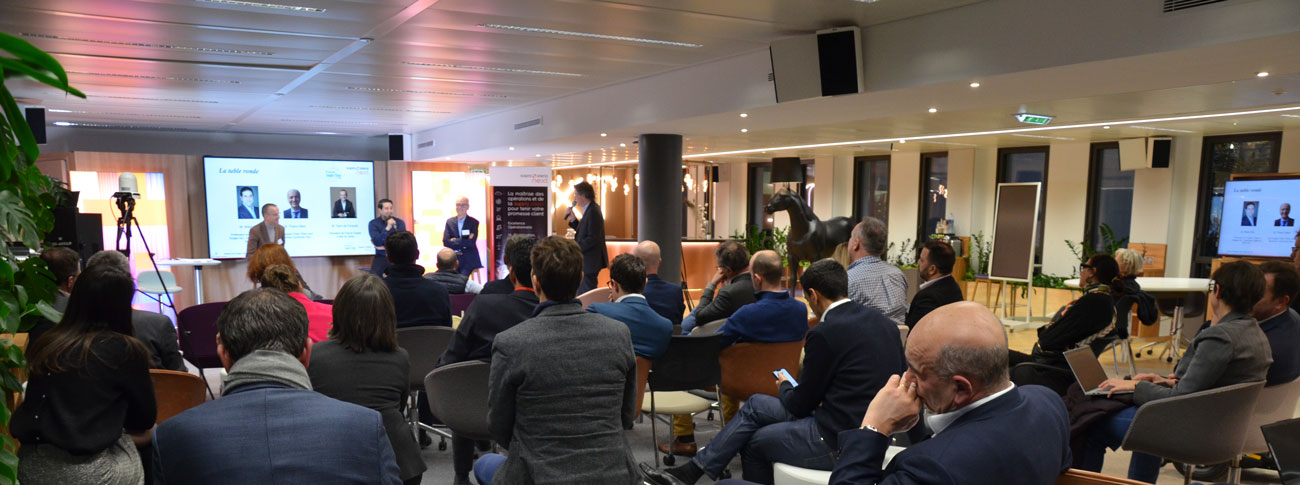
To mark the launch of the 3rd edition of our "Guide des formations supérieures en Supply Chain", students, parents and professionals came together on September 23 for an evening dedicated to one question: is a 5-year degree the key to a career in Supply Chain?
Behind this question lies the whole relationship between qualifications, skills and developments in the sector, which was debated by our speakers with varied and inspiring backgrounds.

How it all began

" The range of Supply Chain training courses continues to develop and evolve. How can we find our way through this profusion? How can we help young people identify the training that best suits them?

After the first 2 editions, France Supply Chain worked for a year, with the help of an apprentice, Houlda WOROU, to gather all the necessary information and prepare a3rd edition, which we wanted to be entirely digital to make it easier to update and consult.

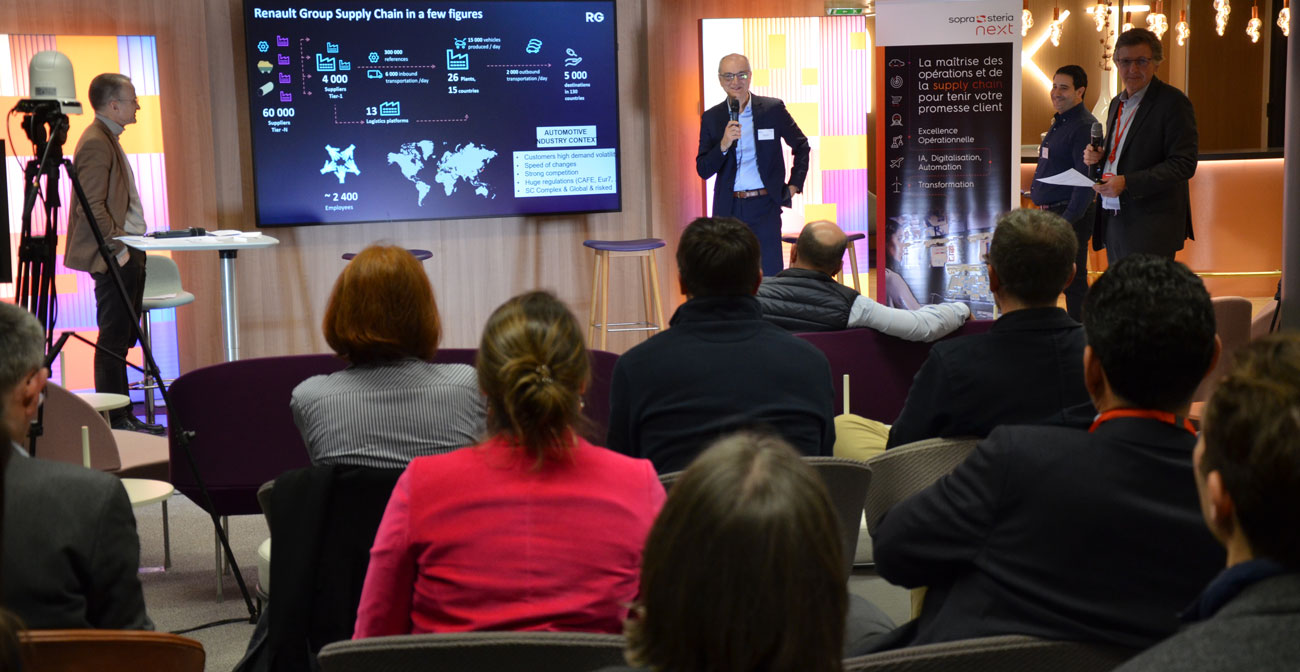
Loic LASSAGNE, leader of the HR lab, at the microphone to explain why the guide was created.

It's a major undertaking, and we hope it will prove a useful tool for everyone. Loïc LASSAGNE -HR General manager - Supply Chain at Renault Group & Leader of LAB Richesses Humaines.

A career in supply chain: training is still essential

At a time when the supply chain sector is booming, it is still too little known to the younger generation. Our guide is designed to help them make the right choices.

  • More than 200 listed training courses, including 30 new ones, covering the whole of France.
  • A 100% digital format, interactive and updated in real time, to keep pace with developments in the sector.
  • Greater accessibility: students, professionals undergoing retraining and companies will all find solutions tailored to their needs.

It is aimed at 3 main audiences:

  • Students looking for training, and possibly their parents or financial sponsors.
  • Companies looking for young or not-so-young supply chain talent.
  • To training institutes and organizations that can showcase their courses while looking at what's being done elsewhere.

All roads lead to Rome...or to the Supply Chain

Throughout the evening, our speakers reminded us that there is no single standard route into the supply chain professions. A wide variety of career paths are possible, from Bac+2 to Bac+5, not forgetting continuing education for working professionals.

The proof is in the pictures:

diagram of the different paths leading to supply chain jobs

Today's Supply Chain is enriched by multiple trajectories, and our speakers have clearly understood this. From schema to reality, their backgrounds and advice give you an overview:

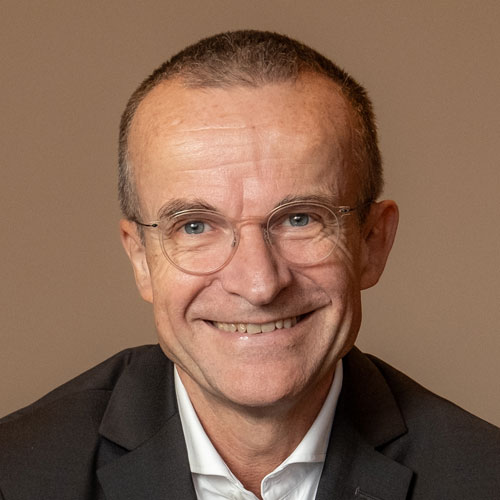
Vincent Barale, Vice President Supply Chain at Louis Vuitton

  • University career
  • His position as logistics manager at Carrefour took him as far as Hong Kong
  • Executive at Louis Vuitton for 22 years

"If you have a 5-year higher education diploma or an engineering degree, it's to move up the hierarchy and take up a management position. In a management position, you're going to be asked to have a global view, to be able to draw up a strategic plan, to make structuring choices for the company, sometimes heavy investments, and so on. But to be credible at this level, you need to be close to the field. An engineer who stays behind his screens won't get very far.

On the other hand, if you've just graduated from a BTS or IUT, you already know the terrain. You need to educate yourself. Go to exhibitions, go to the cinema, read books, but get out of the field, otherwise you'll be seen as mega-operational".

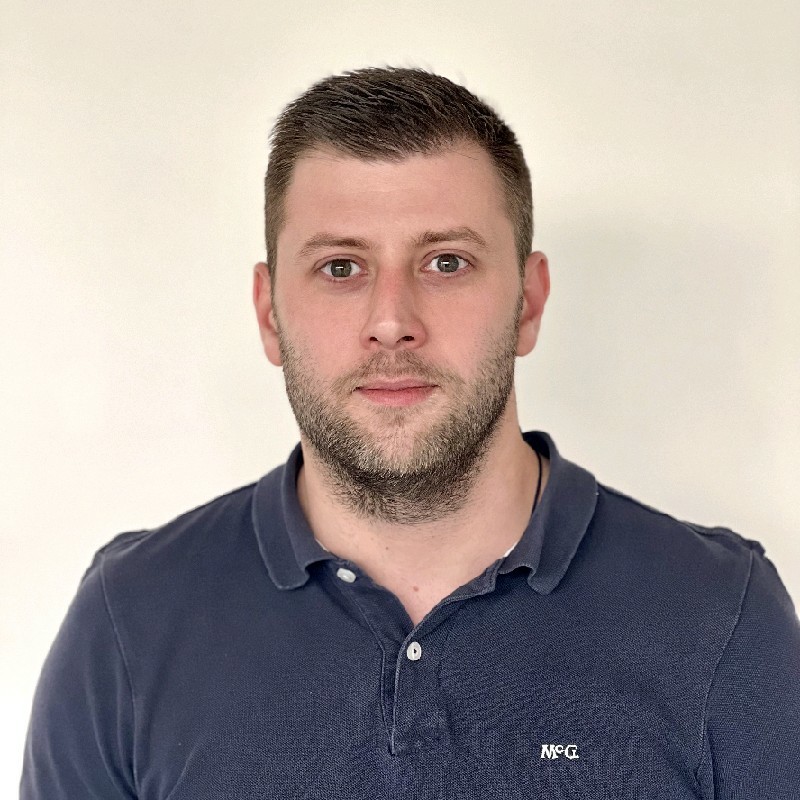
Photo by Rodrigue Branchet-Fauvet, E2E Supply Graduate Program at Renault Group

Rodrigue Branchet-Fauvet, E2E Supply Graduate Program at Renault Group

  • University career
  • Completed two Master's degrees: one at university, the other at a business school to specialize in Supply Chain
  • Has had the opportunity to go abroad through internships and international exchanges
  • Now working for Renault Group

"When I did my first Master's, I decided to do a second one to specialize and understand what Supply Chain was, and not go straight into the world of work lost and without a global vision because at first I summed it up as trucks and pallet trucks, but it's not that at all.

This second master's degree gave me this more global vision, but I lacked the professional experience that I hadn't gained in my university career, where I had taken advantage of internships abroad and international exchanges."

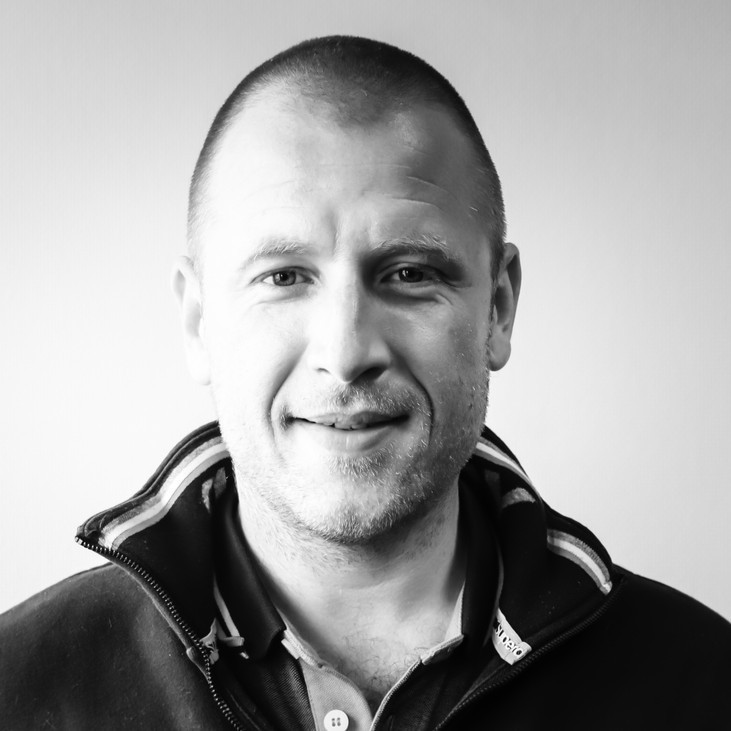
Photo by Baptiste Coccia, stock management and logistics project manager on a work-study program at CNR (Compagnie Nationale du Rhône).

Baptiste Coccia, Inventory management and logistics project manager on a work-study program at CNR (Compagnie Nationale du Rhône).

  • BTS in international trade
  • A year in New Zealand to learn English
  • 8 years in transport and logistics
  • Travelled in Asia and Australia
  • Has resumed her studies and has just started her Master's degree in Lyon on a sandwich course.

"My aim in going back to school and taking this Master's degree is to acquire all the skills I didn't necessarily have, since I was really specialized in sea and air transport.

So now I'm involved in logistics and stock management, and in parallel with my Master's degree, I'm specializing in purchasing, which will give mea real diversity of skills, and I think these are profiles that are in demand on the job market, particularly in the supply chain. What's more, this Master's degree is recognized internationally , so it will be easier for me to apply for jobs abroad." 

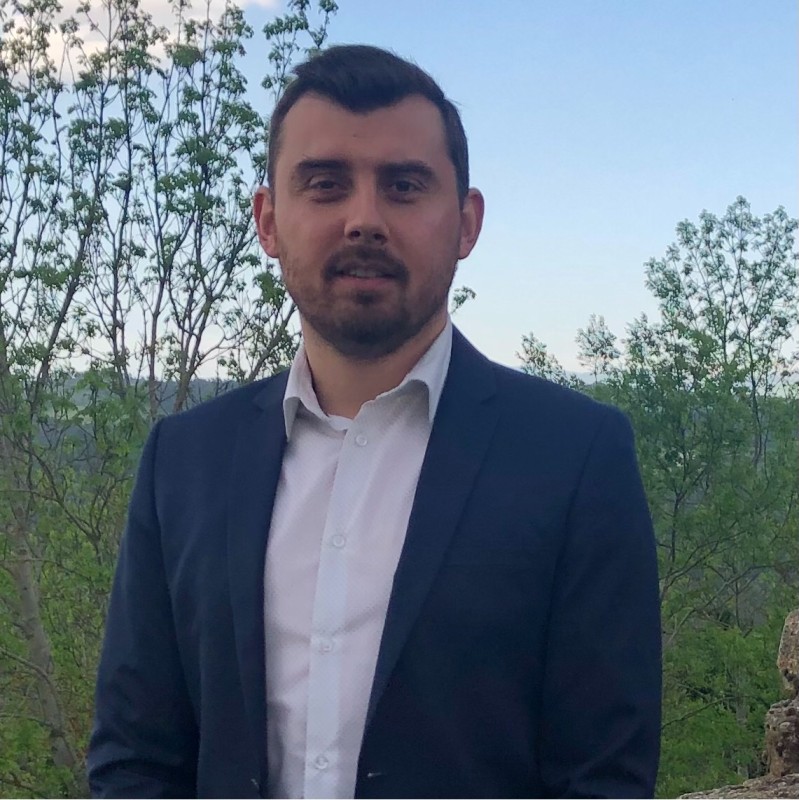
Photo by Laurence Papeil, Supply Chain Director at RAJA

Laurence Papeil, Supply Chain Director at RAJA

  • Worked 10 years after BTS
  • Returned to school at 32 with three young children to "tick the bac+5 box".
  • Master International Logistics and Transport
  • This determination led her to Energizer's world headquarters in the USA as Global Logistics and Distribution Director.

"You can't systematically start out with a Bac +5, but it's more afterwards, how you manage all the opportunities you may have and I think that's what's important, it's to make structuring choices, good ones, sometimes bad ones too, but the important thing is to bounce back, and really move forward regardless of whether or not you have a level of study that corresponds to the position you're given."

The last word

Throughout the round table, they reminded us that there is no linear path to success in the world of Supply Chain. So, yes, studying at a grande école and doing long studies will always be valued, but experience is a social springboard for climbing the ladder. You can start at the bottom of the ladder and quickly build up your skills and responsibilities.

Today, many choose the academic route. The real question then becomes: how do you stand out from the crowd? Here's a roundup of advice from our speakers:

  • Get out in the field: experience the plant and warehouse to understand operational reality and prepare for the move to management.
  • Broaden your culture: nurture your strategic vision beyond technical expertise.
  • Make the most of your differences: open up to the world, learn English and more, develop your interpersonal skills.
  • Project yourself 20 years from now: define a long-term career vision and ask yourself whether the path you've taken is still in line with your desires.
  • Dare: remain curious, test, take risks.
  • Maintain your network: prolong exchanges and networking.

5 SMEs talk about their participation in the eSCalade program

The 5 participating companies all agree that they are at a "pivotal point" in their development. A phase in which these SMEs and start-ups need to change dimension and scale up their processes. Supply Chain is a major lever in this process, and the program meets the expectations of these professionals, not least because it results in a concrete, high-quality action plan for each of them. This is made possible by personalized inter-session follow-up, exhaustive and in-depth training days, and lots of peer-to-peer sharing.

Interview at the closing day of the 6-month program at L'Oréal.

What convinced you to take part in eSCalade, and what's the biggest benefit of the program?

Why would you recommend eSCalade to another SME?

interview - quote

Benoit:

I'd recommend it for an SME that has a clear project for structuring its supply chain, and that has the support of its management to build something. You shouldn't get involved if you don't clearly know where you want to go, or if you don't have the support, backing and resources.

Myriam:

To put it very simply, I'd say it's for an SME looking for visibility over its supply chain. If the company is at a stage where it's trying to find its way, this program allows it to take a step back and define its major objectives, while at the same time making them very concrete. It's a good way to gain vision and clarity.

Benjamin:

It's really a program for gaining perspective, even if the company already has audits (as in the automotive industry)! Because you discover the problems of others who are in other sectors, you make them your own and you question yourself. Initially, I was worried that all the participants would be from the automotive sector, and would therefore come across the same issues (e.g. random forecasts and orders), but I realized that, despite the different backgrounds, many of the problems were similar.

Guillaume:

I'd recommend it above all for companies that want structure in their logistics approach, by providing a "backbone" that enables them to put their finger on the right issues very quickly, and to know how to deal with them right through to the end, with support throughout the process.

David:

I think that the greatest impact will be on people who are in the process of industrializing or increasing their volume, and who want to extend their supply chain capabilities to ISO resource, for example, or at any rate by putting in place procedures and tools, if they are already in place, but which enable all these processes to be tidied up a little, I think that this is really where the program is most relevant.

In any case, I know that in the start-up ecosystem, I think it's really a tool that can be very useful in bridging the "valley of death" gap. When you've finished R&D, you try to produce and launch something on the market. You've got the concept, you've got the market, but you've got to start producing, and that's where a lot of things fall apart, unfortunately.

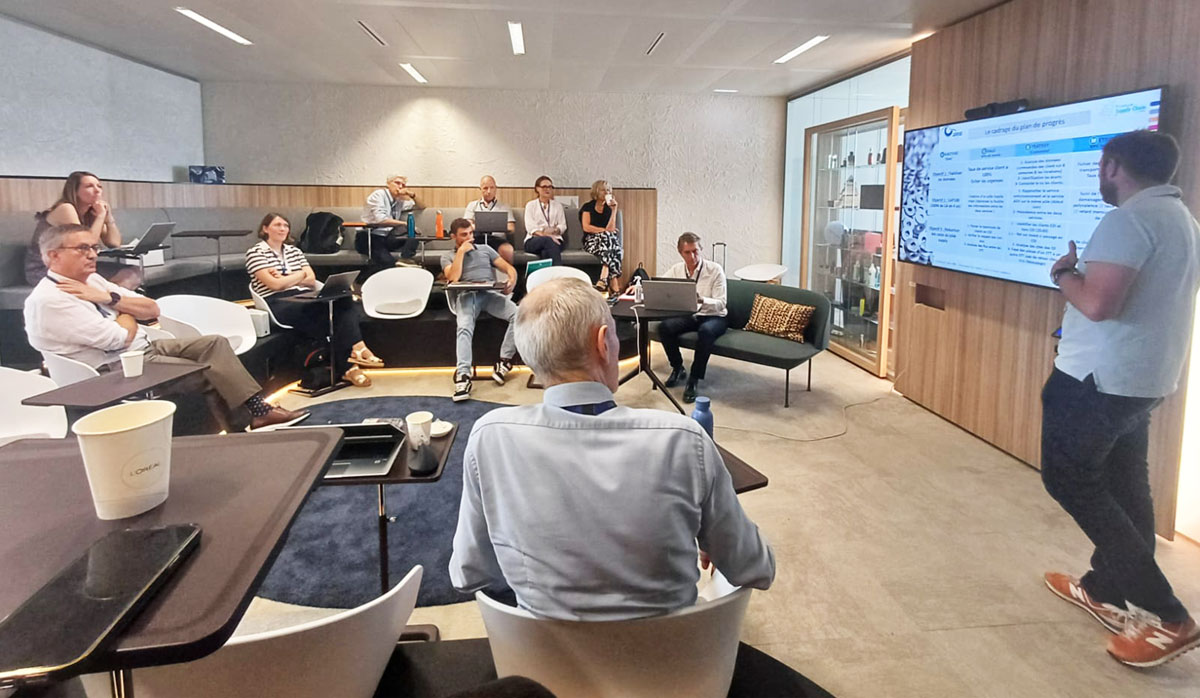
Presentation of action plans

Presentation of action plans and progress plans by participants in front of trainers, network professionals and their sponsor, François PEIGNES, retired Vice President Supply Chain Operations at Orano.

What advice would you give to a small or medium-sized business taking part in the program to ensure its success?

idea exchange

David:

one of the prerogatives is to be equipped with at least an ERP, and therefore to have sufficient digital maturity to fully exploit the potential of the program and the tools offered, because a net requirement calculation in Excel is not viable over time.

Benoit:

It's also important for everyone to describe their motivations for following the program, as this provides a roadmap for the rest of the process and avoids any drift.

Benjamin:

Filling in the pre-training questionnaire, first on your own and then with your management (N+1), helps align expectations and define a clear training guideline.

Guillaume:

already have a real project approachto have something concrete to put into the machine during the sessions, rather than a purely theoretical idea, for a more effective application.

A Supply Chain self-diagnosis to assess its mastery of the fundamentals

In terms of your mindset and Supply Chain vision, is there a BEFORE/ AFTER eSCalade?

Cohesion

Myriam:

These 6 months have given meaning to our action plan. There were some ideas there, but we didn't really know where to start, so the fact that we were able to give a structure to our plan, I think, unblocked certain issues.

And on a more personal note, it's made me feel a bit more at ease. Yes, we're an SME, we're not up to date on everything, but we realize that in some areas things are fine. And there's this strong notion of arbitration and adaptation according to the business, which has really reduced the pressure to be "perfect" or to have to put in place all the great processes and good ways of doing things.

Benjamin:

In concrete terms, we've created a supply chain division, we've already moved people around and now we've got the scheduling, logistics and sales divisions together. We're aiming for smoother communication and mutual support.

And what's really nice is the "before/after" between each day of face-to-face training. That's the real plus of the training, having the two-hour inter-sessional sessions with Laurent (one of the trainers) every three weeks, allows us to dive back into the subject and, above all, to move forward.

David:

It enabled me to consolidate the action plan we had for the supply chain. Today, we're an old start-up, so there are a lot of things to do, to put in place, and it allows us to get feedback from everyone, to see what we're prioritizing so that we can already have a first draft of the supply chain, to have concrete actions right away.

One major contribution has been to put existing tools (often poorly mastered) back at the heart of processes, so that they can be better appropriated for the benefit of the company and the supply chain. In that sense, I think we've really succeeded.

Presentation of action plans

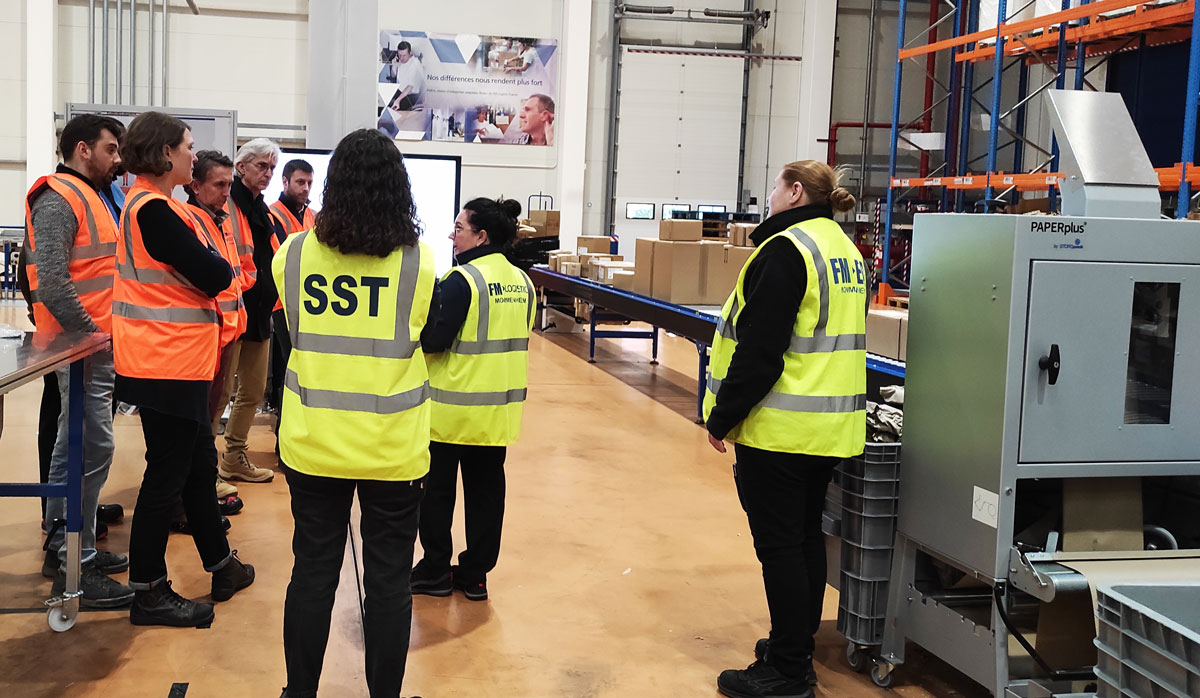
Visit to FM Logistic's Mommenheim logistics platform during the2nd day of training.

In short, the ideal company profile for the Escalade program:

    • In the industrialization or high-volume increase phase.
    • Seeking to increase the capacity of their supply chain with constant resources (at ISO Resource), in particular by implementing procedures and tools to streamline existing processes.
    • For start-ups, to get through the critical stage between the end of R&D and the launch of large-scale production (the "start-up valley of death"), where many fail.

The eSCalade program is proving to be an essential catalyst for SMEs and start-ups seeking transformation and growth. As participants testify, the program lives up to its name eSCalade (Ensemble pour une Supply Chain Agile, Lean, Attentionnée, Digitale, Durable et Efficace), enabling companies to climb the development ladder with confidence and structure.

Join the 4 companies already registered for the January session

eSCalade

Many thanks to our "climbers" for sharing their heartfelt experiences, and congratulations on the work already accomplished and to come!

  • Yann de Feraudy

    Myriam BIZOUARD

    Supply Chain Director

  • Guillaume DEGETZ

    Guillaume DEGETZ

    Supply Chain Manager

    Oceane Logo

  • Yann de Feraudy

    Benjamin FAUTER

    Scheduling and logistics manager

    Gris Group Logo

  • Yann de Feraudy

    David GROSCLAUDE

    Supply Chain Manager

    Cailabs Logo

  • Benoit MAISONHAUTE

    Benoit MAISONHAUTE

    Logistics Manager

    BONY SAS

NEWS

See all the news


EVENTS

PRESS
To go further

Read more

Launch of the Supply Chain Resilience Observatory: global vision, concrete actions

Yann de Feraudy

I think there's a kind of myth behind resilience, and I think that when we got into the subject, we were actually looking for a score, we were looking for a champion, we were looking for the best, and so on. And I remember that we had a few sessions with the COPIL where it was quite tense because, ultimately, what we were looking for were best practices in order to highlight and share them.

With these words from Yann de Feraudy, President of France Supply Chain, we opened the evening's presentation of our White Paper: Supply Chain Resilience.

With this France Supply Chain/Sopra Steria Next co-publication, what we're interested in is the dynamic that companies are becoming part of. We also wanted to establish indicators of this resilience, because things that are measured are managed! That's why we've decided to build on this initial study to create an observatory of corporate resilience, the first of its kind, with the aim of :

  • Supply chain risk management

    Take regular stock of the situation, using an "index" of business resilience

  • Supply chain risk management

    Identify best practices

  • Supply chain risk management

    Offer feedback and expert advice

  • Supply chain risk management

    Provide food for thought with a compendium of outstanding studies and analyses

  • Supply chain risk management

    Share this with the supply chain community

The results show that their average supply chain maturity score will be 2.59 in 2025.

Assessing company maturity

The study is based on well-known supply chain benchmarks, examining planning, purchasing, production and distribution functions, as well as surrounding functions such as information systems and sustainability. "Companies are assessed on a maturity scale of 1 to 4, where 4 represents a competitive advantage. Resilience starts at maturity 3," explains Philippe Armandon, Director of Sopra Steria Next's Industrial Operations and Supply Chain Excellence practice, and leader of the study. Of the 39 companies that responded to the questionnaire, only 26 completed all the maturity questions. This dual approach enables us to obtain a global sample of organizational practices, and a smaller sample for detailed maturity analysis.

The results show that the average maturity score is 2.59, with only 6 companies reaching level 3, the threshold at which resilience becomes a strategic lever. The most advanced companies in this field regularly address supply chain issues at COMEX level, demonstrating the importance of integrated governance. As a link to the rest of this article, it is interesting to note that only 10% of companies have visibility over several levels of their supply chain, with complexity increasing significantly with lower-ranking suppliers.

Risk versus resilience

Before getting down to the nitty-gritty of the discussions, participants wanted to go back over the definition of these 2 terms. "Risk and resilience are notions that are a little different; there's an amalgam between the notions of risk and resilience. The essential distinction lies in the approach taken to events. When it comes to risk, the analysis focuses primarily on the events themselves and the vulnerability they may engender, whether in terms of climate risks, cybersecurity or other threats. This perspective emphasizes the identification and assessment of immediate threats likely to disrupt the business.

Resilience, on the other hand, is based on the assessment and strengthening of long-term capabilities. This approach includes in-depth consideration of capabilities in the broadest sense, encompassing planning, production, supply, distribution and communication.

Photo by Walid Klibi

These two notions are complementary. You have to start with risk analysis, because it provides the basis of vulnerability on which a layer of resilience can be added. And if we want to be truly resilient, there needs to be an alignment between vulnerability and the level of resilience invested.

 explains Walid Kibli, Research Professor at ISLI KEDGE, associated with MIT. This link ensures proactive, adaptable management in the face of hazards.

Assessing company maturity

Renault's risk strategy

Thierry Blein, GM Supply Chain Risks and Business Continuity Plan, began by describing the complexity of Renault's supply chain. Production reaches 15,000 vehicles a day, with each car made up of around 2,000 parts from 4,000 first-tier suppliers. In depth, Renault works with almost 60,000 suppliers. Downstream, 2,000 trucks or ships transport vehicles daily to 5,000 sales outlets in 130 countries. This global, interconnected organization makes exposure to disruptions inevitable: "in 2024, in 7 months, we suffered 10 floods that impacted operations".

To strengthen its resilience, the Group has taken some structuring strategic decisions in recent years, notably by attaching the Supply Chain function to the CEO and investing in digitalization. This transformation has enabled us to decompartmentalize data and obtain a global view of supplier risks. Rather than focusing on the probability of risks occurring, Renault assesses their potential impact on the business. A cross-functional team, with a dedicated budget, analyzes vulnerabilities and anticipates crises by monitoring critical suppliers.

Renault has also set up a single risk management repository accessible to all stakeholders. This approach makes it possible to identify suppliers with multiple risk factors, and to assess the potential impact on production in the event of disruption. This methodology, focused on business impact, reveals vulnerabilities invisible with traditional probability-based approaches.

The complex subject of investing in resilience

"When you talk to people in the supply chain, they know what to do: they know where to invest, where to put flexibility, or strategic stocks. But there's a real difficulty in justifying these investments to top management." This observation highlights a fundamental paradox: investing in resilience means allocating resources to prevent events that we hope will never happen. In this context, conventional financial methods, such as return on investment (ROI) or net present value (NPV) analysis, often prove inadequate.

An alternative approach is to incorporate option theory, already used in technology sectors such as HP and Boeing. This theoretical framework introduces the principle of "the right and not the duty", offering the possibility of acting without immediate commitment. This method enhances the flexibility of decisions by taking future uncertainties into account. Adopting a logic of options enables companies to take preparatory measures (reservations, pre-actions) that facilitate a rapid response to crises when they occur. This approach reflects dynamic, adaptive risk management.

Technology and AI take center stage

Technology and AI take center stage

The use of digital technologies and artificial intelligence is essential to ensure accurate monitoring of supplier risks and early detection of weak signals, "A massive investment over 3 years has been made to digitize and de-risk our most impacting suppliers". Thanks to digital tools, Renault is able to continuously monitor its entire supply chain and detect the first signs of fragility among its suppliers. For example, AI-based risk management solutions can identify social tensions, environmental problems or financial difficulties that could affect suppliers.

Renault relies on two pillars to improve anticipation: visibility and agility. Visibility is based on real-time knowledge of logistics flows, thanks in particular to GPS tracking of trucks and ships. This constant monitoring makes it possible to quickly identify any climatic or logistical risks, and to adapt production forecasts according to recalculated ETAs (Estimated Time of Arrival) versus factory safety stocks. Agility, on the other hand, consists of developing pre-configured scenarios for dealing with disruptions, such as the use of interchangeable parts or alternative suppliers. These scenarios are centralized in a "Control Tower", facilitating real-time operational decision-making.

For further reflection

  • The importance of keeping one's feet on the ground and shortening the decision-making chain

    Direct coordination of Supply Chain crises is essential to maintain a concrete understanding of risks. Being in the field enables us to quickly identify malfunctions and assess whether better risk mapping would have enabled us to anticipate them. This dual role, both operational and strategic, promotes faster, more effective corrective loops.
  • The importance of simplifying the supply chain to improve resilience

    Multiplying suppliers to diversify sources of supply may seem an obvious solution, but it complicates operational management considerably. Without appropriate digital tools, it becomes difficult to locate suppliers precisely and detect signs of failure. Warehouse automation and mechanization also add complexity. Targeted simplification, supported by monitoring and analysis technologies, is essential to ensure lasting resilience, while avoiding the creation of overly cumbersome structures that are difficult to manage.
NEWS

See all the news


EVENTS

PRESS
To go further

Read more

Pooling flows to accelerate modal shift

Shipper pooling: the key to accelerating modal shift?

Are you working to develop low-carbon transport solutions? Would you like to create new rail and river routes? 

to view the replay and the speakers' detailed answers

Since 2022, a SC4Good LAB group has been dedicated to multimodal transport. Its aim is to identify opportunities for pooling the use of rail transport. The initial group, made up of nine shippers, shared and mapped their logistics flows, identifying common corridors between France and Spain, as well as East-West flows.

However, analysis showed that there weren 't enough of us to create a significant mass effect. To explore the subject of pooling in greater depth, group leader Florence Ughetto, Sustainable Development & Logistics Expert for Renault Supply Chain, organized this webinar.

Academic viewpoint on mutualization: what solutions for modal shift?

Hannah Yee, a post-doctoral researcher at École des Ponts ParisTech, presented strategies for decarbonizing freight transport via a modal shift from road to intermodal rail. She explained that rail is used for long distances, while road is used for the first and last kilometers, using the same loading unit throughout. This reduces carbon emissions, as rail transport is less carbon-intensive than road transport.

The researcher went on to discuss the concept of mutualization, where several shippers group together to share transport volumes, thereby reducing fixed costs and obtaining volume-based discounts. She pointed out that intermodal rail is often more expensive than road transport, due to terminal handling costs and first and last mile charges.

Four stages have been identified for setting up a pooling solution:

  • Chapter 1

    Identify

    flows eligible for intermodal rail transport

  • Chapter 2

    Find

    partner shippers with similar origins and destinations

  • Chapter 3

    Set up

    a cooperation agreement between shippers

  • Chapter 4

    Define

    a pooling strategy to organize collaborative transport in practice

She stressed the importance of a holistic approach and supply chain perspective to synchronize shippers and optimize transportation and inventory management costs simultaneously.

The free Appel d'air platform: find or create intermodal transport solutions

Bernard Guilbot presented the Appel d'Air tool, developed by the AI-Cargo Fondation association, of which he is Honorary Chairman, to help decarbonize freight transport by facilitating modal shift. Financed by energy saving certificates, this application is free of charge for shippers.

Appel d'Air uses the Cumulus digital platform to help shippers find existing intermodal transport solutions or pool their flows to create new services. The platform features maps detailing Europe's rail and river networks, with the option of zooming in on stations and ports.

Users can carry out simple searches by entering details such as zip code, city, delivery date, and by defining distance or time criteria for pre- and post-carriage. The tool then provides relevant services, ranked byCO2 savings.

For more complex analyses, users can import CSV files containing their transport flow data. The platform then assesses the eligibility of these flows for modal shift based on existing services, and suggests pooling options to maximize efficiency andCO2 savings . All data is anonymized to protect shippers' confidentiality.

Example of analytical mapping on the platform

Example of analytical mapping on the platform

Michelin's experience of using the platform to optimize transport flows

For the past five years, Michelin has had an ambitious roadmap for reducing its carbon emissions. The company is working on multimodal solutions, starting with rail transport in Europe, using private trains.

For the past two years, Michelin has been using AI Cargo to optimize the decarbonization of its transport volumes. A collaboration initiated with France Supply Chain.

The benefits of the application according to Denis Brangeon, Network Capacity Analyst:

  • Decarbonize our remaining, lower volumes thanks to ai cargo and mutualization

  • Provide visibility to open up the train to other, smaller players, by supplying their entire transport plan. 

  • Chews up some of the work previously done manually

  • Easy to use, with support available from a firm

  • It's free!

If, like us, you are convinced that mutualization and massification will enable us to accelerate this modal shift,

contact us and we'll relaunch our group based on this promising Appel d'air project.

Contact us

to discover the replay and all the questions/answers

  • Does Appel d'air distinguish between hazardous and non-hazardous products?

    Yes, in the templates, we indicate whether products are hazardous or temperature-controlled. What's more, we've launched an algorithm to identify the nature of the flows, to see whether loading is compatible or incompatible.

  • How can I get in touch with other loaders?

    In fact, the initiative comes from Appel d'air, which means that as soon as there are mass flows that enable the creation of a potential service, Appel d'air will contact the shippers to see if they agree to set up a working group with operators to launch a project.

  • What about the platform's perimeter?

    The platform's scope is not European.

    Today, it's loaded with practically all existing services in France. Some of the European services are included, and I think that before the end of the year, we'll have all the existing services in Europe. On the other hand, for prospective services, it is valid for all 27 European countries.

  • What are the frequencies?

    On the frequencies, we see the frequencies as I showed them earlier in the search engine. When I display the results of a search engine, the results are displayed over 7 days.

    As for the rest, what I forgot to mention is that when we carry out flow eligibility tests, the shipper carrying out the test can download a CSV file, retrieve the entire file with the eligibility results, and then see that there is conformity between the actual departure dates and the corresponding services operated.

  • Does Appel d'air work with consular chambers, etc.?

    Yes, we're working with the consular chambers, we're working with all the working groups and associations, particularly on the rail and river aspects. These days, we're getting more and more involved in the regions.

    I would also like to say that for shippers, when there are difficulties, etc., the Appel d'air program also provides a form of support, i.e. the services of a consultancy firm, for a limited period, of course, but completely financed by the Appel d'air program, i.e. it remains free of charge for the shipper, to enable him to formalize his flows and use the platform. This support is also provided for the duration of the program, so that results can be measured, notably in terms of tonne-km carried and tonne-km carried forward.

  • Concerning theCO2 savings given by Appel d'Air, which platforms are calculated?

    So, they are calculated according to the standards laid down by ADEME. We're completely in line with ADEME's calculations. And the calculation is made by comparing the road flow with the pre-carriage, main carriage and post-carriage flows.

  • What has been the impact of modal shift on delays, service rates, etc.?

    As Anna explained, these are generally longer solutions, because there are load breaks on both sides. And it's a different mode of transport. You can't compare road with multimodal.

    It's really a transfer, a switch to another mode of transport that requires buffers, because when a train is late, it's not a quarter of an hour or half an hour. It's usually half a day or more. And then it has to recover its slots to be unloaded at the terminals. This can be problematic when the terminals used are congested. So there are impacts that need to be potentially deconstructed upstream with buffers, already to ensure a service rate that is almost equivalent to road. It's also difficult to achieve a modal shift with a service rate that's good enough not to impact supply chains, especially when you're in industry and production.

    There really needs to be a desire, a commitment to make this shift. Because today, unfortunately, the ton of CO2 is not sufficiently valued, and there are no real financial gains to be made from a modal shift, because we don't get paid, because we produce CO2 emissions. Logic also really applies to our companies.

    There are impacts, but they can be overcome. As shippers, we're not yet where we want to be. Today, we need to achieve a modal shift of around 5 to 6%, compared with 1% five years ago, on 300,000 FTL journeys in Europe. We're continuing to try and create new projects, new corridors on different routes. We hope this will accelerate with tools like AI. We hope to reach 15% by 2030.

  • Can your platform be connected to a TMS?

    So it can be connected to a TMS, yes, you need to create the appropriate APIs, and depending on the type of TMS, you can even finance the creation of these APIs.

  • if I work with a 3PL forwarder who manages my flows, what synergy is there on the platform?

    Freight forwarders are not necessarily the companies that are the biggest drivers of change, so that's why, under the Appel d'Air program, we titillate shippers so that they see the benefits of modal shift and can then put pressure on their freight forwarder to switch to these modal shift phases.

    So the freight forwarder can play a full part in the Appel d'Air program, there's no problem, we just have to make sure that there's no redundancy of flows, i.e. that we don't get flows from both the shipper and the freight forwarder, we just have to identify them to avoid this redundancy of flow, but the freight forwarder is welcome, on the contrary, to participate since in the modal shift.

NEWS

See all the news


EVENTS

PRESS
To go further

Read more

Foresight Workshop: Experiencing the Impacts of Climate Change on the Supply Chain to Build a Desirable Future

"The human brain needs to know what the future will be made of", says Sébastien Bohler, and the conviction of the Foresight working group is that the future is being built! They therefore worked to raise awareness and get as many Supply Chain players on board as possible, in order to build desirable scenarios and strategies for adapting Supply Chains to climate risks. Here's a look back at the first deliverable from the project after a year of collective work: the Perils Workshop.

The prospective construction site :

beyondCO2

Weak signals are already present in 2024, as numerous press articles show. In 2040, managing the impacts of climate change will be part of our daily lives.

How can we adapt to new expectations, regulations and climate change? What adaptation strategies should companies be building, starting today? Are the actions taken by companies sufficient and realistic?

Most climate-related efforts are focused on decarbonizing transport, yet other elements linked to climate change are already having a marginal impact on supply chains, but will become more significant in the future, and need to be considered now to transform companies.

  • prospective-future-desirable-workshop-02

  • prospective-workshop-future-desirable-05

  • prospective-workshop-future-desirable-03

  • Team brainstorming on the question of a desirable future

    prospective-prospective-workshop-future-desirable-04

Participants in the feedback workshop.

The design fiction workshop :

making the foresight project a reality

An enthusiastic group guided by Aurélie Delemarle, Principal at Argon&Co, embarked on a year of collective work following a series of methodological choices:

  • Study scope: the 6 perils rather than the 9 planetary limits. The perils can be experienced and appeal to the emotions. What's more, they allow us to take into account all the categories of the European taxonomy, i.e. :

    1. rising temperatures ;
    2. an increase in violent storms;
    3. loss of biodiversity;
    4. flooding ;
    5. rising waters;
    6. water stress.
  • Impact scenarios rather than transition or climate change scenarios: the study focuses on the direct or indirect impacts on the 4 essential Supply Chain functions (demand, procurement, production and logistics distribution).

The results of this work will be published over the course of the year (Livrable péril, PESTELs, Nouveaux Récits, 1 or 2 scientific articles). The first of these was the subject of a full-scale test with members of the SupplyChain4Good Lab.

The group's first deliverable took the form of a 3-hour foresight workshop by design fiction. The reason for this choice was to get the participants involved in the story, and to help them experience and measure the impact of climate change.

Focus on the tools used during the workshop

The artefacts of biodiversity peril

This immersive approach won over customers, reinforcing their commitment to take action.

Participants are provided with a game kit containing artifacts (objects straight from 2040) and an explanatory note for facilitators, including the context of the scenario synthesized via a PESTEL.

Biodiversity:

The "poor relation" of climate change issues as a whole

Here's an issue that was close to the hearts of some of the participants, as rising temperatures, for example, are much more often talked about than biodiversity. "We're talking about supply footprint"Tariel Chamerois, CSR & Sustainability Manager France & Morocco for DB Schenker, tells us that companies are obliged to reduce their production sites, in this case wind farms, because they are located in a bird migration zone.

Silver

This "biodiversity peril" workshop raises the issue of limiting access to land, with sanctuarized zones where no one will be able to settle.

Then, of course, there's the question of budgeting and the impact on prices. How is biodiversity valued? What is the price of fish? What is the price of birds? Biodiversity provides a whole host of resources and/or ecosystem services that are currently free, or considered to be free, and so the first idea would be to reintegrate it into future budgets.

Today there is no value, so the group of the day concludes that the regulatory framework must and will evolve.

If we take the case of fishing again, today what is included in the sale price of fish is only the energy and human resources required to catch the fish, but not at all the fish resource, which is free once it has been caught. Tomorrow, we may have to consider regenerating the resource, as the FSC model does so well today (planting trees in return for those removed).

Pénélope Laigo, Sustainability & QHSE Group Director at FM Logistic

Last but not least, another anticipated impact is the need to design biodiversity-friendly supply chains. In other words, business models, buildings, flows and solutions that take into account potential impacts on biodiversity from the outset, and how to avoid or even have positive, regenerative impacts.

It is imperative for companies to develop proactive, integrative strategies that take into account all aspects of climate change, including impacts on biodiversity. This requires rethinking business models, infrastructures and processes to minimize negative impacts and promote regenerative practices. Collective commitment and innovation will be essential to transform supply chains and ensure their resilience in the face of future climate challenges.

NEWS

See all the news


EVENTS

PRESS
To go further
  • AWARD FOR BEST SUSTAINABLE SUPPLY CHAIN ARTICLE - 2024 EDITION

    France Supply Chain and AIRL-SCM launch the3rd edition of the Best Sustainable Supply Chain Article Award.

    To know more about it

  • HOW TO BUILD CIRCULAR SUPPLY CHAINS? A LOOK BACK AT A COLLABORATIVE WORKSHOP
    Companies, institutions, academics, local authorities and associations all agree that the circular supply chain is essential for a circular economy.

    To know more about it

Read more

Women and Logistics/Supply Chain, what are the challenges in terms of attractiveness and health and safety?

There are roughly the same number of women as men on earth. And yet, according to the latest GARTNER report of 2023, the proportion of women in the supply chain is only 39% . Worse still, their presence in executive Supply Chain positions is dwindling to 26%. At a time when recruitment is putting the logistics and supply chain sectors under strain, it is vital to pay particular attention to the female population.

shed light on the human, social, technological and organizational actions that promote the integration of women

One of the tools of the #femmesensupplychain community is to alert and raise awareness among professionals through specific conferences. It was in this context that Marie-Laure FURGALA, community manager, took part in a fascinating UX-forum organized by the CERCLE ENTREPRISES et SANTÉ at Preventica Toulouse on September 19.

Jacques Bouvet, Chairman, and Anne-Marie de Vaivre, Founder of the CERCLE ENTREPRISES et SANTÉ, reminded us that "the Logistics/Supply Chain sector in France accounts for over 10% of GDP, almost as much as the health sector, with over 1.8 million employees and consolidated sales of over €200 billion. The sector is driving accelerated innovation in robotics, cobotics and organizational design.

The day's speakers brought their insights and experience to bear on these complex issues:

  • Thomas DAUDRE-VIGNIER, BUT Logistics Director.
  • Samya BELLHARI-TRAHIN, Head of Ergonomics, QWL, Job Retention & Disability Management at GXO Logistics.
  • Marie-Laure FURGALA, from L/SC operational functions to ISLI/ Master Director at KEDGE Business School.
  • Baptiste TRUILLET, Ergonomist, with start-up Soter Analytics.

The first solutions for bringing women into the supply chain

Work on making professions more attractive to women

France Supply Chain and its Lab Jeunes are working to change the image of our professions among the younger generations. The aim is for young people, and especially women, to enter the supply chain by choice rather than by chance. To achieve this, the Lab uses modern, high-impact formats such as comic strips.

"They need us": demystifying the supply chain professions through images, a Lab Jeunes 2023 initiative

The association has also chosen to highlight role models through a series of webinars called "Inspiring Women" , featuring women such as Operations Managers, General Managers and COMEX members. Indeed, it has been observed that top-level representation strongly influences the presence of women in management, and then at all levels of an organization.

The question of visibility is central, and it is essential to develop indicators within companies and with research. Although the signals show a positive evolution, we lack data and before 2018, they are almost non-existent. 

Creating special facilities for women 

These arrangements take the form of company-wide agreements designed to help women better manage their work/life balance. For example:

  • full payment of maternity leave and/or its extension, as Géodis does worldwide;
  • flexible working hours for pregnant women (who move to day shifts when working shifts) or for mothers of young children;
  • additional sick days (sick child days, etc.);
  • work flexibility for positions that allow it through telecommuting.

Initiatives to facilitate the integration of female employees

Numerous applications in the field were presented at the round table, aimed at reducing the arduousness of work at handling, manufacturing or preparation stations.

GXO Logistics uses new Tech solutions to prevent Musculoskeletal Disorders (MSD) and to facilitate tasks. This type of tool is also bearing fruit at But, where 16% of warehouse staff are women, despite the fact that the products handled are large and heavy.

To further enhance the integration of female staff, it is possible to deduce movements via conveyors, collaborative robots (Cobots) that move and bring products to operators, or with "Goods to Man" and robotized cabinet systems.

Another challenge is to reduce the weight handled. To achieve this, there are technological solutions such as the mechanization of warehouses or the deployment of assistive equipment (exoskeletons), as well as organizational solutions such as the revision of standards (maximum pallet height 1800 mm, ideally between 1200 and 1500 mm, maximum parcel weight 7-8 kg, etc.).

For companies that have implemented this type of innovation (SONEPAR or LVMH, for example), the proportion of women in Supply Chain operations is 50%. FM logistic has also told us that the switch to hydrogen-powered forklift trucks has been well received by women, who see recharging as simpler and cleaner.

Ways to build employee loyalty

Once female staff have been recruited, the question arises as to how to retain them. Here's some inspiration for managers and human resources officers:

  • thanks to a genuine policy ofpay equity between men and women (measured and transparent);
  • by promoting commitment via networks of women within companies ("elles VMH") or communities such as ours, to which female employees have access;
  • specific in-house coaching for women (conferences on leadership, career management, burnout prevention, etc.);
  • encourage career development by offering women-specific career paths with cross-functional projects;
  • working on harassmentissues ;
  • with a real policy of parity in Supply Chain recruitment.

These actions are far from exhaustive, and if you're interested in the subject, we invite you to watch the replay of the round table, sequenced by speaker, which will have lifted the veil on a number of approaches and ideas.

See the replay

Many thanks to Anne-Marie de Vaivre for organizing and moderating this rich round table, and to Marie-Laure for her notes 😉 and contribution.

NEWS

See all the news


EVENTS


PRESS

Read more

A Public Replay to discover our Labs, Communities and Novelties

A Public Replay to discover our Labs, Communities and Novelties

On September 21, to mark the start of the new school year, we organized a new webinar to present our activities to our new members and perhaps, who knows, a few future ones. It was an opportunity to recall who we are, how we operate and, above all, our raison d'être.

One-click access to the desired video chapter

For all those who couldn't join us live (September is intense for many of us), we've decided to give free access to the replay of the event. The video features a timeline, so you can view only the passages that interest you.

This session also enabled us to unveil some new community initiatives. Starting with the young people's initiative, embodied by Rodrigue Branchet-Fauvet, an SCM student at KEDGE ISLI and PMO of Lab Jeunes.

  • Comics to demystify supply chain professions

  • Motions videos to showcase Supply Chain best practices and their implementation

    Watch

Another important focus was the presentation of the #community by Marie-Laure Furgala, Director of the ISLI MS/MSC in Global Supply Chain at KEDGE BUSINESS SCHOOL. What is the aim of this sphere of exchange? What do we talk about? A concrete example of the benefits for members who have joined a community.

France Supply Chain offers many advantages, including a new resource bank. This private platform brings together all our Labs and Communities productions, including over 60 subtitled replays of our webinars and 200 publications, as well as best-practice fact sheets, job descriptions and podcasts. To access it, we've prepared a quick video tutorial, which you can discover in the " Focus on Member Benefits" section of the replay.

Finally, the Labs leaders take turns presenting their latest news and productions in sequences lasting just 10 to 15 minutes :

    • Who are we? What are we going to talk about today?
    • Focus on Member Benefits
    • Why Labs and Communities? What are FSC's communities today?
    • Lab SupplyChain4Good (foresight: impact of climate change on the supply chain; circular economy: working group launched; CO2 counter: face-to-face workshop in Paris; etc.).
    • Lab Richesses Humaines (how to recruit internally for Supply Chain functions; warehouse drudgery; onboarding work-study students; interim management)
    • Lab Digital et Technologies (results of the "What are your SC Digital priorities?" survey; work on international and inter-lab use cases)
    • Lab ETI / PME (the Lab's raison d'être; tools adapted to the problems faced by ETIs and SMEs)
    • Lab Jeunes (the podcast that gives a voice to young people; initiatives to make supply chain jobs more attractive)

    To find out more :

    NEWS

    See all the news


    EVENTS


    PRESS

    Read more