France Supply Chain and ELA announcements: a look back at For Supply and Beyond
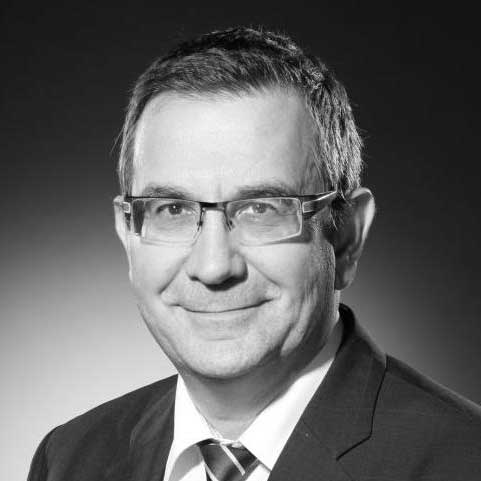
Monsieur de Feraudy, a trick question to begin with: did you want to organize this event?
 Yes, I wanted this event. About a year ago, I received an e-mail from Thomas Wimmer (president of the BVL) who wanted to re-enact the famous Franco-German couple and revive the ELA. I was naturally very interested. We need to learn from each other, we need to work together to get the best practices.
That's when our partnership with Supply Chain magazine came into play, as they organize the Rois de la Supply Chain, and every year, together, we present our champions at the ELA Awards. And it just so happened that last year, in 2022, France won the ELA Awards. And it occurred to me that we could have a kind of Eurovision-type organization where the winner organizes the next edition.
It seemed only natural to seize the opportunity of the 2023 ELA Awards to organize the event marking the milestone of a new ELA governance and also marking a new habit: tonight's winner will have to organize the same event next year.
With For Supply and Beyond, what ideas did you want to put across to the industry?
In 2020, we were looking for a mission and it turned out that we all wanted to use the Supply Chain as a lever for greater sustainability. We are the ones who, with our teams and their skills, are truly essential to create more sustainable supply chains and a more sustainable world. So that's our motto and what we want to do. And we continue to go further(beyond).
We talked aboutsocial impact, circularity, slowing down flows, but also about setting up collaborative ecosystems. These are all subjects that are the subject of debate and questioning, and that our members are developing in the new version of our Manifesto.

How does it differ from the previous version?
In 2021, the French Senate invited us to an interview with a series of questions on the theme "How can we be more sustainable?". We prepared a working document showing the reasons to believe in such a scenario thanks to Supply Chains. The result was our first Manifesto.
In that version, we didn't name the companies that provided the examples and achievements, but in this new version, we've decided to name the projects and companies that agreed to testify. It's a collection of use cases to inspire others, and to share with those who want to know more about replicating these successful projects.
Why have you chosen to reveal your advocacy for a Frugal and Desirable Supply Chain at this event?
What I've just told you only works for France. What we've learned is that very often the answer is beyond constraints, solutions beyond limits of your company alone, you need to work together. You see beyond is everywhere today. But it's not enough for the French to work together. We need to learn from each other at a European level. I therefore invited all our guests to get hold of this Manifesto and to work together to enrich and complete this document with their own examples.
Mr. Markus Mau (President of ELA), any comments?
 A new era of collaboration and interaction is opening up, and this represents real added value for all of us. But to go beyond that, how do we control it? ? How can we be sure that what we consider important is taken care of in the right way and sent to a distant destination?
We have ELA certification, an individual certification attesting to specific skills in Supply Chain Management and Logistics. We are currently adapting it to take into account the new requirements of CSRD, ESG and so on. This work is being carried out jointly by industry and academia, and will ensure that the person you hire meets the standards defined by the ELA and its members worldwide. This goes beyond any university certificate.
-

Supply chain 0025
-

Supply chain 0026
-

Supply chain 0037
-

Supply chain 0114
-

Supply chain 0195
-

Supply chain 0206
-

Supply chain 0216
-

Supply chain 0500
In this extract, our speaker of the day uses the example of coffee to show us that there are two ways of thinking about the Supply Chain:
-
 A sequence of actions
that lead to a café
-
 A series of people
that lead to a café
Transformative Power of Supply Chains on Social Sustainability by Luca SILIPO, Chief Economist, Supply Chain Leader and Independent Thinker
It is this second axis that he has chosen to explore in greater depth, by appealing to our emotions, our memories and our relationship with objects. Luca Silipo demonstrates a hopeful vision for rethinking the future, taking into account the global impact of companies on the city and its inhabitants. A reflection on how to control the power of societal links and how to make them more powerful.
In turn, French, Slovenian, Austrian, Spanish and Swiss entrepreneurs took to the stage to talk about the birth of their projects, their objectives and the results achieved. Digital and technological transformations to harness and transmit data were at the heart of the ceremony, with the use of blockchain, artificial intelligence, AGVs (Automatic Guided Vehicles) and more.
The 6 finalists, including the winner of the 2023 edition, are :
-
 The warehouse of the future for our teams and performance
by Leroy Merlin and France Supply Chain by ASLOG
-
 Optimising international trade and customs clearance with blockchain technology
by NAFEZA & CARGO X and the Slovenian Logistics Association
-
 Warehouse optimization through automation
by RWA member of the Austrian VNL association
-
 Supply Chain Control Tower
by SEAT SA from Centro Español de Logística (CEL)
-
 Visual SLAM Localization and Navigation for Mobile Robots in Logistics
by GS1 Switzerland member SEVENSENSE
-
Digital Logistics Corridors
by USYNCRO from ICIL Institute
-

Supply chain 0377
-

Supply chain 0407
-
What are you doing in your country? What are your priorities today?
-
What are the best sustainable supply chain practices in Europe?
-
How do you work together? What do you collaborate on?
-
How do you work with the European authorities?
-
 Yann de Feraudy
-
 Konstantinos Haniotis
Managing Director at Telenavis S.A. and ELA vice-president

-
 Xavier Rius
General Director of the ICIL Institute

During this2nd round table, the speakers presented the concrete solutions implemented in their companies or with their associations on the subjects of energy transition, decarbonization of freight, as well as arduous work in transport or warehouses.
One of the key issues is the financing and cost of implementing such a transformation. These 4 practitioners gave us their answers and their vision of a sustainable business model.
-
 Camille Demarquilly
VP Global Supply Chain Engineering at Michelin

-
 Romeo Dumitru
Logistics Director at ELBI ELECTRIC & LIGHTING and Vice-President of ARILOG

-
 Ramon Garcia
General Manager of Centro Español de Logística (CEL) and Vice president of the innovation cluster for sustainable delivery of freight (CITET)

-
 Aimé-Frédéric Rozensweig
Supply Chain Expert Leader at Renault Group

-

Supply chain 0417
-

Supply chain 0421
-

Supply chain 0460
-

Supply chain 0467
-

Supply chain 0471
-

Supply chain 0506
-

Supply chain 0516
-

Supply chain 0517